
Social Housing in the Luxury Complex: How Much Solidarity Can Be Bought?
Social Housing in the Luxury Complex: How Much Solidarity Can Be Bought?
A new housing project in Palma's Jonquet mixes luxury units with mandatory social housing. Who protects those in need from displaced units and symbolic penalties? A reality check with a local perspective.
Social Housing in the Luxury Complex: How Much Solidarity Can Be Bought?
A reality check from Palma's Jonquet
Key question: Are statutory quotas and fines enough to ensure that people in need actually gain long-term access to rent-controlled housing within a high-price development?
There is a lot of dust in the air along the Paseo Marítimo right now, the crows are crying above Palma's rooftops, and on the Carrer de Monsenyor Palmer a shell of a building is rising that is supposed to house 53 apartments in a few months. According to the building documents, seven of these units are designated as state-subsidized housing. The numbers are clear: 53 apartments in total, seven rent-controlled units, rent ranges for these seven flats between €676 and €897 per month, and an area of around 66 square meters for the social units.
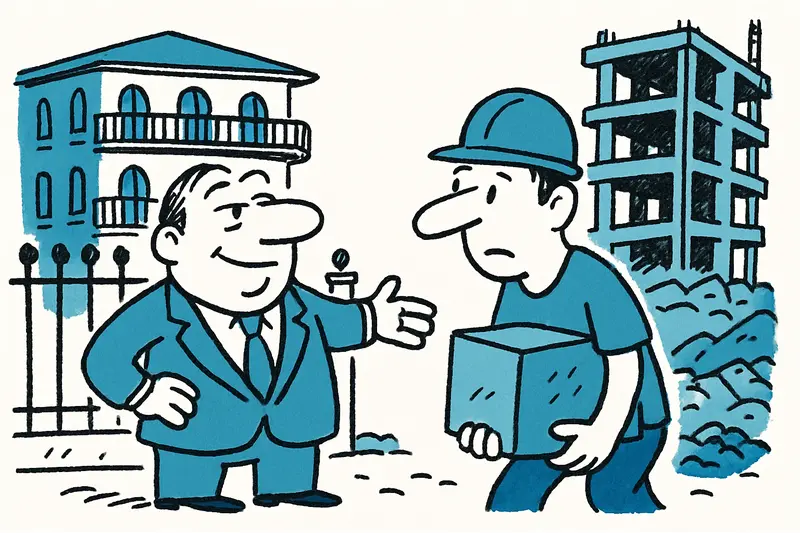
The project uses a classic spatial separation: the market-rate apartments are oriented toward the Paseo Marítimo, with views of the harbor and the sea; the social units are planned in a separate block on the Carrer de Monsenyor Palmer. To many, this feels like a subtle hierarchy — buyers by the water, tenants with housing subsidies on the back street. At the same time, real estate platforms list asking prices for the market apartments between roughly €2.2 and €6.7 million, a dual market problem discussed in Palma at Two Prices: Why the Same Square Meter Can Suddenly Be Luxury.
Formally everything is approved, the regional housing agency Ibavi is supposed to handle allocations, and government politicians indicate that the seven apartments should be assigned "for life" through the register. But practice needs a closer look: the prescribed fine for ignoring the social quota ranges from €30,000 to €90,000 per missing or incorrectly declared apartment. That sounds severe on paper, but is it in proportion to the scale of the overall project?
Critical analysis
When you compare the dimensions, the fines quickly fade into the background. In a multi-million euro project, even six-figure penalties are more of a calculable business risk than an effective protective mechanism. Also: the spatial separation and the smaller size of the social apartments — 66 square meters versus considerably larger luxury units — suggest that the rule may be formally fulfilled but not socially, in the sense of true mixing.
Another problem is transparency and advertising. the listings for for-sale units mention the high purchase prices without clearly marking the registered, price-restricted units. That makes it harder for potential applicants and the public to check whether obligations are being respected. There are legal declaration obligations, but their effectiveness depends on consistent monitoring and follow-up — not on developers' voluntary commitments, as highlighted in cases like From Squat Blot to Luxury Address: Who Benefits from the Conversion in Camp d'en Serralta?.
What's missing in the public debate
The discussion often ends with moral labels: developers are greedy, politicians are naive. Much less attention is paid to administrative procedures: who checks after completion whether the seven units really remain permanently assigned to the Ibavi register? Who verifies the equivalence in construction (fixtures, location within the building, access to communal areas)? What role do intermediate contracts play — for example leasing models, home-staging or apparent "community offers" — that in practice deepen the separation?
Rarely is it asked how such projects affect the neighborhood. Residents on the Carrer de Monsenyor Palmer report noise, parking pressure and rising prices in small shops. If social tenants are placed in a side block, social segregation in the immediate surroundings remains.
Everyday scene from the Jonquet
Last week I stood at a small bar on the corner of the Carrer de la Mar, where the olive trees rustled in the wind and an older woman watered her geraniums. Construction workers in orange vests carried bags of cement past, and a delivery van honked twice — the sounds of Palma. A young waiter shook his head: "They have nicer communal rooms there than we do in our complex," he said quietly. His girlfriend works in a supermarket three streets away. She says she cannot get by on €900, a strain reflected in reporting on rising room costs in Palma such as When the Shared Flat Room Becomes a Luxury: Palma Under Pressure. The new social apartments would help her, but whether she could actually move in — and who her neighbors would be — remains unclear.
Concrete solutions
1) Harsher, scaled sanctions: not only one-off fines but graduated measures tied to profits — for example conditions to return sales proceeds or substantially higher fines for repeat offenders.
2) Transparency requirements in property listings: every sales advertisement for a project with subsidized units should clearly and mandatorily disclose the location, size and fittings of the social apartments as well as the allocation procedures.
3) Independent follow-up inspections: a municipal or regional audit body must conduct unannounced checks after completion to verify that the social units meet the construction and operational requirements.
4) Guarantee community integration: subsidy contracts could require minimum standards — shared access to spa, community rooms or mobility services — or alternatively allocate a fund from the subsidized units for local neighborhood projects.
5) Legal clarity on contract structures: no loopholes through short-term rental models, temporary changes of use or marketing strategies that dilute social obligations. Smaller-scale interventions also exist and show different approaches, for example Sóller transforms old hospital into ten social housing units – is that enough?.
Pointed conclusion
It is not enough that seven apartments are listed on paper as social housing. The state must ensure that the duty to socially mix does not become a mere alibi. Otherwise there is a risk that Mallorca will formally "produce social housing" that is in practice pushed to the margins of society — into a back block, with smaller space and a worse view of the sea. Those who seriously want social housing must design rules so they cannot simply be bought off.
Frequently asked questions
How does social housing work in luxury developments in Mallorca?
Who gets the subsidized apartments in Palma, and how are they allocated?
Are fines enough to stop developers from ignoring social housing quotas in Mallorca?
Why are social housing units in some Palma projects placed in separate blocks?
What should buyers check in Mallorca real estate listings with social housing obligations?
Can social housing in Mallorca really be permanent?
What effects can a luxury housing project have on the Jonquet area in Palma?
What would make social housing rules in Mallorca more effective?
Similar News

Rental Car Theft in El Arenal: What This Incident Reveals About Our Gaps
A teenager steals a running rental car in El Arenal, flees on foot, climbs over walls and is caught by the Guardia Civil...
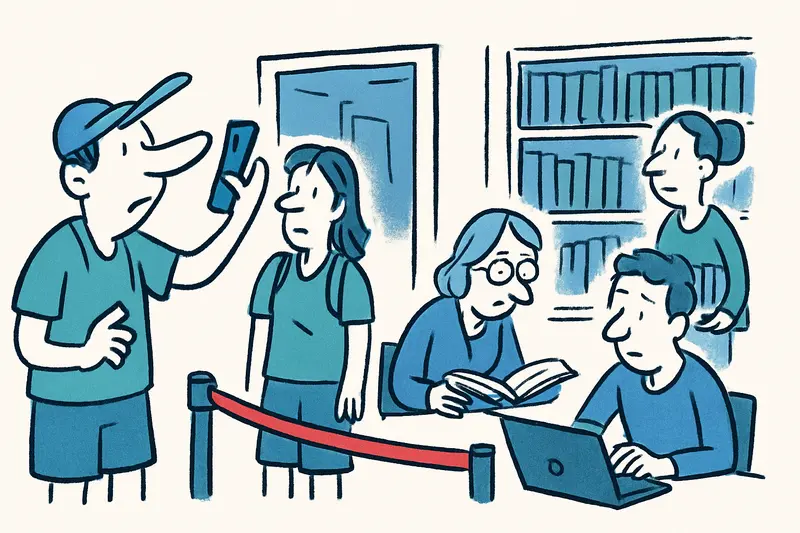
Red Rope in Palma's Library: What Helps Against Selfie Tourism — and What's Missing
Palma's city library cordoned off an area with a red rope to keep selfie tourism away from reading and working activitie...

Fort San Carlos: Museum, Harbor Dispute — and a Conflict That Demands Answers
The military museum at Fort San Carlos sits right on Palma's harbor, with unexpectedly quiet rooms filled with cannons a...
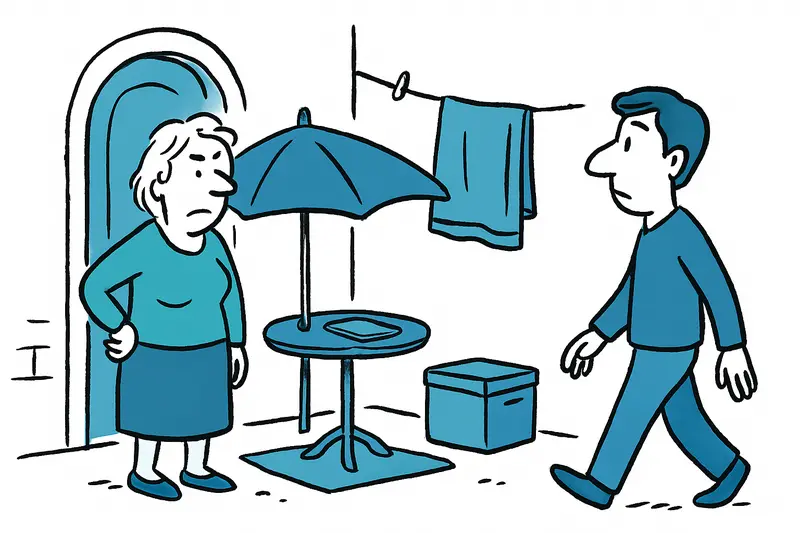
Old Town Under Pressure: When a Doorway Becomes a Sleeping and Shower Place
For months a woman has been living with a parasol, a clothes rack and personal belongings next to the social welfare off...

When Shopping Weighs Heavier: Mallorca Demands a Tax Pause on Food and Fuel
Rising prices are putting pressure on households and agriculture. The Balearic Islands are calling for temporary tax rel...
More to explore
Discover more interesting content

Can Cap de Bou

Townhouse Lleo 72
