
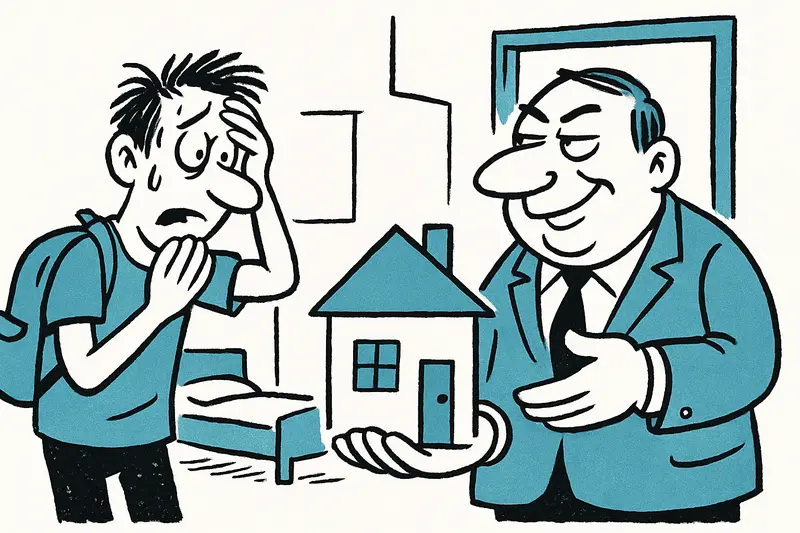
When the Shared Flat Room Becomes a Luxury: Palma Under Pressure
Rental prices on Mallorca are rising rapidly: an average room costs around €558, in Palma €574. Young people are affected — what helps in the short term and which political solutions are missing?
When the shared flat room becomes a luxury
Bus line 1 struggles through Palma early in the morning, the doors open, the scent of coffee at the Plaça mixes with a fragment of conversation: "Rent is already eating up nearly my salary." Concrete figures underline the feeling, as reported in Precios de habitaciones en Mallorca: los jóvenes bajo presión: a room on Mallorca averages around €558 per month, in Palma about €574. For many students, apprentices and hospitality workers this is not just a number — it is about securing their livelihood.
The central question: How affordable will Palma remain?
It's not only about the amount, but about the speed of the increase. Five years ago you paid considerably less for a room in a shared flat. Today you see ads with “incl. electricity” for rooms that offer barely any windows or privacy, and these trends are analysed in Habitaciones compartidas en Palma: más habitaciones, más preguntas. The result: young people cut back on leisure, forgo further training or commute for hours from villages that seem more affordable — with noticeable consequences for quality of life and health.
What receives little attention
The debate often revolves around short-term rentals and tourist numbers — rightly so. But there are side issues that get less attention: empty offices in Palma's city centre that remain unused after the home office boom; landlords who prefer to rent to holidaymakers rather than long-term tenants; and the decoupling between wage development in tourism and rent increases. A waitress in Cala Mayor earns seasonally, yet has to cover housing costs all year round. Regional and national housing policy frameworks also shape these dynamics, as outlined on the official Spanish housing portal (Ministry of Transport and Housing).
There is also a displacement effect: classic shared flats where three to four people live together and share space have become rarer. Instead, flatshare-like offers with anonymous rooms and no sense of community are emerging — short-term compensation instead of long-term housing quality.
Concrete consequences on the ground
On the way to the university in Son Espases you see more commuter bikes; in the evenings fewer neighborhood groups gather at the Plaça. Young teachers, apprentices and volunteers think twice about moving to Palma — or whether to stay with their parents instead. The pressure shows in longer commuting times, less social participation and rising dissatisfaction. In short: Palma risks losing diversity for the next generation.
Approaches to solutions — political and practical
The discussion about social housing and stricter regulation of short-term rentals is underway — but implementation is lagging. Concrete, combined measures are needed:
- Temporary use of vacant buildings: Municipal programmes could more often convert offices, former shops or underused hotels into student housing projects and shared-flat models, following guidance from international policy research such as OECD housing policy resources.
- Rent caps and long-term incentives: Instead of outright bans alone, tax incentives for landlords who rent long-term to young tenants and pilot projects with capped rents for training positions would help.
- Cooperative housing models: Housing cooperatives or community land trusts could remove land and apartments from the market to secure affordable housing in the long term; see the Cooperative Housing International overview of cooperative housing models for examples.
- Transparency and data: A municipal register of vacant apartments and clear mapping of short-term rentals would enable planning and curb speculation.
What those affected can do now
If you're searching urgently: use local noticeboards at universities and pubs, ask neighborhood associations, negotiate with landlords in person — that often helps more than a perfect ad. Collective solutions like flatshare networks, room exchanges at colleges or employers offering housing allowances are often the most practical short-term paths.
In the long run: without political steering, Palma remains risky for young people who want to work, study or start families here. It's not just about numbers, but about a city that stays lively, diverse and intergenerational — not just a postcard tourist bubble.
One final note: Those who have to search listen closely: the Plaça, the cafés and the bus line tell you more about the housing market than many statistics. And they also reveal where solidarity-based solutions are already quietly growing.
Frequently asked questions
How expensive is a room in a shared flat in Mallorca right now?
Why are shared flats in Palma getting harder to find?
Is it still realistic to live in Palma on a tourist worker salary?
What kind of people are most affected by high room prices in Mallorca?
Are there affordable shared rooms near Palma University and Son Espases?
What can I do if I need a room in Palma quickly?
How does the housing shortage in Palma affect daily life?
What housing solutions are being discussed for Mallorca and Palma?
Similar News

Release after bloody attack in Palma: Why the court's decision raises questions
An 18-year-old who allegedly inflicted a serious neck injury on a man at Plaza Gomila using a wristwatch wrapped around ...
Kidnappings in Inca: Three young men forced into car trunks and abused in the forest – a reality check
In Inca, three 18-year-old men were forced into car trunks by masked assailants at the Plaça des Bestiar, taken to a for...
Spreading Massification: The Brake That Still Has Much Work to Do
Marga Prohens announces limits on volume tourism. The measures sound harsh — but are they enough to save everyday life, ...

Through the Keyhole onto the Party Yacht: How Daniela Katzenberger Is Planning Her 40th on Mallorca
Daniela Katzenberger turns 40 and wants to celebrate it on the island — likely with a boat, cake and her mother. A relax...
By Boat Instead of the Road: Palma's Water Bus — a Reality Check
The 'Bus Nàutic' launches in two stages — but questions remain over interim operations, fares and environmental requirem...
More to explore
Discover more interesting content

Can Cap de Bou

Townhouse Lleo 72
