
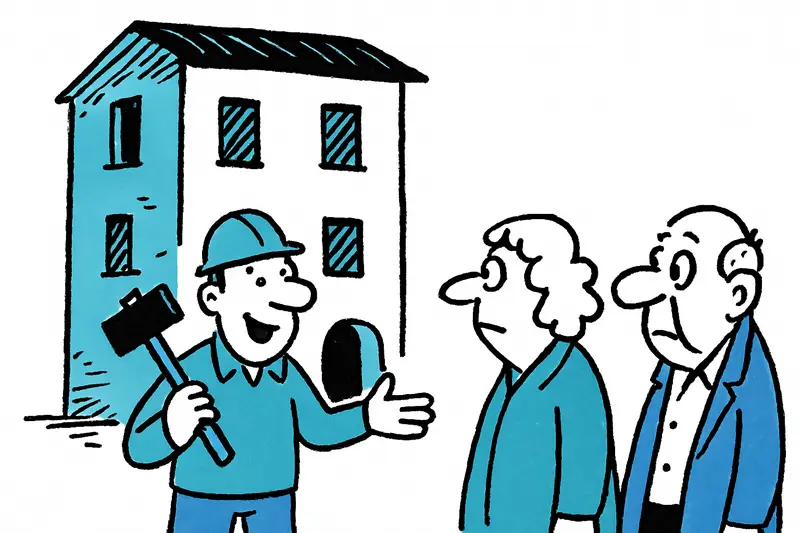
Sóller transforms old hospital into ten social housing units – is that enough?
The former hospital at Plaça Constitució is to become ten social housing units. A pragmatic step — but are ten units enough and how will allocation be handled?
Sóller transforms old hospital into ten social housing units – is that enough?
On the edge of the Plaça Constitució, where in the afternoons the sun heats the cobblestones and in the evenings the tram bell rings briefly once more, a long-empty building is to be given new life: the Balearic housing institute Ibavi is taking over the former hospital, while the municipality will retain the ground floor. Goal: ten rental apartments for people with local ties.
A small solution with great symbolism
The numbers are manageable. Ten apartments do not sound like a major upheaval, more like targeted first aid for urgent cases. Nevertheless, the project carries weight because it shows that in Sóller not all vacant buildings are being left to the tourist market. On the windy forecourt I saw two women talking about the prices at the weekly market — ordinary everyday life that such projects can help preserve.
The municipality keeps the ground floor with about 440 square meters. Offices and contact points are planned there so that services for citizens are closer at hand. The upper floors will be renovated to be barrier-reduced, with small layouts for singles, couples and young families. Planned start of construction: spring 2026; move-ins possibly at the end of 2026 or the beginning of 2027.
The key question: Do ten apartments have enough impact?
This is the central question that the town hall prefers not to ask out loud: Can ten units make a noticeable difference across the town, or is this merely symbolic? In a small town like Sóller every apartment can have a big effect — it can secure a place to live for an elderly person or provide transitional security for a young family. But it will not resolve structural bottlenecks in the housing market.
What matters, therefore, is how the allocation is regulated. The municipality speaks of social criteria: local connection, employees in health and service professions, households with low incomes. This is often where distrust arises: residents demand transparent selection procedures and clear timelines. Without that, the project risks causing unrest rather than trust.
Critical risks and blind spots
Some stumbling blocks are foreseeable. Approval delays, cost increases in the renovation of historic building fabric, or unclear financial planning could disrupt the schedule. The long-term maintenance of the apartments also needs to be considered: who will take care of later repairs? As owner, Ibavi ensures state oversight, but daily management remains a task that ties up staff and resources.
Another blind spot is social integration: social housing must not be pushed to the margins of the city's discourse. If the ground floor houses offices that are then hardly used, the social benefit remains limited. The building must remain part of the neighborhood, with a visible presence and offerings that appeal to neighbors.
Concrete proposals to make the project more than a symbol
Some pragmatic steps could increase the chances:
1. Transparent allocation rules: Publish criteria early, hold a public application phase and set up an independent commission with representatives from the municipality, social organizations and the neighborhood.
2. Schedule with buffer: Realistic construction phases and regular updates for citizens so that rumors and uncertainty have no room to grow.
3. Use the community space: Not just a corridor of offices on the ground floor, but a contact point with set opening hours, advisory services and meeting areas — a place where voices from the quarter are heard.
4. Sustainability and accessibility: Energy-efficient renovation and building measures that reduce long-term operating costs and enable older people to live independently.
5. Strengthen cooperation: NGOs, local businesses and employment services can help tenants reintegrate quickly into work and social life.
A pragmatic step — with prospects for more
In the end the project is typical for Sóller: not a big prestige project, but a local patch aimed at filling concrete gaps. If the selection is fair, the ground floor is activated and management remains transparent, ten apartments can achieve much more than the number suggests. If communication fails, however, a small glimmer of hope can quickly turn into frustration.
The clock ticks quietly over the Plaça Constitució, the market begins to set up, and the question remains: will the old hospital soon be filled again with the smell of cooking and the laughter of children, or will it remain just a nice announcement on paper? Sóller has the chance this time to do it better — with clear rules and a bit of common sense.
Frequently asked questions
What is happening with the old hospital in Sóller?
Will ten social housing units make a real difference in Sóller?
Who will be eligible for the new social housing in Sóller?
What will the municipality keep in the former hospital building in Sóller?
When will the new apartments in Sóller be ready?
Why is social housing in Mallorca so important right now?
What are the main risks for the Sóller housing project?
How can local residents in Sóller trust the allocation process?
Similar News

Release after bloody attack in Palma: Why the court's decision raises questions
An 18-year-old who allegedly inflicted a serious neck injury on a man at Plaza Gomila using a wristwatch wrapped around ...
Kidnappings in Inca: Three young men forced into car trunks and abused in the forest – a reality check
In Inca, three 18-year-old men were forced into car trunks by masked assailants at the Plaça des Bestiar, taken to a for...
Spreading Massification: The Brake That Still Has Much Work to Do
Marga Prohens announces limits on volume tourism. The measures sound harsh — but are they enough to save everyday life, ...

Through the Keyhole onto the Party Yacht: How Daniela Katzenberger Is Planning Her 40th on Mallorca
Daniela Katzenberger turns 40 and wants to celebrate it on the island — likely with a boat, cake and her mother. A relax...
By Boat Instead of the Road: Palma's Water Bus — a Reality Check
The 'Bus Nàutic' launches in two stages — but questions remain over interim operations, fares and environmental requirem...
More to explore
Discover more interesting content

Can Cap de Bou

Townhouse Lleo 72
