

From Squat Blot to Luxury Address: Who Benefits from the Conversion in Camp d'en Serralta?
A dilapidated house on Comte de Barcelona is becoming 'Luxury Living Palma' — penthouses, expensive underground parking spaces, foreign investors. What will happen to neighbors, parking availability and tax revenues?
From Squat Blot to Luxury Address: Who Benefits from the Conversion in Camp d'en Serralta?
At the corner of Comte de Barcelona and Rodríguez Arias the soundscape has changed in recent months: the constant rustle of garbage bags and the Sunday grumbling of the rubbish collectors have given way to the rumble of bulldozers and the distant whir of drills. Where cats once wandered between blocked driveways and tapas lids lay on the pavement, a project with a pretty name is now being built: Luxury Living Palma. A similar transformation sparked debate in New residential building instead of Bar Sagrera? Dispute over the corner plot in Palma.
A quick calculation with uncomfortable numbers
The basic figures are clear: two penthouses of around 130 m² each, terraces of nearly 100 m², private pools — priced at €1.55 million each. Apartments between €600,000 and €850,000. Plus 30 underground parking spaces, individual spots priced around €75,000. An investor group from Austria has bought the building; the architect is Nadal Mir Pons. Three units on the first floor have already been sold, and move-in could be possible by February 2026.
At first glance this sounds like urban renewal: an eyesore turned into a flagship. At second glance, however, you have to ask: Who pays for this conversion — and who really benefits afterwards? These price swings mirror the disparities described in Palma at Two Prices: Why the Same Square Meter Can Suddenly Be Luxury.
The quiet streams of money that almost nobody notices
Little discussed in the public debate are the subtle but lucrative side streams. Parking spaces priced at €75,000 each are not a mere comfort option but a hidden revenue source. In a neighborhood like Camp d'en Serralta, where parking is scarce, an underground parking space functions almost like its own property. These revenues make projects clearly more attractive to investors — and shift the location's value in a direction that quickly becomes unaffordable for locals.
Tax aspects and the buyers' structure are also relevant: capital inflows from abroad stabilize prices in the short term but permanently reduce supply for local buyers. Purchase agreements often regulate who may use communal areas and which rental forms are permitted — factors that affect the availability of housing for tenants without being immediately visible. The dynamic of investors reshaping working-class neighborhoods is explored in Who Owns Palma? When Luxury Quietly Repaints the Working-Class Neighborhoods.
Between relief and feelings of loss: voices from the neighborhood
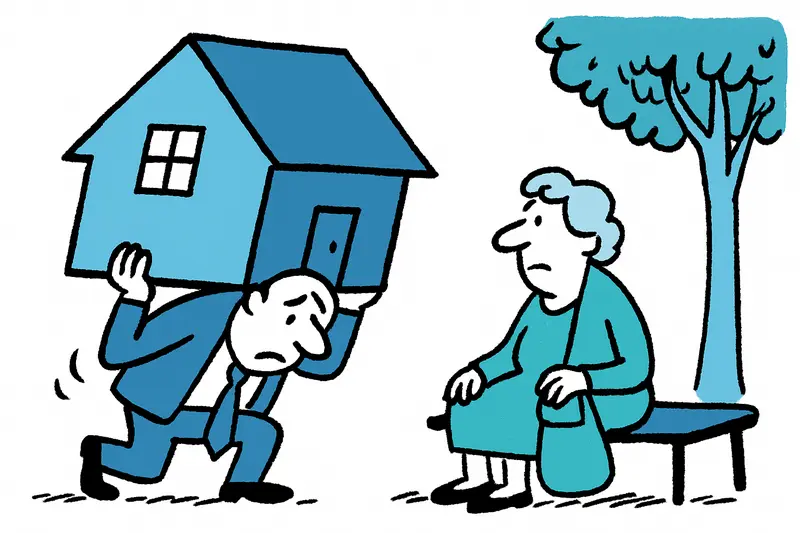
Some, like the baker's assistant at the Porta de Santa Catalina, breathe a sigh of relief: "Finally that thing will be cleared away." Others see their daily life threatened. An older man, who has known the side street for decades, shrugs and says: "The neighborhood will become chic — but for whom?" The concern about rising rents, changing shop concepts and the loss of everyday sounds is real. For the pensioner with the walking stick, demolition excavators are not a modern promise but a disruption of familiar life.
What urban planning should put higher on the agenda
Palma has little space in central locations. Every change of use therefore sends a signal. Three concrete proposals that could have rapid effects:
1. Mandatory diversity: Conversions should include a share of subsidized or affordable apartments. This helps preserve social diversity and prevents the neighborhood from losing its character.
2. Commercial space for local businesses: Ground-floor spaces should not only go to profitable chains. Temporary lease models, graduated rents or a reserved quota for artisans, bakeries and small shops can help protect the local economy.
3. More transparent allocation of infrastructure costs: Who pays for higher standards for streets, lighting or green maintenance? Municipal rules could determine how follow-up costs are distributed — so that upgrading does not only benefit private parties.
Comparable policy proposals appear in Three New Luxury Addresses in Mallorca – Opportunities, Conflicts and Some Practical Proposals.
Practical measures that can help in the short term
Affordable housing is not created overnight. But the city can flip small levers now: a quota for subsidized housing in conversions, grants or tax relief for small businesses suffering from construction, or a municipal allocation policy for underground parking spaces that gives priority to locals. Such measures soften the harshness of gentrification processes.
Between hope and caution: seize opportunities, limit side effects
New construction can improve many things: modern energy standards, safe building fabric, less vandalism. When the Tramuntana blows gently, street cafés are full and the streetlights shine perfectly again, almost everyone is pleased. However, it is important that these improvements are not implemented only as a luxury package for newcomers.
The central question remains simple and sharp: For whom will this story end well? You can already hear the drills and the distant calls of the seagulls — and between the smell of fresh rolls and construction noise it will be decided whether Camp d'en Serralta keeps its soul or primarily gains new account holders.
From Camp d'en Serralta — where the scent of fresh ensaimadas meets the sound of excavators.
Frequently asked questions
Why are some old buildings in Palma being turned into luxury homes?
What does a luxury apartment in Palma usually cost?
Are underground parking spaces in Palma worth paying extra for?
How can luxury redevelopment affect local residents in Palma?
What is happening in Camp d'en Serralta in Palma?
When could new apartments in Camp d'en Serralta be ready in Palma?
What can Palma do to keep new developments affordable for locals?
Who benefits most from luxury housing conversions in Palma?
Similar News

Why the Striped Breams in Cala Pí Should Be a Wake-up Call
Once again bathers in Cala Pí were surrounded while swimming by small, nippy fish — some wounds bled. Time for clear rul...

Daily from New York: How Palma's Air Traffic Is Growing — and What Must Change
United will increase the Newark–Palma service to daily flights in 2027 (Boeing, 231 seats). Strong tourist numbers clash...

When Love Ends in Shards: Destruction in Son Vida and the Questions That Remain
In Son Vida a relationship dispute escalated: a woman destroyed furniture in a luxury villa, later pressed a panic butto...
Who Bears the Burden? Mallorca Between Tenant Protection and Landlord Fears
Madrid's new housing decrees strengthen tenant rights — but on Mallorca concern is growing: will the law drive small lan...

On the Edge: What Mallorca's Airport Loses If a Major Low-Cost Carrier Falters
The company that operates numerous connections from Palma to France and domestically is negotiating with creditors to re...
More to explore
Discover more interesting content

Can Cap de Bou

Townhouse Lleo 72
