
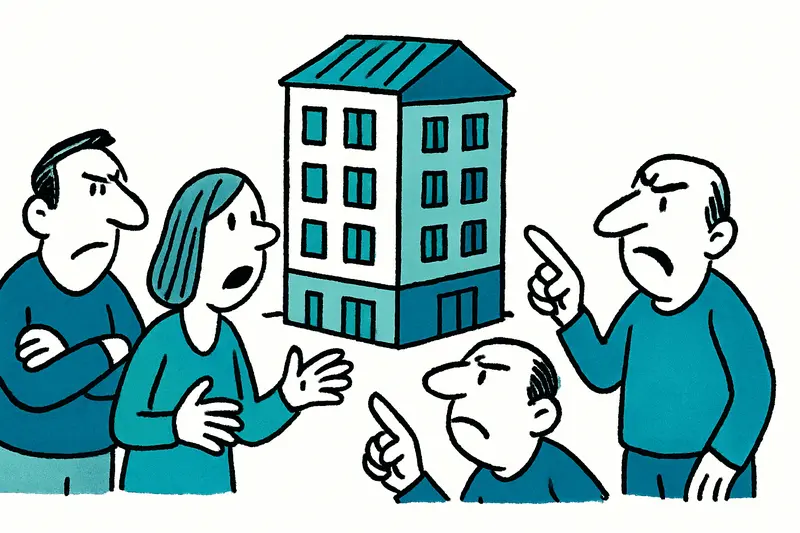
New residential building instead of Bar Sagrera? Dispute over the corner plot in Palma
An inconspicuous corner plot in Palma — once the Bar Sagrera (1943) — is to become a residential building. Expert reports, heritage protection and neighbours clash. How much of the city fits on this small piece of the paseo?
What's at stake at the corner of General Riera / Antoni Marquès?
In the morning the air still carries the scent of freshly baked ensaimadas, Carmen sweeps in front of her bakery, a dog barks briefly, then silence — and right there, on the corner, lies the old site of the Bar Sagrera. Since 1943 there has been life here; now a building application for a residential building is sitting at city hall, as reported in a news article about the proposed new residential building at General Riera/Antoni Marquès. The central question is: what is allowed to be built on this small piece of the city without Palma losing part of its identity?
Facade protected, but what does that actually mean?
The heritage authority has classified parts of the old facade as worth preserving. This designation is described in a news item about the facade partly protected at General Riera/Antoni Marques. That sounds good at first — the familiar windows, the weathered stucco details, the traces of decades remain visible. In practice, however, this entails a number of assessments: an expert report must clarify which floors, reveals or decorations are truly worth preserving and which are merely scenery. The city administration says it will take its time: land-use plans, permissible number of storeys, neighbours' rights — everything will be reviewed. The procedure can take weeks to months, and in the meantime the corner remains a place of waiting.
Between nostalgia and the need for housing
Voices from the neighbourhood are divided. Some neighbours hope for new housing, fresh energy and less vacancy; others lament the loss of character and the risk of increased density. "We need homes, but not at any price," says a resident as she wipes her balcony. This tension is typical for Palma: a city that must grow, but also wants to look after its soul.
The less heard questions
Public debates often focus on facades and storey counts, while other aspects remain underrepresented: how will a new building affect local infrastructure — waste collection, road traffic, kindergarten places? Who pays for the upgrading of pavements or street lighting if rents rise? And: what happens to the small businesses whose customers disappear because of construction and later higher rents? These knock-on effects should be part of any planning process but are rarely addressed early enough.
Facade integration: opportunity or fig leaf?
The applicant has shown initial sketches that aim to incorporate the historic facade. This can work — if the integration is more than cosmetic. Real preservation means technical care: structural reinforcement, faithful materials, and an honest balance between old and new. Too often it ends in a restored front while modern standard flats with no local connection are built behind it. A serious solution would be to impose binding preservation requirements, public review of restoration plans and independent construction supervision.
Concrete proposals — how Palma could better manage this
A few pragmatic approaches that are often missing from the debate but would be effective:
1. Obligation for social housing: A quota for affordable flats in the new building could prevent only luxury units from being built and old neighbours from being displaced.
2. Transparent expert reports & public participation: The facade report and the plans should be made public — with explanatory meetings in the evenings when people come home from work.
3. Temporary interim use: Until a decision is made, the plot could be used as a community garden, pop-up café or studio — preserving the social value of the place.
4. Stricter rules for 'facade retailing': Those who use historic facades must prove that restoration is more than decoration: mandatory material lists, preservation of original reveals, independent inspections.
5. Climate and noise management: Green roofs, facade greening and noise protection reduce urban strain and improve the microclimate.
The next act
Next comes the facade report; after that the city decides how many storeys are permitted. Then the public display follows — anyone with time and patience can visit city hall or follow the files online, for example via a article on planning conflicts around Avenidas/General Riera. Until then the corner, between paseo murmurs and the peal of bells, remains a transitional space: a reminder of Bar Sagrera, hope for housing and concern for what might be lost.
Short and honest: The decision is not a purely technical act of a developer. It affects the people who buy their newspaper in the morning, the baker, the children growing up here. And politics and administration should not forget that when they draw lines on the plan.
Frequently asked questions
What is planned for the former Bar Sagrera site in Palma?
Why is the old Bar Sagrera corner in Palma causing a dispute?
What does it mean when a facade is protected in Palma?
How long can a planning decision take for a new building in Palma?
Can the Bar Sagrera plot in Palma be used temporarily while the project is pending?
Will the new building in Palma have affordable housing?
What should residents check during a building plan display in Palma?
How could a new building at General Riera and Antoni Marquès affect the neighbourhood in Palma?
Similar News
Who Gets Left Out? Why Overbookings Will Hit Many Mallorca Travelers This Summer
On hot check-in days at Son Sant Joan, frustrated travelers pile up. New figures from Reclamador.es show that a large sh...
When the Handyman Came: How an Engagement Ring Disappeared in Mallorca and What It Says About Trust
During a repair in Andratx a highly personal engagement ring went missing — a case that calls not only for punishment bu...
How Burglars Test Fincas in Mallorca — and What You Can Do About It
The Spanish National Police warn of a simple but effective trick: small markings on doors reveal whether a finca is occu...
Palma doubles blue zone: What this means for residents, tourists and narrow streets
From 1 January 2027 Palma's ORA area will grow from around 12,000 to 24,000 spaces. Key question: Will the expansion bri...
Engagement ring disappears during repair: court upholds prison sentences for plumber and partner
During a heating repair in an apartment in Andratx an engraved engagement ring disappeared. After a trace to a pawnshop ...
More to explore
Discover more interesting content

Can Cap de Bou

Townhouse Lleo 72
