
Avenidas in Conflict: New Residential Building, Old Facade — and Many Open Questions
An investor plans a new building at Avenidas/General Riera – but heritage protection, differing permitted heights and neighborhood protests complicate matters. What is at stake?
Avenidas in Conflict: New Development Meets Protected Facade
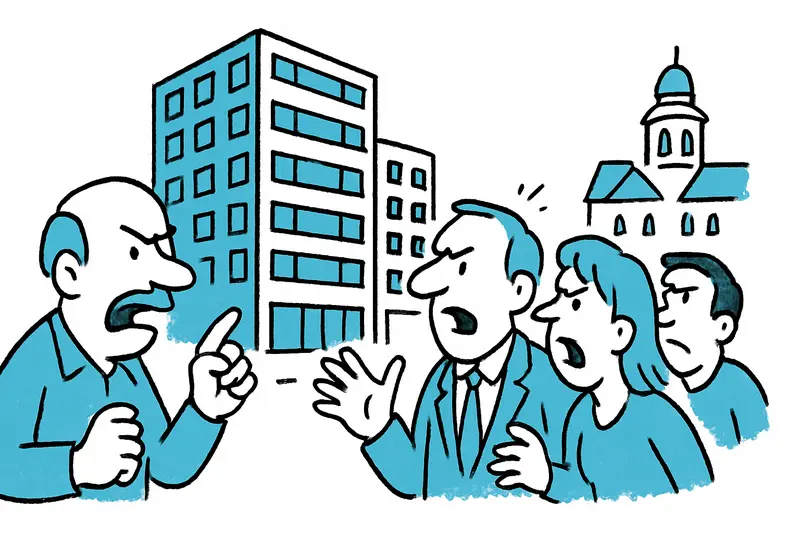
At the corner of Avenidas and General Riera, where the old Bar Sagrera has stood empty for years, covered in ivy and neglect, talk of activity is back on the agenda, as reported in New residential building instead of Bar Sagrera? Dispute over the corner plot in Palma. A private investor plans a modern apartment building with "spacious flats", as the designs put it. The neighbourhood is less enthusiastic: it's not just about square metres, but about the identity of a corner of the old town.
The central question
Can modern housing be created in Palma's old town without sacrificing the protected fabric? That is exactly the core question occupying the city planning commission. Part of the historic facade is listed. At the same time an inconspicuous planning boundary divides the plot into two height zones: in one area up to eight storeys would be permitted, next door building masses already reach ten storeys into the sky. The investor is hoping for exceptions — and that is where the debate sharpens, as detailed in Corner General Riera/Antoni Marquès: Dispute over new residential block and protected façade.
At City Hall calculations are now not only legal but also political. The heritage protection commission has been asked for a report: will the proposed redesign respect the protected facade, or does a "closed shell" threaten to form over a fragmentary remainder? Legal grey areas following the recent change to the Balearic housing law open up options, but they shift responsibility back to local politics.
What people on the street are saying
On Carrer de Sant Miquel more voices than usual are being heard this week: a neighbour, irritated, lights a cigarette and says tersely, "We need housing, but not at any price." The cafe owner on the Avinguda worries about the street scene: more space for cars, less room for tables and afternoon chatter. Young couples see light at the end of the gap — finally more affordable offers so families can stay in Palma. The discussion is louder than the traffic that always pulses at the corner anyway.
What is rarely mentioned: the shadow cast by taller volumes changes the microclimate and daylight for adjacent flats. More storeys often also mean more lifts, more rubbish, more delivery traffic — and thus an additional burden for narrow old-town streets. Such side effects only appear in public debate when a concrete plan is on the table.
Which interests collide?
On one side is the pressure to create housing — the island needs solutions for residents, not just holidaymakers. On the other side is the protection of the historic cityscape and the question of how urban compatibility is defined: is the argument "higher buildings were built next door" enough? Or does each individual case create a precedent for further exceptions along the old-town ring?
Investors' financial interests meet the need for quality of public space. Political decision-makers must weigh short-term increases in housing against long-term preservation of the fabric. Added to this is the issue of transparency: what concessions will the developer make, and can these be bindingly recorded in a development agreement?
Less discussed aspects
Little discussed so far is the alternative to a new-build solution: sensitive renovation and adding storeys to existing structures, adaptive reuse of Bar Sagrera as a community space or social housing. A simple "tear down and build new" is not automatically the best answer to housing shortages; recent cases such as Demolition in Palma: When Reconstruction Replaces the Original show the conflicts.
Equally rare are considerations of mobility and energy: could the new building be required to include fewer parking spaces, but provide bicycle storage and a car-sharing offer? Or green roofs to reduce sealing and improve the urban climate? Such conditions could make a new development more acceptable.
Concrete proposals — so the decision is not only symbolic
City planning now needs concrete instruments, not just reports. Ideas that could help depoliticize the discussion:
- Binding design guidelines: clear rules for facade treatment, for the legibility of the historic fabric and for visible set-backs on the upper floors.
- Social quota: a mandatory share of affordable rental units in the new building — ideally not only as a cash payment, but as an integrated part of the project.
- Traffic and delivery concept: staggered delivery times, fewer private parking spaces, instead loading zones and bicycle parking.
- Local participation: a moderated planning workshop with residents, businesses and specialist offices so conflicts become visible early and compromises can be viable.
- Ecological requirements: green roofs, insulation standards, rainwater harvesting — small measures with big impact in the dense old town.
What happens next?
The heritage experts will soon deliver their report, and the city planning committee meets in early December. Then City Hall will decide whether exceptions will be granted or the plans must be revised. Until then Bar Sagrera remains a decayed shop front — a reminder of Palma's hesitation between preserving and building.
Anyone passing the corner now hears the drone of buses, the clatter of crockery from the café and the neighbours' voices — and wonders whether the next decision will create more space for people or for square metres.
Frequently asked questions
Can a new apartment building be approved in Palma’s old town if part of the facade is protected?
Why do residential projects in Palma’s old town often face so much controversy?
How tall can a new building be on a corner plot in Palma like Avenidas and General Riera?
What are the main concerns neighbours have about new construction in Palma’s dense streets?
Could a new residential project in Palma include affordable housing?
What can Palma ask a developer to change before approving a new building?
What is likely to happen next with the Bar Sagrera site in Palma?
Is renovating an old building in Palma sometimes a better option than demolishing it?
Similar News

Caro Robens: 15 kilograms lighter — and again in the crossfire of online comments
Bodybuilder Caro Robens, who lives in Mallorca, has lost 15 kilograms. Her success on Instagram was met with applause — ...
Meager Industry in Mallorca: How the Island Can Be More Than Just Tourism
The industrial sector in Mallorca is shrinking, productivity is falling and firms remain tiny. The key question: can the...
Pre-Nit de l'Art: Galerie Mensing invites to a special evening with Tom Boston
Before the big art night, Galerie Mensing opens its doors: pop art, champagne, a DJ and a hand-signed print by Tom Bosto...
Sea view and more seats: Cappuccino Grand Café reopens in Port d'Andratx
After a long renovation, the Cappuccino Grand Café on the Port d'Andratx harbor promenade has quietly reopened. Larger t...

Enric Mas wins the Vuelta – a triumph that resonates in Mallorca
Mallorcan Enric Mas has won the 82nd Vuelta — the first Spanish overall victory since 2014. Cyclists and neighbors on Ma...
More to explore
Discover more interesting content

Can Cap de Bou

Townhouse Lleo 72
