
Medusa Beach: Who Bears Responsibility After the Collapse?
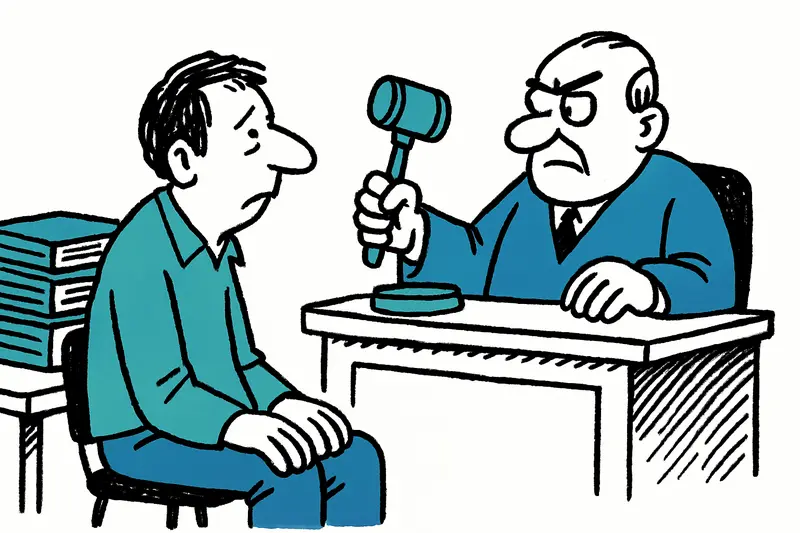
The collapse of the rooftop terrace at Medusa Beach raises a simple but uncomfortable question: Who is responsible — legally, administratively and socially? The case goes to court on November 11. But the wound is bigger than a criminal trial: it concerns oversight gaps, seasonal improvisation and safety along Mallorca’s coasts.
Who bears responsibility — legally and beyond?
On November 11 the ex-operator’s declaration is scheduled at the investigating court in Palma. The former operator, a restaurateur living on Mallorca, is to offer his statement to the investigating judge on the police file. Behind the legal formulations — four counts of negligent homicide, six counts of bodily injury — lurks a much more fundamental question: How could a rooftop terrace apparently be operated for so long without a valid permit and with serious defects?
The evening you can still hear
Anyone who lives or works on Playa de Palma still has the image in their head. May 23, 2024: around 9 p.m. the creaking of wood, then panic, screams and the frantic rattle of rescue teams. Later that night the monotonous beeping of machines on the Paseo Marítimo — and in the morning the smells: saltwater, diesel and the bitter aftertaste of helplessness. Four people died, including two tourists from Germany; about 15 were injured. Debris in the streets, people with briefcases, others with flowers.
More than a missing paper
Investigations point to a missing building permit. But that is only the beginning. The real question is: Why did inspections, neighbors, involved companies or the administration not recognize the structure as a risk earlier? Temporary constructions on the coast are commonplace. They are erected quickly, often with improvised solutions — and likewise quickly reappear in operation notices that are not always complete.
Particularly painful is the failure of coordination processes. Responsibility here dissolves into many hands: operators, architects, subcontractors, the town hall. Where many are responsible, usually no one is truly accountable. Add language barriers in expert reports, cross-border civil claims and a bit of bureaucracy that buries facts in stacks of files.
Who is not being watched?
The role of inspectors is an issue that has so far received too little attention in public debate. Are technical inspections sufficiently staffed? How are subsequent changes to existing structures checked? Evidence suggests there is a lack of capacity, of clear responsibilities and of seamless documentation. In high season often only one thing counts: more seats, more revenue. Structural calculations quickly fall by the wayside — until disaster strikes.
Legal and social consequences
On the criminal level, those responsible will be held to account. At the same time civil claims, insurance issues and compensation demands are underway. At the investigating court in Palma one sees relatives, lawyers and neighbors with briefcases and coffee cups every day. For many of the bereaved, a clear, comprehensible explanation of the causes would be more than a legal victory — it would be a measure of justice.
Economic pressure — underestimated and omnipresent
An often overlooked factor is the economic dynamics on the coast. During the season there is a pace at which operational safety issues easily fall into the background. Authorities are under pressure to protect jobs and secure revenues; that creates conflicts of interest. This is not an indictment of the island’s economy but rather a wake-up call: when oversight is too lenient, risks that can cost lives emerge.
Concrete steps — pragmatic and achievable
Legal clarification is necessary. Yet a verdict alone is not enough to restore trust. What is needed now are systemic reforms that close the gaps — the spaces where responsibility gets lost. Proposals that make immediate sense:
1. Digital register for structures: A central, public register of all temporary and permanent terraces with plans, permits and inspection reports. Visibility creates pressure to comply.
2. Regular documented inspections: Annual structural checks for rooftop terraces and elevated structures. Conducted by independent experts with a public inspection record.
3. Rapid checks after alterations: Any structural change must trigger an immediate re-inspection. No further operation without clearance.
4. Transparent sanctions and liability: Clear fines, explicit liability rules and mandatory insurance for operators. Those who use public space must carry responsibility.
5. Victim fund and accelerated compensation: A temporary fund could offer quick assistance to the bereaved while court proceedings continue — a sign of practical solidarity.
Looking ahead — a chance for modernization
November 11 is a milestone, not the end. Lawyers arrive with rolling suitcases, families seek answers and the neighborhood listens to footsteps on the Paseo. If the judiciary acts diligently, politics must not lag behind. Those who authorize and control public space must act so that evenings like that — the creaking, the screams, the beeping in the night — never happen again.
Investigating this case can be more than a legal reckoning. It can be the starting point for a real safety culture along Mallorca’s coasts — quieter but more effective than any headline.
Frequently asked questions
What happened at Medusa Beach in Mallorca?
Why is the Medusa Beach collapse in Mallorca being investigated?
Who could be held responsible for the Medusa Beach collapse in Mallorca?
When is the former Medusa Beach operator due to give a statement in Palma?
What safety issues are raised by rooftop terraces in Mallorca?
What changes are being suggested for terrace safety in Mallorca?
What makes Playa de Palma especially relevant in the Medusa Beach case?
What can Mallorca visitors learn from the Medusa Beach collapse?
Similar News
After Being Admitted to Hospital Again: Heinz Hoenig and the Questions We Should Ask in Mallorca
Long-time Mallorca resident Heinz Hoenig was admitted to hospital again. A clear “what next?” is missing from the covera...
Yellow Alert: Is Mallorca Prepared for the Next Rain Band?
Aemet has issued a yellow alert for the south, southwest and the island's interior. Thunderstorms and heavy rain are for...
Kegel brothers trial postponed: Why Mallorca must wait for a verdict
The trial of 13 German holidaymakers will not begin until May 2028. The long wait raises questions — for victims, defend...
Chaos on Palma's Runway: Why the Summer at the Airport Was So Disrupted
This summer laid bare where Palma airport is faltering: only just over half of departures were on time and seven percent...
Cocaine Offer on Ham Street: Why the Open Trade Should Ring Alarm Bells
In the middle of Pare Bartomeu Salvà a tourist was offered a packet of cocaine as part of a sunglasses deal. A short int...
More to explore
Discover more interesting content

Can Cap de Bou

Townhouse Lleo 72
