
Who pays for Palma Airport's ongoing construction chaos? A reality check
Who pays for Palma Airport's ongoing construction chaos? A reality check
Aena plans €621.6M for 2027–2031 – almost 47% more than before. What island residents and travelers can actually expect remains unclear. A local look with questions, analysis and concrete proposals.
Who pays for the ongoing construction chaos at Palma Airport? A reality check
€621.6M for 2027–2031, more wooden partitions in the terminal and a possible fee increase of €0.35 – time for clarity.
Key question: Who ultimately pays the bill for the coming years of construction at the airport — the travelers, the airlines or the taxpayers on Mallorca?
The bare numbers are known: investments of €621.6 million are planned for the period 2027 to 2031; this corresponds to an increase of around 46.7% compared with the approved amount of the previous five-year period (€424 million). On the list are renovations of runways and taxiways, renewals of jet bridges, optimization of parking areas and conversions of rooftop photovoltaic surfaces. For Ibiza €229.7M are planned, for Menorca €170.7M — with a focus on enlarged security areas. For related reporting see €624 Million for Palma: Visions, Construction Sites — and the Outstanding Bill.
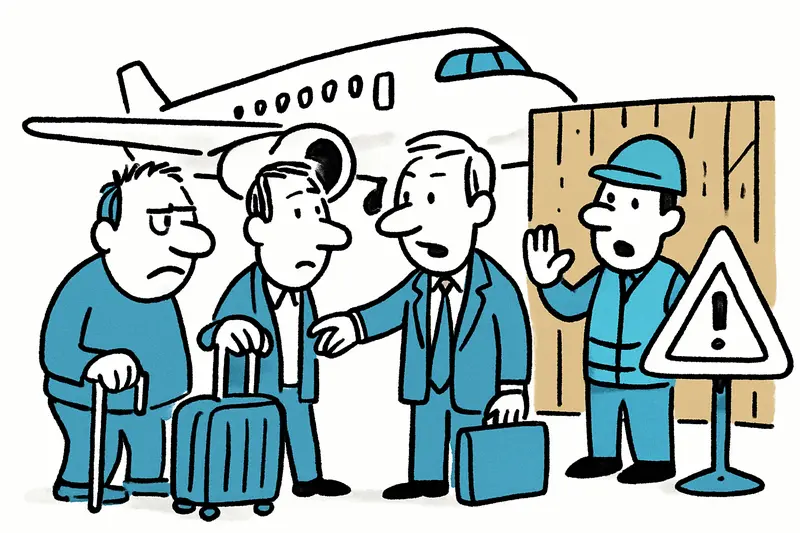
On site the airport feels like a maze, as reported in Palma Airport is modernizing — but the way there is noisy, confusing and exhausting for many passengers. When you walk to the terminal in the morning you see wooden walls, barriers and zigzag detours. At the kiosk in front of the departure hall travelers stand with suitcases, a mother pushes a pram around a newly installed barrier, taxi drivers argue about changed pickup points. The loudspeakers call departures, but information signs are often hidden behind tarpaulins. For people with luggage or reduced mobility this is not a side effect but a real obstacle.
The investment sum itself is not a scandal. Taxiways and bridges age, equipment must be maintained. It becomes critical when it comes to transparency and the question of how these costs should be distributed: Aena proposes an average annual fee increase that could be around €0.35; a few days ago €0.25 was still being discussed. Such surcharges ultimately affect ticket prices, add costs to low-cost and holiday flights and also increase operating costs for freight and charter services. Safety concerns have been highlighted by incidents such as a recent wall failure, discussed in Wall Collapse at Palma Airport: More Than an Accident — How Safe Are the Major Works Really?.
Critical analysis: More money does not automatically mean less trouble. A large investment framework can lead to construction sites remaining in place longer because more extensive projects run in parallel. If work is carried out simultaneously on terminals, security areas and parking areas, complexity increases for passengers and airline logistics. The announced redesign of the photovoltaic systems is welcome; whether it noticeably improves the airport's CO₂ balance depends on the scope and implementation.
What is missing from the public debate: a clear timeline with milestones, a breakdown of which measures are urgently safety-related and which are purely comfort-oriented; also a binding presentation of who will actually feel the fees. So far there are many announcements but little reliable information on traffic disruptions, accessible detours or compensation mechanisms for affected businesses and commuters.
Concrete everyday scene: One kilometre away, at the bus stop towards Palma, commuters stand in the morning waiting for delayed buses. Especially in the evenings, when planes land late, terminal detours combine with overcrowded bus lines and longer taxi queues. Once again it is ordinary people — restaurant owners, hosts, porters — who feel the expansion through unpredictable waiting times and uncertainty.
Concrete solutions: more transparency in figures and schedules; prioritized work on safety-relevant areas outside peak times; firm commitments to accessible routes and functioning elevators during construction phases; accompanying investments in additional shuttle buses and clear, multilingual signage; a tiered fee model that incentivizes off-peak flights; public online status pages with live updates on closures and alternative routes.
Additionally: an independent review procedure to evaluate the economic viability of major works (for example photovoltaic conversions) and a simple complaint and compensation mechanism for businesses that suffer revenue losses due to construction. Finally, it would make sense not to leave the decision about average fees solely to Aena, but to negotiate them bindingly with local authorities and consumer representatives. Local budget debates are covered in €624 million for Palma: Big Money, Many Open Questions.
Why this matters: a modern airport is more than concrete and technology. It is the gateway to the island, a workplace for thousands and part of the tourism infrastructure on which many livelihoods depend. If construction noise and detours cause months of confusion, the experience of the first minutes of a visit suffers — and that is reflected in reviews, repeat visitor rates and indirectly in the local economy.
Punchy conclusion: the investment sum of €621.6M is not a free pass for unplanned construction sites. Those who build must explain: what exactly, when and at what cost will happen. Without this clarity the wrong people will pay in the end — the travelers and the small local businesses. Mallorca needs modern infrastructure, but also predictability and an understandable bill.
Our appeal to officials and travelers: demand schedules, demand accessible solutions and keep a critical eye on proposed fee increases. The island is entitled to progress — but not to surprises that needlessly complicate everyday life.
Frequently asked questions
Who pays for the ongoing construction at Palma Airport?
Will flights from Mallorca become more expensive because of Palma Airport works?
Why does Palma Airport feel so confusing during construction?
Is Palma Airport still accessible for passengers with luggage or reduced mobility?
How much is Palma Airport investing in the next construction phase?
When will the Palma Airport works be finished?
Are buses and taxis around Palma Airport affected by the construction?
What should travelers expect at Palma Airport during the construction period?
Similar News
High heel slips, car accelerates: accident on Camí de Son Hugo
A woman lost a high-heeled shoe on the forecourt of the sports facility at Camí de Son Hugo. The car accelerated, mounte...

Phone Scam: How Two Hotel Employees at Playa de Palma Lost Thousands of Euros
One morning in September, two reception employees at Playa de Palma were pressured by alleged alarm-company staff — in t...

When the Wallet Becomes a Danger: Attack in Peguera and Lessons for Mallorca
In Peguera, two women are said to have stolen the wallet from a 75-year-old German couple. When the victim intervened, t...
Plata stays Plata: Young people take over, Llonguets remain
A small bar on Carrer de l'Argenteria will continue: Tolo Serra hands the place over to young Mallorcans at the end of t...

Unnoticed in the Luggage Compartment: How a Boy Traveled More Than 100 Kilometers in a Team Bus
A minor traveled in the undercarriage of a team bus for more than 100 kilometers until his cries for help were heard. A ...
More to explore
Discover more interesting content

Can Cap de Bou

Townhouse Lleo 72
