
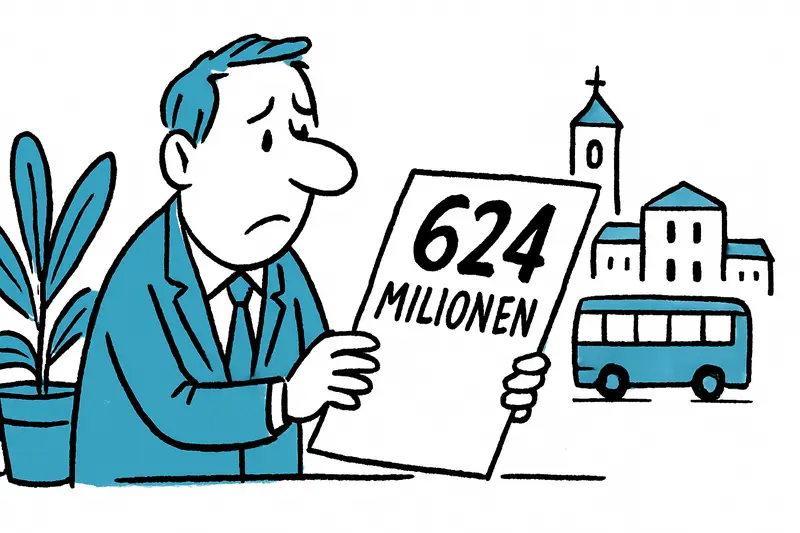
€624 Million for Palma: Visions, Construction Sites — and the Outstanding Bill
Palma plans a €624 million makeover. Major projects, many construction sites — but who will cover the follow-up costs, and will small traders and residents be left behind?
Big numbers on a quiet Passeig: Palma's budget and its pitfalls
On a windless morning, when the smell of coffee drifts from the Passeig to the Plaça de Cort and the pigeons doze on the ledges, the city administration presented a budget draft of €624M package for squares, e-buses and social housing. For Palma this is more than a number — it is a wildfire of construction sites, visions and expectations.
The central question: a better city — or a problem later on?
The headline of this plan is modernization: Plaça Major, redesign of the GESA building, a new fairground, a botanical garden, e-buses, more bike stations, social housing. It sounds good, almost tempting. But the real question is simple and uncomfortable: Will Palma actually become faster, greener and more social — or will residents later pay the bill for expensive upkeep, long construction phases and poorly planned follow-up expenses?
Short-sighted savings models and the bill for the future
At first glance the figures look impressive. On second glance, costs lurk that rarely appear on the budget sheet: maintenance, care, spare parts, energy, personnel. New squares need gardeners and irrigation, e-buses require charging infrastructure and technical maintenance. If the city invests now but does not earmark steady funds for upkeep and operating costs, later cuts or user fees may be looming. And where public coffers reach their limits, privatization models or public-private partnerships quickly appear — with reduced public influence and often opaque contracts.
The quiet losers: market stalls, small businesses and craftsmen
At Plaça Major the market vendors complain quietly while the first construction fences are already clinking at the edge. Delivery zones disappear, streets are closed, regular customers stay away. Small shops in narrow alleys have no large reserves; for craft businesses months-long restrictions can be existentially threatening. So far there is no clear package of compensation, flexible delivery rules or temporary tax relief. Without such safeguards, the social price of urban redevelopment will be high — visible in empty shop windows and idle workbenches.
Mobility: e-buses as a symbol, not a sole solution
The idea of electrifying the bus fleet hits a nerve: less noise on the Riera, better air on the Passeig, quieter rides through the old town. But electric buses are not a cure-all. What matters are frequencies, transfer hubs, safe cycling routes without gaps and the origin of the electricity. Does Palma use genuine green power or the existing grid mix? Without accompanying infrastructure — charging stations, traffic management systems, coordinated routing — expensive purchases risk having little impact in everyday life.
Concrete proposals instead of generalities
Instead of painting visions, we need solid rules and protection mechanisms. Proposals that could be implemented in the short term:
1. Phasing model for construction sites: Schedule works so that central markets, delivery zones and emergency access remain open. Night and weekend work only where strictly necessary.
2. Maintenance fund: Reserve a binding percentage of investments for ongoing maintenance and operation. This way future additional costs are calculated early on.
3. Fund for small businesses: Short-term grants, flexible tax relief and simplified permits for affected businesses during construction phases.
4. Pilot projects and test zones: Test new ideas such as e-bus lines or greened squares on a small scale first, as with the Es Carnatge project, before rolling them out citywide.
5. Transparent schedules and contacts: Online construction portals, clearer construction plans, fixed contacts in each neighborhood — so complaints don't disappear into an anonymous hotline.
Don't miss the opportunities — but listen to the voices
Of course the budget draft also contains great potential: an attractive Plaça Major can draw locals back, social housing could ease pressure on rents, and better local mobility would make summer heat more bearable. What matters is that the city administration does not drown out the quiet voices — the market vendor, the bus driver, the single mother who depends on reliable daycare and school routes.
Conclusion: responsibility instead of construction chaos
€624 million is more than a political statement; it is an obligation. Palma can use this sum to become more sustainable and fair. Or it can end up in half-finished projects, high maintenance costs and unhappy neighborhoods. With every concrete mixer and every new street lamp the question should be: who pays the follow-up costs? Who protects small businesses? And how do we ensure that progress is not only visible, but also lasting and socially acceptable?
When the cathedral bells ring and the wind blows dust clouds over the building sites, the city council must do more than describe visions. It must plan, think economically and above all listen — at the corners where progress otherwise quietly fails.
Frequently asked questions
What is Palma planning to do with its €624 million budget?
Will Palma’s new projects create higher costs later on?
How will construction work in Palma affect local shops and market stalls?
Are electric buses enough to improve transport in Palma?
What is changing at Plaça Major in Palma?
What is planned for the GESA building in Palma?
Why are people in Palma worried about maintenance costs after new projects?
How can Palma make construction projects less disruptive for residents?
Similar News
Almost 70 Euros for Just Under Three Hours of Parking: The Trap at Son Sant Joan
A short work errand at the airport ended with a surprisingly high parking bill. Why the two-hour tariff limit raises so ...
Goodbye Megayachts: Why Palma's Port Is Now Focusing on Small Luxury Liners
Four smaller luxury liners berthed in Palma at the same time recently — around 1,600 passengers on board, plus about 2,0...
Fear in the Sa Teulera Forest: Youth Groups Harass Cruising Zone in Palma
In the wooded area of Sa Teulera, those affected report verbal attacks, property damage and intimidation. How safe is th...
Axa opens first health center in Palma: €3 million, 650 m² and more local access for La Vileta
In the heart of La Vileta, Axa has opened its first own health center in Mallorca. On around 650 square meters and with ...
30 Years of Nit de l'Art: What Palma's Art Night Really Shows — and Conceals
Nit de l'Art celebrated its thirtieth anniversary: full galleries, young visitors — and the quiet tensions between the a...
More to explore
Discover more interesting content

Can Cap de Bou

Townhouse Lleo 72
