
Wall Collapse at Palma Airport: More Than an Accident — How Safe Are the Major Works Really?
On the large construction site at Palma Airport, a multi-storey wall section collapsed onto a precast element. No one was injured, but the string of incidents raises legitimate doubts about oversight and the pace of the works. What needs to be done now.
Wall Collapse at Palma Airport: No Injuries — but Many Questions
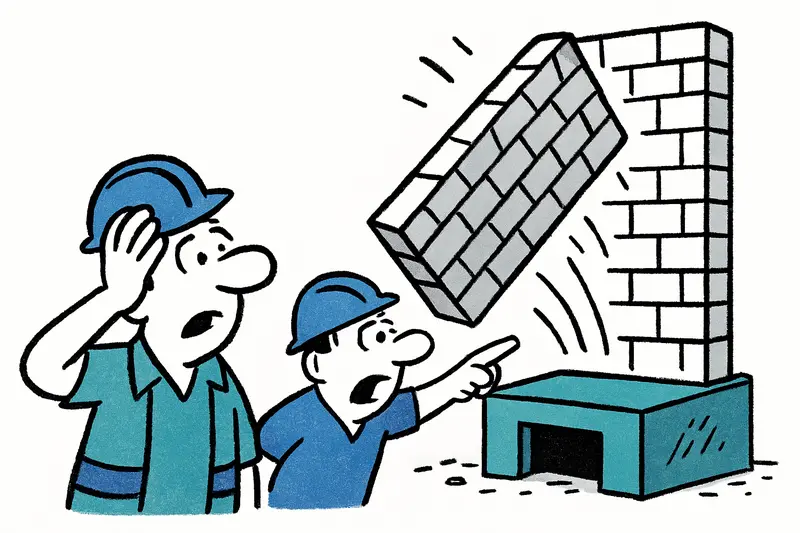
Late on Friday morning, shortly before half past nine, a multi-storey section of a construction wall on the large site at Palma Airport gave way and crashed onto a precast module. Dust drifted over the access road to the Carretera del Aeropuerto, and the dull bang could still be heard in the small cafés. Luck in misfortune: nobody was injured. The affected precast element, however, is heavily damaged — an image that has caused concern among many residents and workers.
The Key Question: Are Oversight and Speed Compatible?
The incident raises a central question: how well are oversight and speed coordinated on such a mammoth project? This is not the first time something has gone wrong. In recent months there have been several incidents, from cracked protective glass in the arrivals hall to falling ceiling panels, and incidents such as Water in the Check‑in: Drops Again, Questions at Palma Airport. The pattern points more to structural issues than to mere bad luck, as reflected in incidents like Another accident at Palma Airport: Worker falls on construction site — who protects the employees?.
What Happened on Site — and What Can Be Seen in the Photos
Technicians cordoned off the area immediately, fire and security services responded, and construction work was halted. Aena initiated inspections and opened sanction proceedings against the contractor. The area is outside the publicly accessible parts of the terminal, so flight operations were unaffected — but the damaged precast unit was clearly visible in the evening and heightened unease among employees who pass the site every day.
Background: Time Pressure, Subcontractor Chains, Makeshift Solutions
Workers report high workloads, tight schedules and pressure to meet deadlines. Such conditions foster mistakes: temporary shoring, rapid assembly of precast elements and many trades working at once increase the risk that temporary structures are not sufficiently checked. An often overlooked aspect is the role of subcontractor chains: who monitors the quality of temporary construction states when several companies deliver and install parts in succession?
What Is Neglected: The Inspection of Temporary Structures
Public debate usually focuses on visible damage. Less attention is paid to how well temporary walls, scaffolding and precast storage are planned and monitored. A precast element may be correctly dimensioned statically, but the way it is stored or the loads from neighbouring work can be the weak point. Independent, recurring inspections are needed here — not just a sign-off at handover.
Concrete Measures That Would Help Now
In the short term, the site in the affected sector must be secured further: expand exclusion zones, immediately inspect adjacent precast elements, and systematically check identical modules. In the medium term, independent safety audits would make sense — external experts who assess not only static calculations but also workflows and coordination. Also necessary: a binding plan to reduce simultaneous work in high-risk areas and clearer allocation of responsibilities along the subcontractor chain.
Politics, Administration and the Public: Transparency as a Trust Booster
Many Mallorcans are asking: if mistakes happen in such a visible place, what else is going wrong? Past close calls, such as Car breaks through airport fence: How close was Mallorca to a catastrophe?, amplify these fears. Transparency can restore trust: regular, understandable updates on safety checks, easily accessible reports on investigation findings and clear communication about sanctions against proven negligent firms would calm concerns. Worker representatives and independent engineers should also be involved in the inspection processes.
Also an Opportunity: Getting Better Rather Than Rushing to Finish
As uncomfortable as the admission is — delays could bring a dividend in quality and safety. If the project is temporarily slowed, there is room for remediation, improvement of working conditions and the introduction of stricter controls. In the long term, that protects not only people but also the island's image: a safely built airport is an argument for reliability to tourists and airlines.
What to expect now: The operating company has cordoned off the sector, inspection engineers are on site, and the results of the investigation are expected in the coming days. Possible fines and sanctions against the contracted company have been announced. For travellers, little changes in the short term; the public check-in areas remain in operation.
On the Plaça de Cort, residents discussed the pace of the construction in the afternoon — the atmosphere is tense and trust shaken. This is a moment when administration, site management and clients must show responsibility. Not with glossy statements, but with concrete, verifiable measures.
We will follow up and report as soon as the investigation results are available. In the meantime: safety first — for workers, travellers and the neighbourhood.
Frequently asked questions
Why did a construction wall collapse at Palma Airport?
Were there any injuries in the Palma Airport wall collapse?
Did the incident affect flights at Palma Airport?
Is Palma Airport still safe while the major works continue?
What problems have been reported during the Palma Airport construction project?
What happens after a safety incident on a construction site in Mallorca?
Why are temporary structures on major works so important to inspect?
What do workers near Palma Airport say about the construction pace?
Similar News
More than €450,000 watch seized: What remains from the raid against gangs?
The National Police report 34 arrests and the seizure of a watch worth more than €450,000. A reality check: what do the ...
When a Piece of the Sea Disappears: Portixol Pool in Limbo
Portixol in Palma faces a decision: the license for the terrace and pool on public waterfront land expires at the end of...
Magaluf: Fire on Punta Ballena — about 50 evacuated and many unanswered questions
On Monday afternoon a fire in a shop on Punta Ballena street in Magaluf prompted the evacuation of about 50 people. The ...
When the Village Street Became a Flood: What Storm Adam Reveals About Mallorca's Vulnerability
Roaring water turned Carrer de Palma in Consell into a torrent on 19 October; on the coast beachgoers helped prevent a s...
Krümel in a celebratory mood: How Peguera danced at the season closing
With accordion, glitter and an international audience: Marion "Krümel" Pfaff combined her birthday with the season-closi...
More to explore
Discover more interesting content

Can Cap de Bou

Townhouse Lleo 72
