
DGT and Live Warnings: What's Really at Stake in Mallorca
DGT and Live Warnings: What's Really at Stake in Mallorca
The Spanish traffic authority wants to curb live alerts about mobile checks. A reality check: why the idea raises more questions, how holidaymakers and locals are affected, and what practical alternatives exist.
DGT and Live Warnings: What's Really at Stake in Mallorca
Guiding question: Should real-time shared alerts about speed traps and police checks be criminalized — and if so, with what consequences for Mallorca?
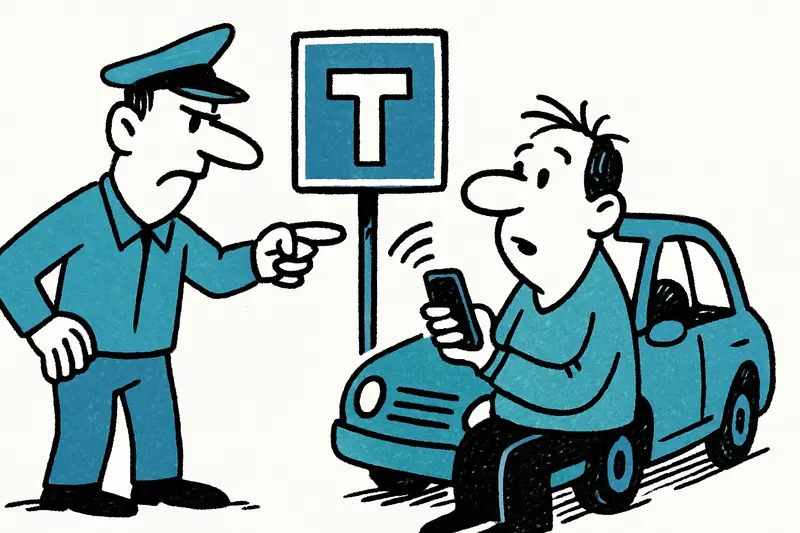
On the island people are already talking about it on park benches, at petrol stations and in the corner café: the traffic authority Dirección General de Tráfico (DGT) plans to restrict features in navigation apps that warn in real time about mobile speed checks and police controls. Classic navigation will remain allowed, as will warnings about fixed speed cameras. What is meant, however, concerns the live reports in apps like Waze official site or Google Maps and the rapid WhatsApp chains currently circulating on many Mallorca roads.
In short: authorities want to prevent controls from losing their element of surprise. The argument runs like this: if drivers briefly slow down only to speed up again, the control fails to achieve its prevention goal. Officials also see a safety risk because reports often require handling a phone while driving. In reality, when you drive along the Arenal road toward Palma on a Friday evening you hear not sober debates but the constant hum of engines and the clicking of indicators — and you can see how differently drivers react to dangers. The question is not abstract.
Critical analysis: the basic idea is understandable. But the planned approach has blind spots. First, a blanket ban does not only target irresponsible drivers but also the community that warns each other of real dangers: construction sites, accidents, animals on the road. Second, there is a risk of surveillance: where is the line between restricting certain app functions and intruding on digital neighborhood networks?
An often overlooked aspect is the role of tourists. In months with heavy flight traffic many drivers on Mallorca are still unfamiliar with the roads. For them navigation systems are vital — not only to reach destinations quickly, but to avoid suddenly turning the wrong way and causing a traffic jam. If live alerts disappear, the accident risk for inexperienced drivers increases. The debate should not be conducted solely through the lens of punitive measures.
Legally, not everything is clear either: Spain already has tough sanctions against fixed radar detectors and jamming devices (up to 6,000 euros). Users of dedicated radar detectors face a 200-euro fine and three points on their license. Internationally there are different models: Germany relies on a broad ban on speed-camera apps while driving, France allows cell-free warning zones instead of precise points. The DGT seems to be looking at such solutions, but how the rules should look in detail — when exactly a report is considered punishable, whether passengers are exempt, how control density or movement patterns are taken into account — remains open.
What is missing in the public debate: transparent criteria and piloted tests on the island. Instead of a nationwide command, a phased approach would be more helpful, for example trial phases in selected regions of Mallorca with clearly measurable safety indicators. Without pilot projects there is a risk of a rule that, while well intentioned, produces side effects: increased smartphone use to evade controls in the vehicle, shifts of checks to secondary roads and a relocation of the discussion to private chats that are harder to monitor.
Everyday scene: on a sunny morning I stroll along the Passeig Mallorca; buses stop, delivery vans honk, and at the roundabout in front of the Estació tren de Sóller a car stops abruptly because everyone else slows down suddenly. Moments like these show how fragmented traffic safety on the island is: decisions by individuals quickly affect many others. A ban on live warnings hits that dynamic — with uncertain consequences.
Concrete solutions:
1) More precise rules instead of blanket bans: define which form of warning is problematic (an exact real-time pinpoint) and which should remain allowed (information about hazard zones, construction sites, longer stretches).
2) Pilot projects in Mallorca: short-term, limited tests in heavily used areas (e.g. Palma–Arenal route, Ma-13) with evaluation of accident numbers, average speeds and acceptance among tourists and locals.
3) App design requirements: providers could be required to display warnings as broad hazard areas instead of exact pins. This preserves the ability to warn of risks without fully anonymizing the control position.
4) Public outreach instead of pure enforcement: campaigns at airports, with car rental companies and at ferry terminals to inform visitors about traffic rules, the consequences of radar detectors and safer driving options.
5) Expansion of short mobile checks combined with variable positions — that is exactly what the DGT plans, but accompanied by transparency and evaluation.
Pointed conclusion: a general ban on live warnings would be a coarse instrument for a subtle problem. The DGT is right to be concerned about the effectiveness of controls, but Mallorca needs solutions that take island life into account: many unfamiliar drivers, narrow coastal roads, evasive behaviors. Layered rules, on‑site tests and an obligation for apps to make warnings less precise would be better. That way there is still room for neighborhood-level help — without sharing systems that completely undermine controls.
The discussion is not over. On Calle Olmos you can already hear the jingle of keys when drivers check their nav as they get out. Anyone traveling on Mallorca should prepare for this: apps will continue to exist, but their live functions could soon be much less direct — and fines may follow if rules become stricter.
Frequently asked questions
Will live speed trap alerts in Mallorca navigation apps be banned?
Why does the DGT want to limit live police and speed check warnings in Mallorca?
Are tourists in Mallorca likely to be affected if live alerts are restricted?
What fines exist in Spain for radar detectors and similar devices?
Could Mallorca be used for pilot tests on live traffic warning rules?
What kind of navigation alerts would still be allowed in Mallorca?
How should drivers in Mallorca prepare if live warnings become less precise?
What alternatives to a total ban are being discussed for Mallorca roads?
Similar News

The Maricarmen Case: Why an Eviction Is Forcing Spain's Housing Debate
Images of an 87-year-old woman on a stretcher have sparked a debate in Spain that also runs deep in Mallorca. Who protec...
Parking dispute in Els Hostalets: When a gap leads to violence
A parking dispute on Calle Aragón escalated into a mass brawl at night. Why do trivial conflicts here turn bloody so qui...
Bodycams in Palma: More clarity needed so surveillance doesn't become the norm
Palma's local police equip UII officers with Axon Body 4 cameras. Useful for evidence collection — but specific rules on...
When the Bread Door Closes: Why Maria de la Salut Lost Its Last Bakery
The only bakery in Maria de la Salut, a sales outlet of Forn de ca'n Joan Terès from Palma, has permanently closed. What...
Ancient Piece Brought to Light: Guardia Civil Recovers Roman Anchor Fragment off North Coast of Mallorca
Divers from the Guardia Civil recovered a massive iron piece from Roman times off Mallorca's north coast. The roughly 35...
More to explore
Discover more interesting content

Can Cap de Bou

Townhouse Lleo 72
