
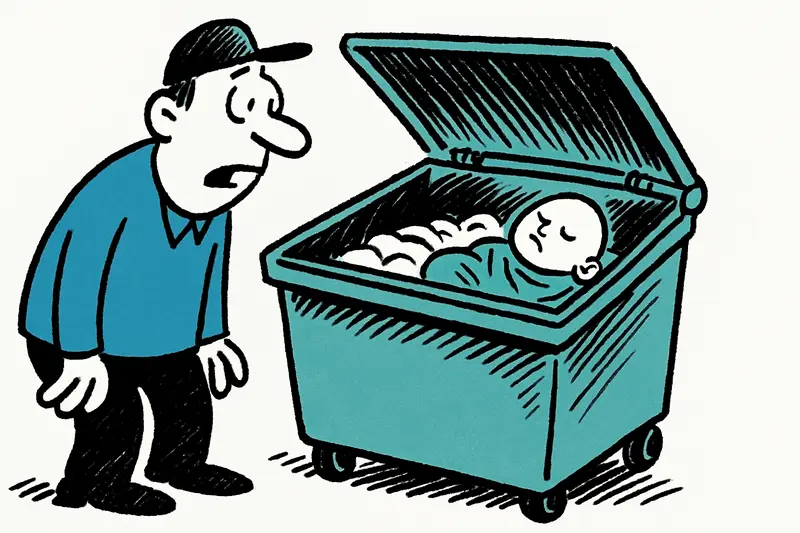
Dead Infant in Trash Container: Disposed Alive? A Reality Check from Palma
Dead Infant in Trash Container: Disposed Alive? A Reality Check from Palma
Experts say the extremely premature girl showed signs of life. Why that is not just a legal question in court — and what is missing in everyday life on Mallorca to prevent such a thing from happening in the first place.
Dead Infant in Trash Container: Disposed Alive? A Reality Check from Palma
How could a tiny newborn end up in a waste container at the end of 2023 — apparently after being born alive? This question runs through the current trial in Mallorca like a red thread. Experts conclude after the hearings in the courtroom that the girl showed signs of life at birth, but as an extremely premature infant with only minimal chances of survival. What does this mean for the legal assessment — and what is missing in the public debate?
Key question
Was throwing the child away a crime against life, or a desperate act in a situation where medical help probably would not have saved the child even in the short term? This central question separates the legal situation, morality and the sober medical assessment.
Critical analysis
Medical experts estimate the gestational age at about 26 to 27 weeks; specialists described the child as extremely premature. One expert said the chance of survival was "only a few minutes," and only adequate neonatal care would have offered any prospects. At the same time, a treating doctor reported that a pulse oximeter detected oxygen in the bloodstream — a clear vital sign. The experts remain cautious about the cause of death: lack of oxygen is considered likely, and injuries could have contributed, both during birth and when the infant was placed in the container. Medically speaking, therefore: the child lived at least briefly, but without professional help had little chance.
What is missing in the public discourse
The discussions quickly focus on questions of guilt and sentencing. Less attention is paid to structural questions: What is the access to pregnancy counseling and confidential help for pregnant women on Mallorca? What routes to quick, anonymous support exist when someone acts in panic or shame? And finally: how do families and neighborhoods treat pregnant women who are clearly in distress? These levels are often overlooked, even though they have prevention potential, as highlighted by reports of neglected places like Corpse found in Alcúdia disco ruin: Who is responsible for decaying places? and by child-related incidents documented elsewhere such as Attempted Baby Sale in Málaga: Woman Arrested, Newborn Taken into Care.
Everyday scene from the island
I often see this in small places like Porto Cristo: the harbor, fishermen's voices, the clatter of doors in the late afternoon. People talk, but often not about personal emergencies. A woman in pain or ashamed may not go to the familiar pharmacy or contact neighbors. In Palma and the smaller communities, hospitals and health centers are visible — but proximity does not automatically mean accessibility, especially not when there is shame or fear of stigmatization. Local incidents such as Body Recovered off East Coast: A Sign of Larger Problems at Sea? also remind us of broader social and structural issues.
Concrete solution approaches
1) Expansion of confidential counseling services: an anonymous phone and chat service with medical professionals and social workers, available around the clock. 2) Clinics as “safe contact points”: clear, publicly visible notices at hospitals and health centers that any pregnant woman will receive immediate help, anonymously if necessary. 3) Awareness campaigns in communities: not with a wagging finger, but with practical information — where to go without an appointment, what rights exist, how short-term emergency care works. 4) Training for first responders and municipal services: waste collectors, park wardens, taxi drivers should know how to recognize a newborn emergency and provide first aid. 5) Legal review of help pathways: are there hurdles in the system that prevent women from seeking help? These barriers must be removed.
Concise conclusion
The court case revolves around guilt and criminal liability. Medically, however, the bitter realization is that an extremely premature child would have had chances only with specialized intensive care. The public debate must not only know judges and indictments; it must also ask why people in our neighborhoods act in such isolation that they place life in a trash container. Practical care, anonymous support services and more neighborhood courage are not cure-alls — but they are concrete steps to help ensure such a tragedy does not repeat.
Frequently asked questions
What does it mean legally if a newborn in Mallorca showed signs of life but died shortly after?
Can an extremely premature baby survive without intensive care in Mallorca?
What does a pulse oximeter reading mean in a newborn case?
Where can pregnant women in Mallorca get confidential help if they are in crisis?
What should you do if you find a newborn in a trash container in Mallorca?
Why do some babies die from lack of oxygen during or after birth?
Why is shame such a major factor in pregnancy crises on Mallorca?
What could Mallorca do better to prevent newborn emergencies?
Similar News
Large-scale Anti-Tourism Graffiti at Cala Mendia: Protest or Vandalism?
On the morning walkers discovered an approximately 50-meter-long slogan against tourism on the wall above Cala Mendia. W...
Bomb threat before Jet2 flight in Tenerife: A reality check for security protocols
A passenger reported a bomb in luggage shortly before departure in Tenerife. Evacuation, baggage checks, delays — and ma...
Who is stripping Mallorca's coast bare? Why entire slopes are being removed for villas
On Mallorca steep slopes are again being removed to make way for luxury construction sites. Who bears the responsibility...

Robber Falls While Fleeing in Sant Agustí: Who Takes Responsibility?
During a purse-snatching in Sant Agustí, a non-commissioned officer chased the suspect; the man jumped from a bridge and...
Bomb threat on board? Why the Tenerife incident concerns us in Mallorca
A passenger on a Jet2 flight from Tenerife to London triggered an evacuation and intensive security checks. The result: ...
More to explore
Discover more interesting content

Can Cap de Bou

Townhouse Lleo 72
