
Corpse found in Alcúdia disco ruin: Who is responsible for decaying places?
Corpse found in Alcúdia disco ruin: Who is responsible for decaying places?
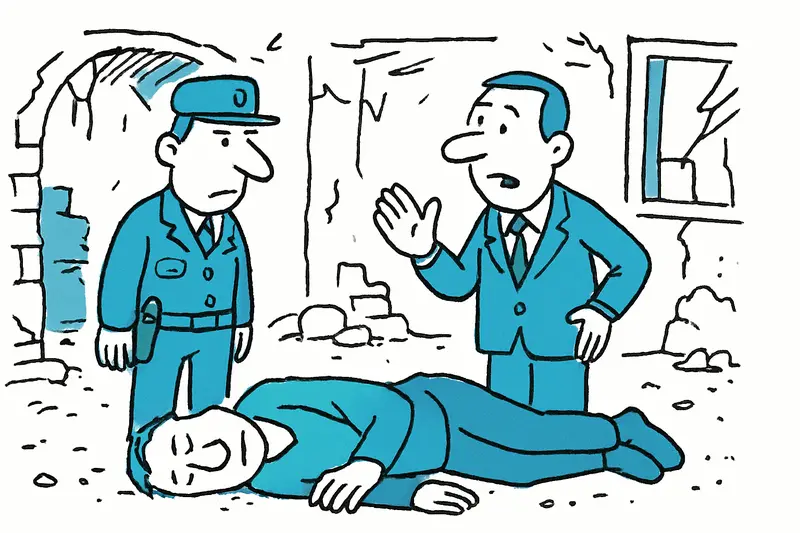
In a disco ruin near Playa de Muro that has been occupied for years, the body of a man was discovered. The Guardia Civil is investigating; a forensic institute will determine what happened.
Corpse found in Alcúdia disco ruin: Who is responsible for decaying places?
Between trash, graffiti and bureaucratic runarounds: A body makes problems visible that have been sleeping for longer
Early on Thursday morning officers discovered the body of a man in a former nightclub close to Playa de Muro that has been empty and occupied for years, as reported in Body found in disco ruin in Alcúdia: Who is responsible for abandoned sites?. The body was taken to the forensic institute in Palma; the Guardia Civil has opened an investigation. The sober facts are short, the questions that remain are numerous.
Key question
How is it possible that decaying buildings in tourist towns become sleeping places, sources of danger and ultimately crime scenes — and who must act before it is too late?
Critical analysis
Such seemingly abandoned buildings are not a marginal phenomenon on Mallorca: vacancy meets rising housing prices, informal occupation meets little state presence. An empty venue falls into disrepair, water and filth settle in, electricity theft and improvised fireplaces appear. When then a person is found dead, this quickly leads to criminal processing — but rarely to a structural examination of the causes. Authorities, property owners and the municipality stand in a triangle in which responsibility is often pushed back and forth.
Police investigations clarify the immediate facts of the case. But the investigation ends at the cause of death. It does not speak with the people who, for lack of alternatives, inhabit such places, and it does not replace the administrative processes needed to secure or make derelict properties usable.
What is missing in the public discourse
There is a lack of an honest debate about the shortage of housing, about affordable emergency accommodation in the low season and about clear responsibilities for decaying building stock. Instead, immediate outrage dominates: neglect, crime, a "security problem" — the causes are rarely named. Equally little discussed is how property rights, tourism pressure and social services interact.
A typical local scene
If you walk along the avenue in Port d'Alcúdia on a December morning, you hear the seagulls above the harbor, delivery vans bringing baguettes and the distant roar of the waves. Three streets away stands a ruin with shattered windows, graffiti on its outer walls and a trash container in front. A garbage collector rolls the bin that morning, an older resident pulls his scarf up and shakes his head — he has seen people sleeping there. Such scenes are part of the everyday picture, but they are rarely reflected in decision-making rooms.
Concrete solutions
1) Mapping and prioritization: Municipalities should systematically record derelict properties and prioritize them by risk potential. 2) Immediate measures: Emergency closures, lighting and regular checks prevent buildings from becoming danger spots. 3) Social services: Mobile teams of social workers, health services and mediators should maintain regular contact with occupants to offer alternatives such as emergency shelters or transitional housing. 4) Accelerated legal routes: If owners do not act, administrative procedures must exist to secure buildings or transfer them to municipal use. 5) Transparency: Citizens should be informed about responsibilities and planned measures — this reduces rumors and uncertainty.
Why this matters regardless of the ongoing investigation
The autopsy will show how this man died. The investigation will clarify whether a crime took place. But as long as vacant buildings in tourist municipalities function as problem zones, the risk remains that tragedies will repeat. Safety cannot be achieved by police action alone; it requires administrative work, social services and active local politics.
Conclusion: The discovery of the body is a sad symptom of a longer failure: neglected buildings meet people without secure housing. Those who now only await the investigation miss the chance to address the causes. This applies to Alcúdia as well as to other places on the island, as reflected in Cadáver en la ruina de una discoteca en Alcúdia: ¿Quién asume la responsabilidad por los lugares abandonados?. A combination of rapid securing, social support and clear responsibilities would be a pragmatic start.
Frequently asked questions
Why do abandoned buildings in Mallorca become a safety problem?
Who is responsible for securing a ruined property in Mallorca?
Can people live in abandoned buildings in Mallorca during winter?
What happens when police find a body in an abandoned building in Mallorca?
Is Playa de Muro affected by abandoned or neglected buildings?
What can Mallorca municipalities do about derelict buildings?
Why do neglected buildings in Mallorca stay empty for so long?
What is the link between Mallorca’s housing shortage and abandoned buildings?
Similar News
The End of the Cheap Ride? Why Mallorca Is Hit Harder by the Fuel-Price Shock
Gasoline and diesel average close to two euros per liter. What this means for commuters, supply chains and renters in Ma...
Relaxed liquid rules in Munich: What Mallorca travelers will notice
At Munich Airport the 100-milliliter rule will be lifted at all checkpoint lanes — thanks to new CT scanners passengers ...
For 45 Years on Mallorca — and Then This: How a Market Visit in Santa Ponsa Became a Lesson
A woman who has lived on the island for decades lost money and important documents at the Mercat Setmanal in Santa Ponsa...
10 percent surcharge on the beach: How legal and transparent is the extra charge at Playa de Muro?
A German part-time resident noticed days after a restaurant visit in Playa de Muro that the bill included a flat ten per...
Body near the Llevant Market: What this death says about our city
A man was found dead on Sunday afternoon near the Llevant Market. Police say the death appears natural. The scene raises...
More to explore
Discover more interesting content

Can Cap de Bou

Townhouse Lleo 72
