
Body found in disco ruin in Alcúdia: Who is responsible for abandoned sites?
Body found in disco ruin in Alcúdia: Who is responsible for abandoned sites?
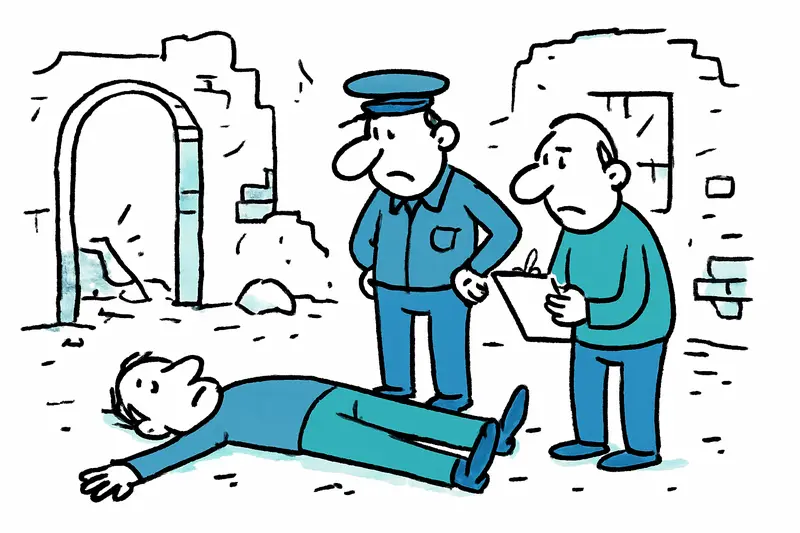
A dead man was found in the ruins of the former Es Fogueró Palace disco in Alcúdia. The Guardia Civil is investigating and an autopsy will determine the cause of death. The discovery raises questions about the safety of abandoned buildings and the provision of services for homeless people and seasonal workers.
Body found in disco ruin in Alcúdia: Who is responsible for abandoned sites?
A discovery, many problem areas — and one guiding question
Guiding question: How many abandoned buildings and overlooked corners does Mallorca need before politics, owners and society commit to ensuring safety and shelter?
Last Thursday someone discovered the body of a man on the grounds of the former Es Fogueró Palace disco in Alcúdia (Body found in disco ruin in Alcúdia: Who is responsible for abandoned sites?). The Guardia Civil has taken over the investigation, and an autopsy will clarify the cause of death. The building has stood empty since the early 1990s; what was once a dance floor and neon lights is now a crumbling skeleton where homeless people and seasonal workers occasionally seek shelter.
Those are the sober facts; further reporting on similar incidents can be found in Corpse found in Alcúdia disco ruin: Who is responsible for decaying places?. But the scene on site tells more: in the mornings, when buses to Playa d'Alcúdia drive down the avenue, the ruin sits like a foreign body between flower beds and supermarkets. Gulls scream, delivery vans park, and two plots away vendors prepare their stalls for the weekly market. No one purposefully walks past such places — and yet neglect squeaks along on silent soles.
Critical analysis: Why such finds are not just "fate"
Abandoned buildings in Mallorca are not a nostalgic relic; they are often a social and legal vacuum. Ownership is unclear, maintenance is lacking, and oversight is sporadic. In that gap risks arise: collapse danger, fire damage, criminal use and, indeed, inhumane dwellings. When seasonal workers or people without a fixed residence seek refuge, it is not just a single tragedy — it reveals systemic failures.
The presence of law enforcement is, after a discovery like this, self-evident. But prevention requires more than occasional checks. Technical barriers alone are not enough: as long as there are people who must sleep in ruins, every locked door simply produces new risks elsewhere.
What is missing from the public discourse
There is a lack of concrete numbers and maps showing which building ruins on the island are actually unused and unsafe. There is no clearly regulated responsibility between owners, municipalities and the Balearic building archive. And there are no practical offers for people who live in such buildings out of poverty or lack of time — especially in peak season, when accommodation is scarce.
Moreover, the economic reasons why owners let properties fall empty are too rarely discussed: tax issues, inheritance disputes, high renovation costs or a lack of prospects for repurposing. A public discussion that names these causes would be more helpful than merely outraged slogans (see also Cadáver en la ruina de una discoteca en Alcúdia: ¿Quién asume la responsabilidad por los lugares abandonados?).
Everyday scene from Alcúdia
Imagine the road to the harbor: once a party mile, now a jumble of tourist shops and quiet corners. In the evening you can hear the sea, next to it the murmur of people looking for work or accommodation. A seasonal worker on the way to his lodging nods politely, an older resident fetches her small dog — and nobody likes to talk about the ruin on the corner. Until something happens that can no longer be ignored.
Concrete solutions
1) Mapping and renovation register: The municipality should create a publicly accessible map of abandoned buildings, including owner contact details and hazard level. Transparency creates pressure but also options for action.
2) Mobile social teams: In high season teams made up of social workers, health services and building inspectors should carry out targeted operations at known ruins. Not only control, but advice, medical help and placement in emergency accommodation.
3) Immediate measures in case of danger: Temporary safety fences, power cut-offs, fire safety checks and emergency lighting until a permanent solution can be reached.
4) Incentives for owners: Tax relief or grants for renovation, coupled with deadlines. Those who do not act could face graduated fines.
5) Accommodation for seasonal workers: A coordinated offer of low-cost, supervised accommodation reduces the number of people dependent on ruins. Businesses and hoteliers could take responsibility in partnership with municipalities.
Concise conclusion
The empty dance floor of the past has become a memorial: those who let spaces decay create risks for people and neighborhoods. Clarifying the death is important — but in the long term what counts is how we deal with the places where people seek shelter. It's not just about walls and signs. It's about clear responsibilities, pragmatic aid offers and the fact that an island that lives from tourism also bears responsibility for its most vulnerable residents.
As long as decaying buildings like the Es Fogueró Palace remain neglected, the area where tragedies can unfold will grow. Alcúdia does not need more ruins that bear silent witness — it needs solutions that are visible the morning after the market.
Frequently asked questions
Why do abandoned buildings in Mallorca become a safety problem?
What happens after a body is found in an abandoned building in Mallorca?
Who is responsible for abandoned buildings in Mallorca?
Are abandoned buildings in Mallorca used as shelter by homeless people or seasonal workers?
What does the former Es Fogueró Palace disco in Alcúdia show about abandoned sites?
Why do abandoned buildings often stay empty for so long in Mallorca?
What can Mallorca municipalities do about dangerous abandoned buildings?
Is there a public map of abandoned buildings in Mallorca?
Similar News

Caro Robens: 15 kilograms lighter — and again in the crossfire of online comments
Bodybuilder Caro Robens, who lives in Mallorca, has lost 15 kilograms. Her success on Instagram was met with applause — ...
Meager Industry in Mallorca: How the Island Can Be More Than Just Tourism
The industrial sector in Mallorca is shrinking, productivity is falling and firms remain tiny. The key question: can the...
Pre-Nit de l'Art: Galerie Mensing invites to a special evening with Tom Boston
Before the big art night, Galerie Mensing opens its doors: pop art, champagne, a DJ and a hand-signed print by Tom Bosto...

Sea view and more seats: Cappuccino Grand Café reopens in Port d'Andratx
After a long renovation, the Cappuccino Grand Café on the Port d'Andratx harbor promenade has quietly reopened. Larger t...

Enric Mas wins the Vuelta – a triumph that resonates in Mallorca
Mallorcan Enric Mas has won the 82nd Vuelta — the first Spanish overall victory since 2014. Cyclists and neighbors on Ma...
More to explore
Discover more interesting content

Can Cap de Bou

Townhouse Lleo 72
