
Water scarcity, heat, shrinking beaches: Palma's wake-up call for urban planning
A new study sketches bleak scenarios for Palma: less rainfall, more hot days, rising sea levels and massive economic losses. What's missing from the public debate, and how can the city respond?
Water scarcity, heat, shrinking beaches: Palma's wake-up call for urban planning
Key question: Can Palma still afford the costs of delay?
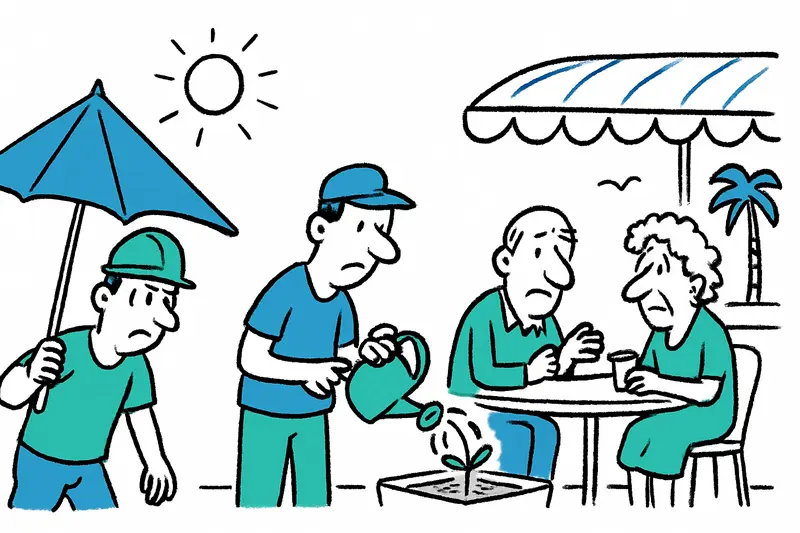
On Passeig Mallorca on a late autumn afternoon the sound of mopeds is louder than usual, gardeners pour water into new planting beds and two elderly men sit in front of a bar discussing the weather. These small scenes make up everyday life – and yet something bigger lies behind them: a study on climate risks paints a picture that threatens the city's structure. Rising temperatures, less rain and a higher sea level are no longer a distant future but factors that could noticeably change the island's economy and life by 2050.
Critical analysis: Numbers that should wake people up
The study gives stark figures: in Palma the annual number of very hot days could rise from about 15 today to around 62; average maximum temperatures could increase by roughly four degrees by mid-century. That directly affects work, tourism and health – in a worst‑case scenario the study estimates up to 12,000 additional heat‑related deaths in Palma if nothing is done. The economic drama becomes clear in the projection that GDP per capita in the Balearic Islands could fall by up to around 17 percent.
At the same time, a medium sea level rise of approximately 24 centimeters is projected. Coastal sections, including individual coves like Cala Estància and Ses Troneres, could lose almost their entire beach width by the middle of the century. Flooding that affects the airport, commercial areas and lower‑lying neighborhoods, along with a clearly increased wildfire risk, complete the picture. Water supply also comes under pressure: a drop in rainfall of around 20 percent combined with rising evaporation means less groundwater recharge; some reservoirs already supply Palma beyond their sustainable capacity, and in some places saltwater is intruding into groundwater.
What's missing in the public debate
Despite the urgency, public debates often overlook two things: first the distribution question, second the financing and implementation mechanisms. It's not just about technical solutions like desalination plants or wastewater treatment; it's about who pays the price, how water use is socially prioritized, and how small businesses and less visible neighborhoods can be effectively protected locally. Also little discussed is how beach and coastal restorations will be permanently financed if storm frequency and sea level rise increase simultaneously.
Everyday scene as a metaphor
On the Plaça de Cort a construction worker carries a sunshade through a new school zone; next door a small guesthouse advertises "Save water – discount for guests." Such measures are good but symbolic. In apartment blocks in the La Vileta neighborhood, where some of the overexploited groundwater reserves lie, residents report occasional pressure problems in the pipes – a practical sign that theoretical risks are already being felt.
Concrete approaches (no magic bullets, but effective levers)
1) Restructure water management: priority lists for water use, gradual introduction of water pricing to create savings incentives, and promotion of on‑site rainwater retention and reuse systems in hotels and businesses.
2) Plan infrastructure smarter: repair and reduction of leak losses, modernization of wastewater treatment with direct reuse for green areas and industry, and decentralized storage that can recharge groundwater.
3) Nature‑based coastal protection measures: combine dune restoration, vegetated forebeaches and renaturation of dune zones instead of relying solely on large-scale beach nourishment. Such solutions dampen waves, retain sediments and are often cheaper than purely technical options.
4) Urban cooling and health protection: more street trees, shaded routes at heavily frequented locations (bus stops, plazas) and clearly defined "heat refuges" with drinking water supplies, especially for older residents.
5) Economic resilience: support businesses in risk management, introduce water efficiency standards for hotels, consider insurance models that reward prevention, and provide municipal incentives for powering desalination plants with renewable energy.
6) Planning and retreat: consider long‑term zoning in particularly vulnerable coastal areas that limits new construction and creates retreat spaces. This is politically painful, but without clear rules the consequential costs will only rise.
What to do in the short term
The city administration has already named some ideas: better water governance, improved wastewater treatment, a municipal desalination plant and more green spaces. Now speed and concrete budgets are needed: evaluation of the energy costs for desalination, specific saving targets for public buildings, a binding timetable to reduce leak losses and transparent monitoring of groundwater levels.
Concise conclusion
The numbers are not an alarm bell to be ignored. Palma faces a choice: invest now in adaptation or bear much higher costs in the long term – economically and humanly. The right decision is not only technical but political and social. If the city wants to keep its character – streets, beaches, shops and people – it must start making the harder decisions now. Otherwise the mopeds and the smell of coffee will soon be less everyday.
Frequently asked questions
What climate changes is Palma likely to face by the middle of the century?
What adaptation measures are proposed for Palma to cope with heat and water scarcity?
How could climate risks affect Palma's economy and everyday life?
Which areas of Palma could be most affected by sea-level rise and coastal erosion?
What practical steps can residents of Palma take to address water scarcity today?
What role does groundwater and neighborhoods like La Vileta play in Palma's water security?
What small actions could help Palma protect its beaches and coast?
Why is public debate about financing and cost distribution important for Palma's adaptation plans?
Similar News

Assault in Ciutadella: When a Restaurant Bill Turns Into Violence — What's Missing Now
Two British tourists are alleged to have seriously injured a waiter in Ciutadella. Passports confiscated, travel banned....
Hot Rhythms: Trio Corrente opens the Jazz Voyeur Festival in Palma
The Trio Corrente from São Paulo brings Brazilian rhythms to Palma's Music Conservatory on October 29. An evening for ja...
Palma on Alert: What the City Can Do to Prevent Nighttime Violence
Calls for blockade actions have raised vigilance in Palma. A critical assessment: who is calling for action, what is mis...
When luxury cars and privacy collide on Mallorca's streets: Richard Mille on the island — what's missing in the discourse?
Watch entrepreneur Richard Mille is at the "Rallye des Légendes" on Mallorca. Why a private luxury rally raises question...

Why Thorsten Legat's Involvement at Germania Mallorca Ended So Quickly – A Reality Check
Six matches, high expectations: We ask why co-founder Thorsten Legat's project at FC Germania Mallorca failed after such...
More to explore
Discover more interesting content

Can Cap de Bou

Townhouse Lleo 72
