
Palma on Alert: What the City Can Do to Prevent Nighttime Violence
Palma on Alert: What the City Can Do to Prevent Nighttime Violence
Calls for blockade actions have raised vigilance in Palma. A critical assessment: who is calling for action, what is missing in the debate and how can escalation be prevented?
Palma on Alert: What the City Can Do to Prevent Nighttime Violence
Key question: Is today's strategy sufficient to prevent looting and riots on Friday?
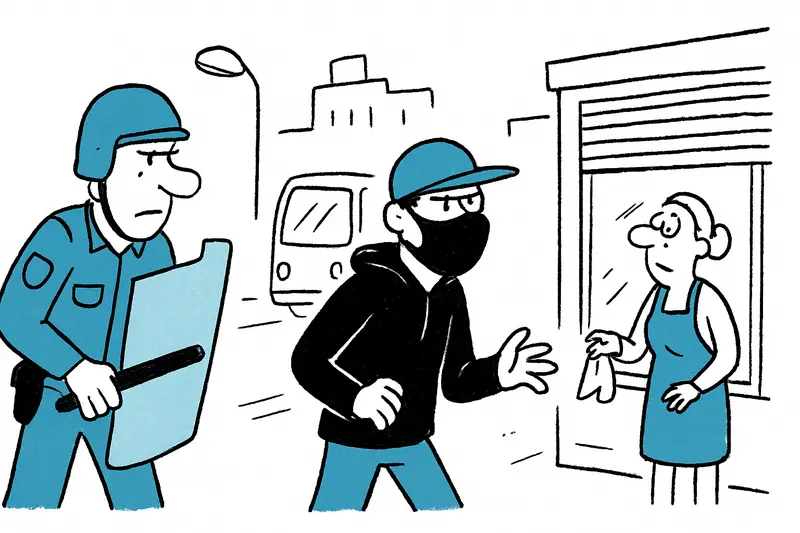
This coming Friday there is a tangible tension in the air on Palma's streets. Security forces — National Police, Guardia Civil and the Spanish intelligence service — have increased their presence after violent riots and looting occurred in another major city in the region, such as the Nighttime Attack on the Paseo Marítimo. In the chats and channels that have been circulating for days, a buzzword appears intended to mobilize: "Blocus." Who exactly is behind it remains vague; it is also unclear whether it is a fixed group or loosely connected activists from Generation Z.
The scenario is typical of the digital age: calls are decentralized, location and time can be changed at short notice, participants choose black clothing, masks or caps to avoid photos and wanted images. For shopkeepers in Palma's center who lift their shutters in the morning and see the street sweepers pass by at Plaça d’Espanya, this is no longer an abstract risk. The city's trade association has already voiced concerns; small shops and service providers fear copycat effects modeled on other cities, as discussed in Palma Tightens Controls: More Security — or a New Punitive Culture?.
Critical analysis: Authorities respond predictably with an increased presence. But police alone are no guarantee against escalation. Pure deterrence can work in the short term — but it also creates the risk of confrontation when provocateurs encounter mobile units. Even more problematic is the information situation: many warnings remain vague, and authorities sometimes communicate only after rumors have already spread on social media. In an environment where WhatsApp groups and Telegram channels spread new meeting points in seconds, delayed public communication leads to uncertainty — and to rumors that can themselves contribute to escalation.
What is missing in the public debate: the perspective of neighborhoods and small businesses. It's not just about numbers of officers or technical surveillance tools. Someone running a café on Carrer del Blanquerna or Passeig Mallorca needs clear, practical guidance: when to close? Who helps with evacuation? Who pays for damages? Such questions have been hardly answered so far. Also seldom discussed is the role of social services: de-escalation is more likely to succeed when there are local mediators and trusted contacts on site, not just uniformed units.
Everyday scene: On an early Thursday morning in front of a jewelry store at Plaça d’Espanya a saleswoman stands polishing the display, the smell of coffee mixing with the scent of oil from a delivery van. A bus from the metro station stops; commuters get off, the shutters of some shops are half closed. Conversations revolve around what was shared in the group app this morning — "be careful," "maybe better to stay in." Such small images show: the possible consequences affect people who have nothing to do with the mobilization, but whose everyday life suddenly becomes uncertain.
Concrete solutions: preparation must be multi-layered. First: transparent, timely communication. Authorities should use official channels to send reliable information at set times — for example, preventive notices in the afternoon shortly before possible actions. Second: targeted support for small businesses, e.g. a municipal hotline team that coordinates practical help on high-risk days (short-term pickup and securing services, information on insurance, contacts for local craftsmen). Third: prioritize de-escalatory police tactics — visible presence combined with plainclothes officers and joint local contact points in neighborhoods, instead of solely heavily armed deployments. Fourth: technical cooperation with platforms, but under clear legal frameworks; quick removal of coordination calls that clearly aim at violence makes sense, but must not lead to blanket censorship. Fifth: low-threshold offers for young people who might be mobilized — short-term dialogue formats in schools and universities, youth centers serving as evening contact points.
Rule-of-law note: security measures must be proportionate. Temporary restrictions on assembly places or road closures should be transparently justified and subject to judicial review; for discussion of road closures and protest movement in the city, see Evening Road Closures in Palma: Between the Right to Protest and Traffic Chaos. It is legally problematic to order blanket bans on messaging services; such measures would only be justifiable in exceptional cases and with a clear legal basis.
What is now missing: a practical crisis plan for city residents that does more than list numbers of officers and actually gives behavioral recommendations: safe routes for people returning home, phone numbers for help, agreed meeting points for relatives and tips for protecting shop windows and storerooms. Equally necessary is an obligation to follow up: who protects victims of economic damage? What support is available for injured employees? Without such measures the response remains purely policial and the social wound stays open.
Conclusion: Palma stands at a crossroads between preventive, citizen-oriented security and purely demonstrative deterrence. Those who want to prevent violence must take into account the local landscape and the everyday realities of people: clear communication, support for businesses, de-escalating operations and short-term dialogue offers are more practical and effective in the long run than simply more police cars, as argued in Palma after the Protest: How Freedom of Expression and Everyday Life Can Be Balanced. If the city now acts with prudence and concrete support measures, a heated evening can be turned into a manageable incident — otherwise there is a risk that a small but determined minority will permanently damage the city's image.
Frequently asked questions
What concrete steps is Palma taking to prevent nighttime violence and looting?
What should residents of Palma know to stay safe on high-risk nights?
How is Palma protecting shopping districts like Plaça d’Espanya and Passeig Mallorca?
How does the city manage rumors and information during unrest in Palma?
What role do social services and youth programs play in Palma's security plan?
Why is de-escalation important alongside police presence in Palma?
How are legal limits on assemblies or communications handled in Palma during potential unrest?
What guidance exists for victims and workers after an incident in Palma?
Similar News
Water scarcity, heat, shrinking beaches: Palma's wake-up call for urban planning
A new study sketches bleak scenarios for Palma: less rainfall, more hot days, rising sea levels and massive economic los...

Assault in Ciutadella: When a Restaurant Bill Turns Into Violence — What's Missing Now
Two British tourists are alleged to have seriously injured a waiter in Ciutadella. Passports confiscated, travel banned....
Hot Rhythms: Trio Corrente opens the Jazz Voyeur Festival in Palma
The Trio Corrente from São Paulo brings Brazilian rhythms to Palma's Music Conservatory on October 29. An evening for ja...
When luxury cars and privacy collide on Mallorca's streets: Richard Mille on the island — what's missing in the discourse?
Watch entrepreneur Richard Mille is at the "Rallye des Légendes" on Mallorca. Why a private luxury rally raises question...
Why Thorsten Legat's Involvement at Germania Mallorca Ended So Quickly – A Reality Check
Six matches, high expectations: We ask why co-founder Thorsten Legat's project at FC Germania Mallorca failed after such...
More to explore
Discover more interesting content

Can Cap de Bou

Townhouse Lleo 72
