
Palma after the Protest: How Freedom of Expression and Everyday Life Can Be Balanced
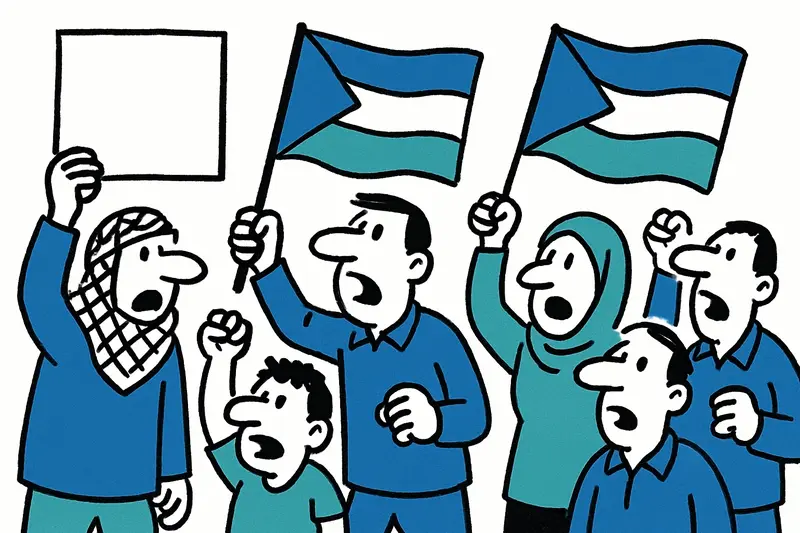
Thousands demonstrated on Sunday in Palma — from the Plaça de les Columnes to the Plaça Joan Carles I. The day showed: voices were loud and nerves tense. How can Palma in future balance freedom of assembly, public safety and a tourism-shaped everyday life?
Sunday in Palma: Voices, flags and autumn wind
The Plaça de les Columnes was not a place for relaxed cappuccino drinking on Sunday afternoon. Kufiyas fluttered, children ran with cardboard signs next to seasoned activists, and now and then a wisp of smoke drifted over the crowd when a small cardboard effigy caught fire and stewards extinguished the flame. Arabic songs played from loudspeakers; between the slogans mixed the honking of vehicles on the Avinguda and the distant cries of seagulls — a scene the island had not seen on a normal late-autumn day for a long time.
A central question
How can Palma reconcile the right to demonstrate with public safety and the everyday life of a city shaped by tourism? This question runs like a red thread through the reports of the afternoon: thousands of people took to the streets, evening road closures in Palma, shopkeepers complained about lost revenue, residents felt uneasy — and tourists stopped to take pictures or moved on, shaking their heads.
More than numbers and police reports
The public debate often focuses on participant numbers and whether the police reacted appropriately. Yet there are aspects that are hardly or only marginally discussed: urban planning preparations for large gatherings, digital management of traffic flows in real time, the psychological strain on residents, and the role of local mediators who could broker between organizers, authorities and businesses.
On Sunday there were two short verbal escalations — in front of a fast-food restaurant and in front of a party headquarters. Both times things remained at the level of words. But these incidents show how quickly symbolic actions and emotions can flare up in a city where groups of people, commuters and tourists converge closely; similar provocations have been reported in recent provocative poster campaigns in Mallorca.
What Palma is missing
Several gaps can be read from the events: there is no unified protocol for large demonstrations, communication channels are fragmented, and the capacity for de-escalating moderation on the squares is limited. For business owners there are no short-term contingency plans to prevent revenue losses from automatically turning into anger against organizers or authorities.
Technically, the infrastructure for rapid digital traffic information to residents and visitors is often missing: real-time detours, push notifications to affected bus lines and tourist apps that provide parallel information are hardly used as standard.
Concrete opportunities and pragmatic solutions
The afternoon in Palma is above all an opportunity to turn improvised reactions into a systematic approach. Some proposals that could be tackled immediately:
1. A municipal protocol for large gatherings – with clear reporting deadlines, fixed time windows and prescribed routes that leave sufficient space for demonstrators and traffic.
2. Mediator teams – neutral, trained teams with language skills that act as a contact point during planning, the event and afterwards. They could perform de-escalation and enable quick arrangements with local businesses.
3. Digital information and control system – a central platform or app that shows real-time detours, parking bans, bus changes and alternative shopping options for affected merchants. Push messages via SMS to residents could significantly reduce uncertainty.
4. Pop-up sales areas and support fund – short-term usable stalls in side streets and a small fund that compensates businesses or finances advertising for alternative opening hours would reduce frustration and economic damage.
5. Constructive channels for protest energy – instead of relying only on volume, organized collection points for humanitarian goods, coordinated appointments with local parliamentarians or a series of public forums could turn protest demands into concrete, actionable policy proposals.
Looking ahead: politics, planning and patience
Implementation requires political decisions and a measure of pragmatism: urban planners, police, organizers and businesses must sit at the same table long before the next demonstration is registered. It is not the task of a single authority but of a network — and it requires resources, training and trust.
On Sunday Palma was loud, emotional and visibly divided, a split also apparent in debates such as the bullfighting comeback in Palma. That is not a flaw of the city but the expression of a living society. The question is whether the city administration will make this day a learning moment: a protocol, digital control and mediator teams could ensure that voices in the squares are heard without unnecessarily paralysing everyday life. The voices will not fall silent — and Palma must decide how to handle them.
Frequently asked questions
Can protests in Palma be held without disrupting everyday life too much?
What should visitors in Mallorca do if a protest affects Palma city centre?
What kind of traffic problems can a large demonstration cause in Palma?
What information should Palma residents receive during a protest?
How can local shops in Palma deal with losses during a protest?
Why are mediator teams useful during protests in Palma?
When does freedom of expression become a public safety issue in Palma?
What long-term changes could help Palma manage future protests better?
Similar News
Release after bloody attack in Palma: Why the court's decision raises questions
An 18-year-old who allegedly inflicted a serious neck injury on a man at Plaza Gomila using a wristwatch wrapped around ...
Kidnappings in Inca: Three young men forced into car trunks and abused in the forest – a reality check
In Inca, three 18-year-old men were forced into car trunks by masked assailants at the Plaça des Bestiar, taken to a for...
Spreading Massification: The Brake That Still Has Much Work to Do
Marga Prohens announces limits on volume tourism. The measures sound harsh — but are they enough to save everyday life, ...
Through the Keyhole onto the Party Yacht: How Daniela Katzenberger Is Planning Her 40th on Mallorca
Daniela Katzenberger turns 40 and wants to celebrate it on the island — likely with a boat, cake and her mother. A relax...
By Boat Instead of the Road: Palma's Water Bus — a Reality Check
The 'Bus Nàutic' launches in two stages — but questions remain over interim operations, fares and environmental requirem...
More to explore
Discover more interesting content

Can Cap de Bou

Townhouse Lleo 72
