
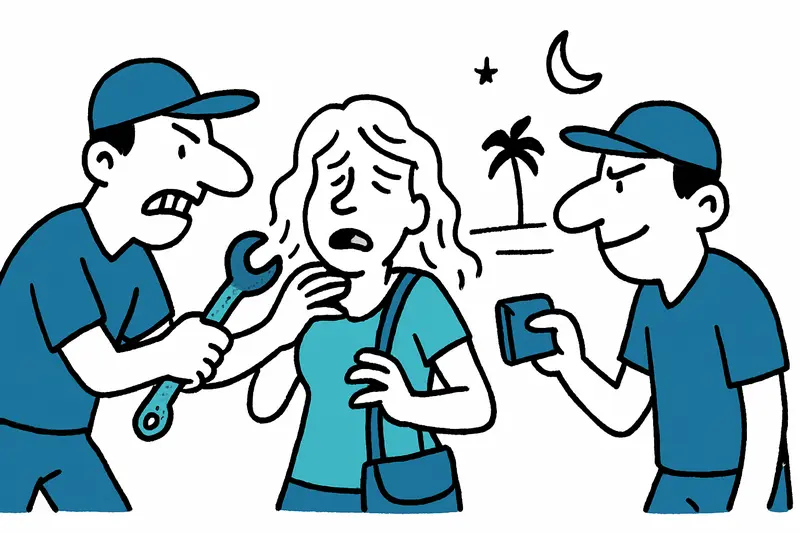
Nighttime Attack on the Paseo Marítimo: How Safe Is Palma’s Party Mile Really?
Two violent attacks between 2 and 4 a.m. have caused an uproar on Palma's Paseo Marítimo. A German tourist was put in a chokehold as bags and phones were stolen. What does this mean for visitors — and what needs to change locally?
How safe is Palma's party mile in the early morning hours?
The images of dancing groups, flashing lights and loud music on the Paseo Marítimo are a familiar part of Palma's nightlife. Last Friday, however, a stretch of the party area ended differently: in the early morning hours two robberies were reported. Asalto nocturno en el Paseo Marítimo: turista alemana amenazada y robada A German tourist describes being put in a chokehold, and a man was taken to hospital with a bleeding head wound. The question now circulating through bars, hotels and WhatsApp groups is: How safe are the streets when the music stops and the street cleaners have not yet arrived? Reports of other incidents include Persecución nocturna en Can Picafort: cuando los paseos turísticos se convierten en un peligro.
What happened — short and clear
According to police, two young men entered the area that is particularly lively between 2 and 4 a.m. Witnesses alerted emergency services after they saw an injured man on the ground. Plainclothes officers soon discovered two people matching the description; a mobile phone was hastily thrown near a tree. The shoes of those arrested showed traces of blood. In one of the incidents there was also a chokehold and a threat with a screwdriver. Documents, phones and bank cards were taken — but many items could later be recovered thanks to the swift action of the police.
The uncomfortable key question
How could things get this far — and why does it happen at this exact spot? This is not only a question for the police but for the whole city: operators, hoteliers, event organizers and the administration. The party mile is loud, lively and attracts people — but precisely in the twilight between 2 and 5 a.m. a kind of blind spot emerges: cleaning vehicles, dwindling security staff and exhausted bartenders mean checks are less frequent.
Aspects that are often overlooked
1) Victims do not always report everything: many tourists do not want to burden their holiday with police reports, only contact their consulate after returning home or block cards themselves — this distorts figures and makes it harder to identify patterns.
2) Perpetrator networks vs. opportunistic crime: not every theft is part of an organized structure; often small groups act deliberately at peak times. This affects what prevention must look like.
3) Economic incentives and empty streets: bars and clubs empty at certain times, concentrating cash and accessories in pockets — a Mediterranean-like magnet for offenders.
Concrete opportunities and proposed solutions
A bit more care can do a lot. Suggestions that could be implemented quickly and with little effort in Palma:
More visible presence: Not only patrol cars but also uniformed foot patrols in the hotspots between 2 and 5 a.m., when the risk increases according to statistics.
Better lighting and clear walkways: Dark niches along the Paseo are like hidden shop windows — repair, illuminate and smooth sidewalks.
Cooperation with hoteliers and bars: Quick reporting chains, short training sessions for staff, taxi call lists and secure storage for passports and valuables.
Use technology: More CCTV at key points, better analysis of video footage and a central hotline for video tips.
Preventive information for guests: Information leaflets at check-in, short notices in several languages on how to block cards or get home safely.
What travelers can do immediately
Some rules of conduct help immediately: carry bags close to the body, keep cards separately, if possible travel in groups or use a taxi and leave important documents in the hotel safe. Apps that allow bank cards to be blocked immediately are a quick protective measure — a small tip few people pay attention to before departure.
A look ahead — with realism
Palma remains a city with heart: the sea breeze, the clinking of glasses in the evening, the throaty rattle of mopeds on the harbor side. This joie de vivre should not become a risk. The recent incidents are a wake-up call, not an alarm signal for complete distrust. If authorities, businesses and visitors work together — with more visible presence, smarter infrastructure and simple preventive measures — the party mile can become safer without losing its soul.
Investigations are ongoing. For many who work and live here: be alert, not panic — but a little more caution and the right measures would make Palma's nightly face noticeably more relaxed.
Frequently asked questions
Is the Paseo Marítimo in Palma safe at night?
What time of night is Palma’s party area most risky?
What should tourists do to stay safe on Mallorca after a night out?
Should I keep my passport and bank cards in my hotel safe in Mallorca?
What happened on the Paseo Marítimo in Palma?
Why can nightlife areas in Palma become more vulnerable after closing time?
Are there safer ways to get back from the Paseo Marítimo at night?
Is Palma doing anything to improve safety on the Paseo Marítimo?
Similar News
Who Gets Left Out? Why Overbookings Will Hit Many Mallorca Travelers This Summer
On hot check-in days at Son Sant Joan, frustrated travelers pile up. New figures from Reclamador.es show that a large sh...
When the Handyman Came: How an Engagement Ring Disappeared in Mallorca and What It Says About Trust
During a repair in Andratx a highly personal engagement ring went missing — a case that calls not only for punishment bu...
How Burglars Test Fincas in Mallorca — and What You Can Do About It
The Spanish National Police warn of a simple but effective trick: small markings on doors reveal whether a finca is occu...
Palma doubles blue zone: What this means for residents, tourists and narrow streets
From 1 January 2027 Palma's ORA area will grow from around 12,000 to 24,000 spaces. Key question: Will the expansion bri...
Engagement ring disappears during repair: court upholds prison sentences for plumber and partner
During a heating repair in an apartment in Andratx an engraved engagement ring disappeared. After a trace to a pawnshop ...
More to explore
Discover more interesting content

Can Cap de Bou

Townhouse Lleo 72
