
Oh no, slippery hazard: Nuredduna Street — Palma's most dangerous sidewalk?
Oh no, slippery hazard: Nuredduna Street — Palma's most dangerous sidewalk?
Residents warn: Nuredduna Street in Palma turns into a mirror-smooth trap when it rains. Who is responsible — and what practical changes can be made?
Oh no, slippery hazard: Nuredduna Street — Palma's most dangerous sidewalk?
Key question: Why does a popular promenade become a risk for pedestrians when wet — and who must take action?
In Palma you hear the click of heels, the hum of buses on the Avenidas and the murmur from Café Monaco. When it rains — as during the Sudden Storm in Palma: A Weather Shock and the Question of Protecting Mallorca — the mood changes: raindrops on leaves, the scrape of brooms, and the occasional curse when someone slips. More precisely: residents say that Nuredduna Street, the green link between Plaça de las Columnas and the Porta de Sant Antoni near El Corte Inglés, is one of the slipperiest spots in the city.
The cause is simple and insidious at the same time. After long dry spells, the finest dust settles on the paving slabs. The first rain residues mix with this abrasion and form a thin, smooth layer — comparable to soapy grease. In addition, the city uses hoses during cleaning operations; when water runs over the smooth surface, it briefly creates a dangerous area. The residents' initiative Flipau amb Pere Garau has documented the problem, and regulars at a local café repeatedly report people slipping.
Critical analysis: technical, organizational and communicative shortcomings come together here. Technically, the existing slab surface seems prone to slipperiness, especially in combination with certain shoe soles. Organizationally, coordinated cleaning times and warning measures are missing: when Emaya cleans with high-pressure cleaners or hoses, it often happens during the day when many people are around. Communicatively, there are hardly any indications for passersby — no temporary signs, no barriers, no direct warnings to cafés and shops. This gap in coordination echoes wider concerns raised in Storm Alert: Is Mallorca Prepared for the Deluge?.
What is missing from the public debate: the discussion so far revolves around isolated cases and outrage on social media. Objective impact assessments are lacking: How many accidents actually occur per year and on which sections? Which parts of the paving are particularly problematic? And: are there already inspection reports or test series on alternative surfaces? Without these figures, the discussion remains stuck at the level of annoyance.
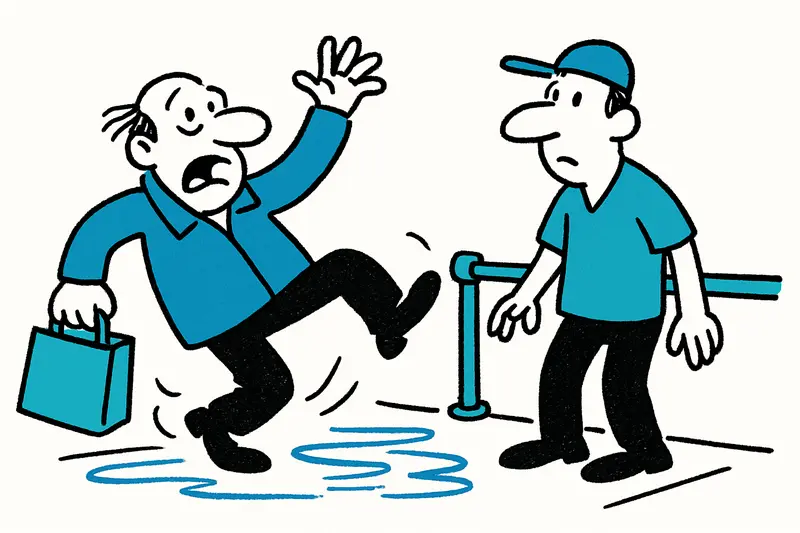
Everyday scene: a Tuesday noon after a short shower. Tourists lean against the windows of Café Monaco, waiters carefully wipe the tables, delivery workers push crates. An older man with a shopping bag slips, grabs the railing; a child giggles because their shoe got wet. The street cleaners come down the stairs with a hose — and two or three meters further you can see the shiny, mirror-like patch where people had been walking without a second thought moments before.
Concrete solutions, straight to the point:
1) Short term: Place temporary warning signs and cones during cleaning operations; schedule cleaning during time windows with fewer pedestrians (early morning or late evening); train staff to recognize and cordon off slippery spots.
2) Medium term: Test temporary anti-slip mats at critical points; set up a pilot section on Nuredduna to trial more effective surfacing materials (rougher slabs, sandblasted finishes); install information signs at junctions advising caution in wet weather.
3) Long term: Conduct a comprehensive assessment of the paving material by the city's technical department; allocate budget for targeted renewal or coating; implement binding cleaning protocols that require dry cleaning (sweeping) before using water to remove abrasive dust.
Other low-cost measures: a local campaign recommending suitable footwear for the rainy season, information leaflets for shops so staff can actively warn customers, and easy-to-use reporting channels for hazardous spots.
What the municipal administration must do is clear: take it seriously, measure, act. A combination of short-term warnings and long-term adaptation of the surface is practical and will prevent further falls — especially among older people and delivery workers carrying heavy loads; local reporting has already highlighted serious incidents in wet conditions, such as Sudden drama on Paseo Mallorca: a death in the rain.
Conclusion: Nuredduna Street is not a natural phenomenon but a planning problem that can be solved. Anyone who drinks their morning coffee by the Café Monaco window does not want to watch their neighbor's grandmother slip on the way to the pharmacy. If Emaya, the technical department and the residents' initiative work together, the "ice rink" can be turned back into a safe promenade. In short: warn, test, tackle — before the next fall happens.
Frequently asked questions
Why can Nuredduna Street in Palma become slippery after rain?
Is Nuredduna Street in Palma dangerous for pedestrians when it rains?
What should I wear on slippery streets in Palma during rainy weather?
What can Palma city services do to reduce slips on Nuredduna Street?
Where is Nuredduna Street in Palma?
What happens when Palma streets are cleaned with water during the day?
Which people are most at risk on slippery pavements in Palma?
How can residents report slippery spots in Palma?
Similar News
Magaluf: Watchtower Alarm – Lifeguards Pull Unconscious Beachgoer from the Water
After a drama in the late afternoon, two lifeguards at Magaluf beach rescued an unconscious 44-year-old man. He was stab...
Turquoise in the City: How dangerous is the color play of the Sa Riera?
The Sa Riera in Palma suddenly turned turquoise — a pretty motif, but behind the effect lies a discharge of saline waste...

Jeckliner at Sunnesching: Cologne spirit sets sail from Palma
In September 2027 the Mein Schiff 2 briefly becomes a floating carnival stage: four days with Cologne bands, comedy and ...
Finally Home: Mike and Leyla Heiter Buy Villa with Sea View in Mallorca
The reality TV couple Mike and Leyla Heiter have bought a house in Mallorca with a roof terrace and sea view. An Instagr...
Arrest after series in Palma: Who protects apartments from repeat offenders?
The National Police arrested a man in Palma who investigators say may have broken into several apartments. In one incide...
More to explore
Discover more interesting content

Can Cap de Bou

Townhouse Lleo 72
