

Real Mallorca relegated: Who takes responsibility?
Real Mallorca relegated: Who takes responsibility?
Despite a win against Oviedo, Real Mallorca are relegated. Fans turned on the club leadership, who retreated to the VIP box after the final whistle. A reality check: where did things fail sportingly and organizationally — and which steps are now necessary?
Real Mallorca relegated: Who takes responsibility?
The red flag didn't wave, but the mood was at rock bottom: Real Mallorca has dropped into the Segunda, even though the team won in Son Moix against Oviedo. Shortly after the final whistle the club's three top officials visibly sought refuge in a box. The supporters' reaction was clear: whistles, insults, disappointed looks. The question now in the room is simple and uncomfortable: Who bears responsibility for this downfall?
Critical analysis: sporting decisions or structural failure?
On the pitch the facts were plain: coach Martín Demichelis chose an expected starting eleven with Asano and Muriqi up front; there were offensive efforts, chances from headers and a brief rally after opportunities from Muriqi and Asano. But football on this final day is a lottery of results: other matches also decided matters — including the late strikes that sealed their fate in Bilbao (Too late to ignite: RCD Mallorca lose narrowly 1-2 in Bilbao) — turned an evening of resistance into a season-long confirmation of failure. From a sporting perspective the analysis holds: squad quality, bench depth and injury misfortune played a role (Red Alert: Why Mallorca's Crisis Runs Deeper Than the 0-1 in San Sebastián). Yet that does not explain everything.
Behind the stadium noise it gets loud organizationally. A lack of clarity in transfer policy, insufficient integration of youth players and communication that remains internal rather than engaging fans are weaknesses that have accumulated over months (Two dismissals trigger a crisis? Mallorca after 0-3 to Barça faces tough questions). The fact that the club leadership fled to the box immediately after the final whistle is symbolic of a leadership style many supporters perceive as distant. Taking responsibility means not only making decisions but also defending them in public.
What is missing in the public discourse
Debates often focus on goals and league positions — which is emotional and understandable. But too rarely are long-term issues discussed: What does the sporting strategy for the next five years look like? How stable is the financial structure if revenue from the top division disappears? What role should the youth academy and local talent play in the future? And not least: How transparent is the sporting management when it comes to squad planning? These questions are absent in the loud hour of anger, yet they remain essential if the club is not to face relegation again in a year's time.
An everyday scene from Son Moix
Saturday evening: the sun is still low, the loudspeakers broadcast final match analyses, sausage vendors pack up. In the stands fans in worn shirts sit next to children with colorful scarves. After defeat by fate you see men with sad faces, women arguing, teenagers swearing. On the avenue around the stadium cars stop, fans speak quietly or shout, an old man throws his scarf onto the ground. This mixed atmosphere shows: it is not just about a point on the table, but about identity and trust.
Concrete solutions
What must follow can be formulated in practical steps: 1) Public accountability: a clear, timely explanation of the sporting and financial situation by the leadership with a Q&A session for fans. 2) Sporting master plan: define a clear strategy for transfers, youth development and scouting — with measurable milestones. 3) Communication reset: regular fan forums, transparent squad lists and insight into budget priorities. 4) External review: an independent audit of processes and contractual structures so mistakes are not repeated. 5) Mental support: assistance for players and staff so the return to physical and sporting normality succeeds.
Pointed conclusion
Relegation is not a single misstep but the symptomatic result of sporting, organizational and communicative failures. Fans have a right to clarity, the club to careful self-examination. If decision-makers continue to hide away in secluded boxes, mistrust will remain. Those who love the club must now demand responsibility — and see actionable plans. Only then can Mallorca dream again of Son Moix instead of resigning itself to empty seats.
Frequently asked questions
What is the weather usually like in Mallorca in February?
Can you swim in Mallorca in February?
What should I pack for Mallorca in February?
Is February a good time to visit Mallorca?
What is Port de Sóller like in February?
Is Palma still lively in February?
Are Mallorca beaches busy in February?
What can you do in Mallorca in February if the weather is mixed?
Similar News
Smoke over the UIB: Who is responsible for the fire on the roof?
On Saturday afternoon a fire broke out on the roof of the Arxiduc Lluís Salvador building at the University of the Balea...
Short Getaway with Sea View: Inmood Aucanada among Spain's Top Hotels for Dinner Breaks
A small hotel on the coast of Alcúdia was highlighted by a Spanish experience platform as particularly suitable for shor...
Cala Pi crowned Mallorca's most beautiful beach: A morning at the rocky cove
The travel portal Holidaycheck praises Cala Pi as Mallorca's most beautiful beach: a narrow, romantic cove, clear water,...
Injured captain, big plans: Germania Mallorca before the away match in Consell
The newly founded FC Germania Mallorca travels to Consell on Saturday. Captain Bastian Müller is out injured, but coach ...
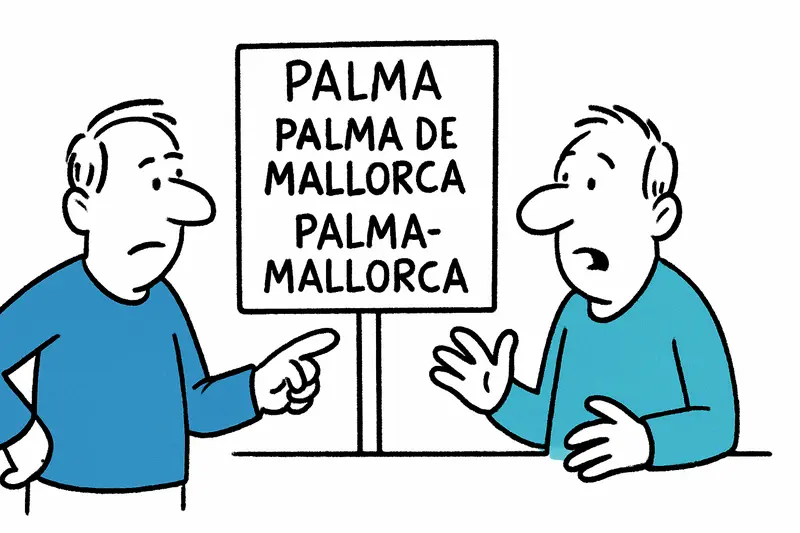
Palma, Palma de Mallorca, Palma‑Mallorca: What is it really about?
The debate over the city's name is more than grammar: it concerns identity, law and branding policy. A sober reality che...
More to explore
Discover more interesting content

Can Cap de Bou

Townhouse Lleo 72
