
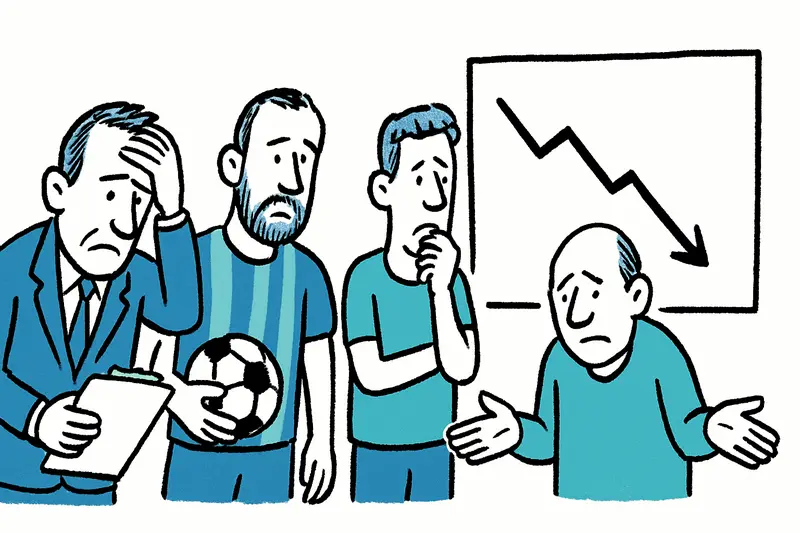
RCD Mallorca after Relegation: A Reality Test for the Club, Players and the Island
RCD Mallorca after Relegation: A Reality Test for the Club, Players and the Island
Relegation hits the island club hard: lower TV revenues, possible departures of Vedat Muriqi and Samu Costa, and a coach who leaves open whether he will stay. A reality check: what matters now and which steps can save Mallorca.
RCD Mallorca after Relegation: A Reality Test for the Club, Players and the Island
Guiding Question
How can RCD Mallorca manage financial losses, waves of departures and sporting uncertainty so that the club not only survives but returns stronger?
Critical Analysis
Relegation to the second division is not just a sporting result. On Mallorca it means immediate financial losses: TV rights shrink, sponsorship deals lose value, and transfer power melts away. Local reports such as Yellow Alert in Palma: How RCD Mallorca Can Still Save the Season discuss these immediate impacts. That likely explains why names like Vedat Muriqi and Samu Costa are already circulating as possible departures. A striker with a good scoring record does not command the same market value in the Segunda División as in the Primera; midfielders like Costa are attractive to teams with smaller budgets – or costly for Mallorca to keep.
Coach Martín Demichelis said after the last match (Too late to ignite: RCD Mallorca lose narrowly 1-2 in Bilbao) that many players were "not second-division players" and left open whether he would stay. This is a double challenge: on one hand the statement reveals a necessary realism about the squad profile. On the other hand it unsettles fans and sponsors even more. The club now faces decisions that go far beyond tactics and lineups: wage structure, squad planning, communication with supporters and local partners.
What Is Missing from the Public Debate
Conversations in cafés and at kiosks on the Plaça Major revolve around individual players and the coach's fate, as explored in Red Alert: Why Mallorca's Crisis Runs Deeper Than the 0-1 in San Sebastián. Rarely discussed, however, is the club's longer-term financial strategy: What do contract durations look like, how high are actual wage obligations, and what reserves exist for precisely such scenarios? Talent development is also seldom mentioned – yet the academy holds a lever to reduce costs in the medium term and strengthen identity.
There is also little public debate about the role the city of Palma and local businesses can play going forward. A full stadium during a crisis would convey more stability than any PR campaign – but that does not happen by itself.
Everyday Scene on Mallorca
The afternoon after relegation, regulars at the bar on Avinguda Jaume III sat with newspapers at the table. Some stared silently at their café con leche, others argued quietly about lineups from weeks ago. An older fan, a yellow scarf in his bag, simply said: "We've seen worse times." The mood was downcast, but not apocalyptic. On the other side of the island, on the promenade of Port de Pollença, young people loudly discussed promotion dreams for next season – a hope that repeatedly appears in conversations with locals.
Concrete Solutions
1) Transparent financial audit and short-term rescue plan: The club must disclose the size of the gap after revenue losses and which measures (wage cuts, bonuses instead of fixed salaries, transfers) are realistic. Clear figures build trust with fans and sponsors.
2) Squad strategy with restraint: Not every player who looks expensive today must be sold. Priority should be contracts with fair defensive mechanisms: performance-based clauses, loan deals with wage sharing and targeted sales to form a competitive but affordable team for the Segunda.
3) Promote youth proactively: The academy cannot solve all problems overnight, but targeted development and early integration of talents reduce costs and strengthen local ties. Cooperations with island clubs to provide adult playing minutes would be sensible.
4) Involve local partners more: The city of Palma, medium-sized companies and tourism actors should think in package solutions – sponsorships, hospitality offers and joint actions can mitigate revenue losses and position the club as part of the island's economy.
5) Communications strategy: Honest, calm and unifying. Panic-driven media scares help no one; better are regular updates, fan forums and transparent goals for the coming season.
Why This Matters
RCD Mallorca is more than a football team: it is a social glue for many communities on the island, a driver for local tourism on matchdays and a bearer of identity. Sloppy crisis management would not only cause sporting setbacks but also affect local business partners and neighborhood morale.
Concise Conclusion
Relegation is a reprimand, but not a death sentence. It is a reality test: those who act wisely now – transparently, frugally, with courage to promote youth and strong local alliances – have a good chance of a quick return. Those who cling to vanity or short-term fixes risk a longer decline. On the streets of Palma after the match there was not only sadness but also a determination to rebuild the club. That could be the most important resource – if the club knows how to use it.
Frequently asked questions
What does RCD Mallorca’s relegation mean for the club financially?
Which RCD Mallorca players could leave after relegation?
Will Martín Demichelis stay as RCD Mallorca coach after relegation?
How can RCD Mallorca build a competitive team in the Segunda División?
Why is RCD Mallorca’s academy becoming more important now?
How can Palma and local businesses support RCD Mallorca after relegation?
What is the mood like among RCD Mallorca fans in Palma after relegation?
Can RCD Mallorca return to the top flight quickly after relegation?
Similar News

Smoke over the UIB: Who is responsible for the fire on the roof?
On Saturday afternoon a fire broke out on the roof of the Arxiduc Lluís Salvador building at the University of the Balea...

Short Getaway with Sea View: Inmood Aucanada among Spain's Top Hotels for Dinner Breaks
A small hotel on the coast of Alcúdia was highlighted by a Spanish experience platform as particularly suitable for shor...
Cala Pi crowned Mallorca's most beautiful beach: A morning at the rocky cove
The travel portal Holidaycheck praises Cala Pi as Mallorca's most beautiful beach: a narrow, romantic cove, clear water,...
Injured captain, big plans: Germania Mallorca before the away match in Consell
The newly founded FC Germania Mallorca travels to Consell on Saturday. Captain Bastian Müller is out injured, but coach ...
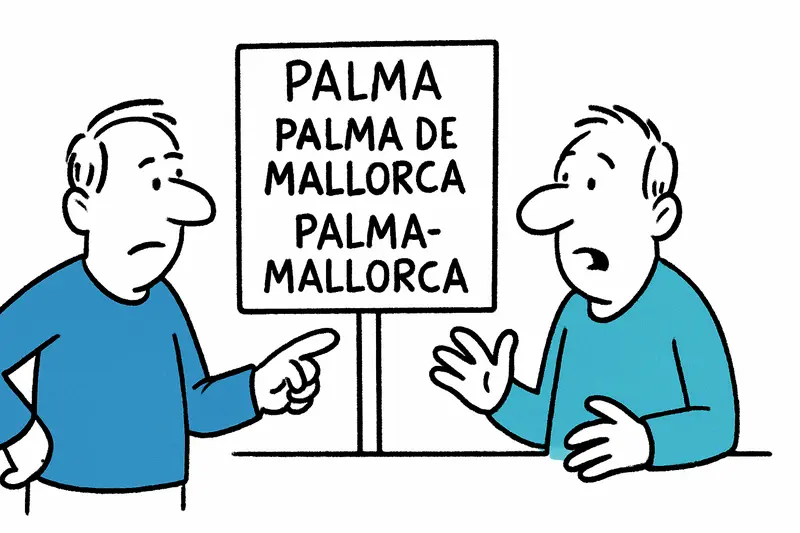
Palma, Palma de Mallorca, Palma‑Mallorca: What is it really about?
The debate over the city's name is more than grammar: it concerns identity, law and branding policy. A sober reality che...
More to explore
Discover more interesting content

Can Cap de Bou

Townhouse Lleo 72
