
Why Spaniards Live Longer: A Critical View from the Island
Why Spaniards Live Longer: A Critical View from the Island
Spain tops the EU rankings for life expectancy. Which factors truly stand out — and what is often overlooked? A local perspective from Palma.
Why Spaniards Live Longer: A Critical View from the Island
Clear guiding question: Why is life expectancy in Spain around 84 years — about 2.3 years above the EU average — and what does that say about our everyday life in Mallorca?
Brief stocktaking
The raw numbers are known: 84 years in 2024, women on average 86.6, men 81.3. The main causes of death remain cardiovascular diseases and cancer; respiratory diseases and Alzheimer’s also play a role. At the same time, the smoking rate has fallen in the long-term comparison (from around 32% in 2001 to about 20% by 2020), while annual per-capita alcohol consumption in Spain has risen from 10.4 liters (2015) to 11.1 liters (2023). Overweight affects 15% of adults (2022) and 19% of younger people; six out of ten adults are insufficiently active. This demographic shift is discussed in Fewer seniors in Mallorca: Opportunity or a ticking gap?.
Critical analysis: Why these numbers don't tell the whole story
High years alone create a positive image that is too quickly read as evidence of an overall healthy system. Living longer does not automatically mean that the added years are good and active. More years with chronic illnesses or limited mobility are possible. Moreover, averages conceal regional and social differences: health behaviors are unevenly distributed, more problematic in educationally disadvantaged milieus.
What is missing in the public discourse
On Mallorca you often hear praise for the Mediterranean diet, the warm climate and family structures. These factors count. What is discussed less often, however, is the quality of follow-up care for chronically ill people, the mental health of older people, housing and traffic conditions that make movement easier or harder, and the growing role of alcohol consumption. Also little on the radar: how climate change and heat waves can affect mortality risk, especially among older residents.
A scene from Palma
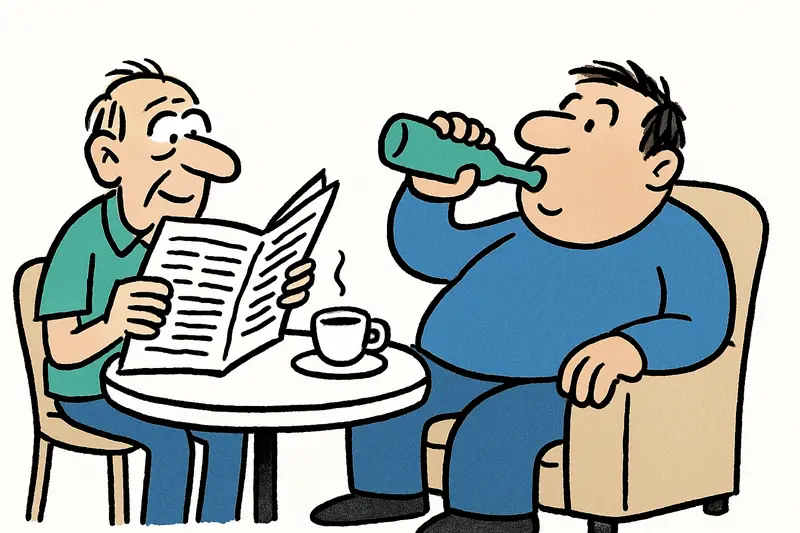
Early in the morning at Mercat de l'Olivar: seniors with newspaper and café con leche, a baker preparing pan con tomate, a group discussing their doctor's appointments after shopping. Scenes like this show both: social embedding and everyday care — protective factors — but also: long waiting lists, short consultation times, limited mobility after operations. The island creates community, but that's not always enough. Such scenes also reflect local food economics discussed in Why Food Is So Much More Expensive in the Balearic Islands — A Reality Check.
Concrete approaches
- Target primary prevention: programs against risky alcohol consumption tailored to specific age groups and communities, instead of general campaigns.
- Integrate movement into everyday life: walkable neighborhoods, safe bike lanes, low-threshold sports offers in neighborhoods and senior centers.
- Strengthen nutrition education in schools and communities: Mediterranean cuisine as practice, not just an image; support for low-income families.
- Close gaps in care: better coordination between general practitioners, specialists and rehabilitation services; more mobile services for people with limited mobility.
- Promote social health: offers against loneliness, low-threshold psychological support for older people.
Why this matters for Mallorca
On the island, tourist demand, When Mallorca Grows: Strategies for an Island in Transition, and a large number of older permanent residents meet. Decisions about urban planning, health services and leisure offerings have a direct impact on daily quality of life — and thus on the question of how healthy the additional years really are.
Pithy conclusion
Spain's higher life expectancy is not accidental and is based on real protective factors, above all diet, climate and social networks. But that should not distract from the fact that declines in smoking can be offset by rising alcohol consumption, lack of exercise and gaps in care. On Mallorca, the task is to shape the gained years so that they remain worth living. That can only be achieved with concrete, local measures — not with sentimental praise of Mediterranean cuisine.
Frequently asked questions
Why do people in Spain, including Mallorca, live longer than the EU average?
Is living longer in Mallorca the same as living a healthier life?
What health risks are still a concern for older people in Mallorca?
How important is the Mediterranean diet for health in Mallorca?
Why is exercise so important for people living in Mallorca?
How does alcohol affect public health in Mallorca?
What kind of healthcare gaps do older residents face in Mallorca?
How can Mallorca reduce loneliness and improve mental health among older people?
Similar News

Rental Car Theft in El Arenal: What This Incident Reveals About Our Gaps
A teenager steals a running rental car in El Arenal, flees on foot, climbs over walls and is caught by the Guardia Civil...

Red Rope in Palma's Library: What Helps Against Selfie Tourism — and What's Missing
Palma's city library cordoned off an area with a red rope to keep selfie tourism away from reading and working activitie...

Fort San Carlos: Museum, Harbor Dispute — and a Conflict That Demands Answers
The military museum at Fort San Carlos sits right on Palma's harbor, with unexpectedly quiet rooms filled with cannons a...
Old Town Under Pressure: When a Doorway Becomes a Sleeping and Shower Place
For months a woman has been living with a parasol, a clothes rack and personal belongings next to the social welfare off...
When Shopping Weighs Heavier: Mallorca Demands a Tax Pause on Food and Fuel
Rising prices are putting pressure on households and agriculture. The Balearic Islands are calling for temporary tax rel...
More to explore
Discover more interesting content

Can Cap de Bou

Townhouse Lleo 72
