
Eggs in Mallorca: What the Wrong Size Grade Really Means
Price isn’t the only thing that matters when buying eggs: carton size labels follow fixed rules. Here’s what shoppers can check—and what questions remain open during an inspection.
A small label with a pretty big promise
At the supermarket, picking up a carton of eggs is often a matter of seconds. Your eyes go to the price, perhaps also to whether they’re free-range or organic. The size grade is easy to overlook. But it isn’t just a decorative row of letters: S, M, L and XL represent specific weight ranges. If a recipe calls for large eggs, you’re not buying on guesswork—you’re relying on a standardised label on the carton.
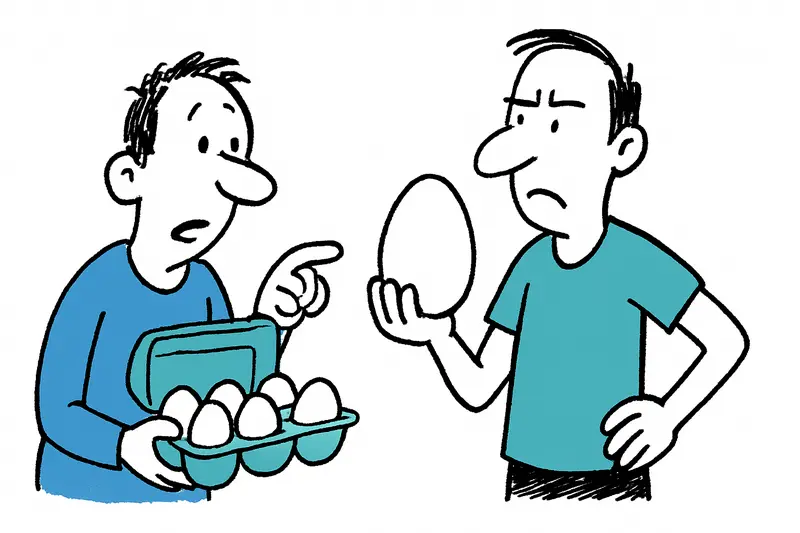
The EU classifies eggs by weight: S is under 53 grams, M ranges from 53 to under 63 grams, L from 63 to under 73 grams, and XL starts at 73 grams. This tells you nothing about whether an egg is fresh, especially tasty or from a particular farming system. Weight grade, farming method and origin are different pieces of information. They sit side by side in the supermarket and are still often confused.
What an inspection needs to establish
If there is a suspicion that eggs were sold in a higher weight grade even though they are lighter, the obvious question is: how were they checked? It takes more than weighing a few eggs. There needs to be a representative sample, details of the batch the product came from, and clear documentation of the measurements. Without those details, it is difficult for anyone outside the process to judge how reliable a finding is.
Responsibilities across the supply chain are not always immediately clear either. Who graded and packed the eggs? Who applied the label? And who brought the product to the island? These are not nitpicks. The answers help determine whether an error might have occurred at the producer, the grading facility or a later stage. A complaint is not yet a final ruling on the responsibility of any one company.
What is often missing from public debate is a clear distinction between suspicion, a confirmed violation and a final penalty. Removing a batch from sale initially protects shoppers. But it does not automatically reveal how many cartons have already been sold, whether customers will be notified or what the final consequences will be. Transparency does not mean making every inspection sound dramatic. It means explaining the key steps clearly.
A look at the supermarket shelf
Shopping in Palma rarely goes by the textbook. Outside, a bus rattles along Passeig; inside, the checkout beeps, and someone with a basket full of oranges is already waiting behind you. You quickly turn the carton over: size grade, best-before date, farming method. Weighing individual eggs is neither practical nor sensible for consumers. The businesses that place the product on the market are responsible for correct grading and labelling.
Still, shoppers can check a few things. The size grade should be shown on the packaging, and the label should be complete and legible. If a carton is damaged or the eggs look unusually inconsistent in size, it’s worth asking the store. If you have a specific concern, keep the carton and receipt and contact the retailer or the relevant consumer protection office. A photo of the label is more useful than an angry comment that gives no details about the product or where it was sold.
How Mallorca could do better
For inspections, a brief, easy-to-understand update would help: What was flagged? Which batch is affected? What measure is in place, and when will the case be resolved? Retailers should know how enquiries and refunds will be handled. Consumers need a straightforward way to report batch details. This would leave less room for guesswork and help prevent a single inspection from being taken as proof of a general problem with eggs on the island.
Businesses can also take preventive steps: regular checks of grading equipment, documented sampling and clear traceability from carton to delivery. That may sound like paperwork. For food products, paperwork can be the difference between a targeted recall and a vague warning that makes everyone anxious without telling anyone exactly what to do.
The weight grade on an egg carton is not an approximate shopping guide; it is a binding product declaration. Misstating it misleads shoppers and puts retailers who follow the rules at a disadvantage. But a fair reality check also requires the specific evidence and the status of any proceedings to be made clear. In Mallorca, what should stick in the end is not the loudest rumour, but a clear answer about what was checked—and what follows from it.
Frequently asked questions
What do S, M, L and XL mean on egg cartons in Mallorca?
Does a larger egg mean it is fresher or better quality?
Does egg size matter when following a recipe in Mallorca?
What should I check on an egg carton before buying it in Mallorca?
What should I do if I think eggs are the wrong size grade?
How can inspectors check whether eggs in Mallorca were labelled with the wrong size?
Does taking an egg batch off sale in Mallorca prove the label was wrong?
Who is responsible if egg size labels are wrong in Mallorca?
Similar News

New Venue at the Harbor: The Poppa Club Moves into the Former Varadero
The Marport Group has unveiled The Poppa Club in the former Varadero building. A terrace, lounge, and views of the bay a...
Groceries in central Palma: Carrefour Express opens on Jaume III
There’s a new place for a quick shop on Jaume III: Carrefour Express offers groceries and everyday essentials, including...
Palma on the Jersey: Germania Mallorca Sells New Away Kit
White with dark blue accents and Palma Cathedral on the chest: FC Germania Mallorca is offering its new away kit for €49...
Palma Cathedral as a Film Set: When AI Advertising Makes Fiction Look Real
An Instagram Reel makes a giant film poster appear on Palma Cathedral. The image is artificially generated and not label...
New Carrefour Express Brings Everyday Shopping to Palma’s Jaume III
A Carrefour Express has opened on Jaume III. The small store offers groceries and everyday essentials—and is open on Sun...
More to explore
Discover more interesting content

Can Cap de Bou

Townhouse Lleo 72
