
Esporles pushes back against 5G mast on a protected building — where is the transparency?
Esporles pushes back against 5G mast on a protected building — where is the transparency?
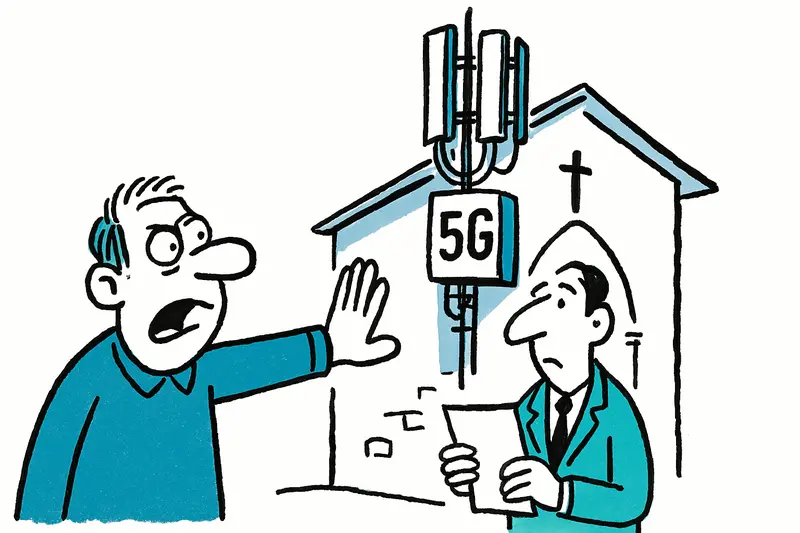
On Calle Mestre Munar a new 5G antenna has alarmed neighbors: it stands at the rear of a house protected as cultural heritage, and residents report seven cancer cases in the area. The municipality demands clarity and alternative locations.
Esporles pushes back against 5G mast on a protected building — where is the transparency?
Key question: How should small municipalities like Esporles act when a mobile communications installation is erected directly adjacent to a building classified as cultural heritage (BIC) and neighbours grow suspicious because of several illness cases?
On the narrow Calle Mestre Munar, where church bells still ring through the bare plane trees in the morning and the smell of freshly baked pa amb oli drifts from the stairwells, many residents are currently sitting closer together than usual. About fifty households feel affected since a row of new 5G antennas was installed at the rear of a protected building. The atmosphere is tense: according to residents, seven cancer cases have been recorded within roughly 50 metres, two of them fatal. Whether there is any connection is unknown; and that is precisely the point.
Critical analysis: What is missing is transparency and methodology. According to the town hall, Spanish telecommunications law limits the municipality's ability to prohibit infrastructure — a fact the municipal administration confirms. At the same time, residents say they do not have all the documents: neither exact mast heights nor technical parameters nor environmental and heritage impact assessments. The operators — residents name Movistar and American Tower — have not responded so far.
Several questions remain open: Which frequencies and transmission powers are being used? Were regulatory distances to residential areas respected? Was there a prior assessment of visual and landscape compatibility, especially because the building is protected as a BIC? And: what epidemiological data are actually available — at municipal, island or regional level?
What is often missing in public discourse is a sober separation between legitimate concerns and scientific facts. The neighbours' fear is understandable and real. Still, it must not be replaced by speculation. Independent on‑site measurements, transparent operator documentation and a clear role for health authorities in evaluating local disease data are lacking.
Everyday scene: An afternoon in Esporles shows how closely politics and neighbourhood life are interwoven here. On Mestre Munar street, pensioners, parents with strollers and shopkeepers from the plaza discuss the issue over an espresso. The phrases are often the same: 'We want clarity' and 'No one asked us'. The mayor has already met with resident groups; the atmosphere is more a negotiation space than a demonstration — neighbourhood concern meets administrative limits.
Concrete approaches — what the municipality can do now:
1) Documentation request: The municipal administration should formally demand the complete technical documentation from the operator: site plans, antenna heights, transmission power, frequency bands and heritage impact reports. Without these papers, any discussion remains speculative.
2) Independent measurements: Accredited measurements of electromagnetic fields must be carried out at several times and under different weather conditions. The results should be publicly accessible and explained by experts.
3) Involvement of health authorities: Regional and island health authorities should check whether the reported illness cases are statistically unusual. If necessary, an independent epidemiological analysis is advisable.
4) Review of heritage protection: Because the antenna is mounted on a BIC building, the cultural authority must carry out a formal assessment: visual screening, interventions to the fabric and urban impact need to be clarified.
5) Alternative sites and negotiations: The municipality can systematically identify possible alternative sites — municipal rooftops, industrial areas or already built-up locations outside dense residential zones — and present these options to the operators. Mediation talks with Movistar and American Tower should be documented.
6) Citizen participation and information duty: An open information evening with experts, moderated by the town hall, can help alleviate fears and communicate facts. A citizens committee would bundle communication and accompany further steps.
Punchy conclusion: Esporles is emblematic of many Mallorcan places where technical necessities meet protected heritage and sensitive neighbourhoods, as in Avenidas in Conflict: New Residential Building, Old Facade — and Many Open Questions. The facts must be visible and verifiable — for the health of people and respect for the townscape. Without these foundations, any decision remains fragmentary and lacking in trust. Anyone walking down Calle Mestre Munar does not hear only the church bells: they hear the expectation of answers.
Frequently asked questions
Can a town in Mallorca stop a 5G mast if it is installed on a protected building?
What can residents in Mallorca ask for if they are worried about a new 5G antenna near their homes?
Are health concerns around mobile antennas in Mallorca ever investigated officially?
What should a Mallorca town hall check before allowing a 5G installation on a historic building?
How are 5G mast disputes usually handled in Esporles, Mallorca?
Where can mobile antennas be placed in Mallorca if a residential street is too sensitive?
Why are residents in Esporles concerned about the 5G mast on Calle Mestre Munar?
What can public information meetings help with in Mallorca neighbourhood disputes?
Similar News

Near-miss on Lanzarote: Landing Ryanair Jet and Iberia Takeoff — what really went wrong
On Lanzarote there was a dangerous incident: A Ryanair flight (FR5910) from Dublin landed on runway 03 while an Iberia E...

Eurowings introduces new Premium Business seats on Mallorca routes
From December 1, selected Eurowings flights to Palma and other destinations will feature eight particularly generous sea...

Car on MA-13 near Inca in flames – a safety check for the island
A vehicle caught fire on the MA-13 towards Alcúdia on Tuesday afternoon. The driver was uninjured, the car was destroyed...

Real Estate in Mallorca: Fewer Buyers, Higher Prices — What's Behind It?
Sales on Mallorca are falling, yet prices continue to climb. Why fewer transactions do not equal relief — and what shoul...
Just Bought — Already Trouble: Water Damage in the Heiters' Villa and What Owners in Mallorca Should Know Now
A newly purchased sea-view property — and within days a water damage. What risks lurk in new properties in Mallorca, and...
More to explore
Discover more interesting content

Can Cap de Bou

Townhouse Lleo 72
