
Ex-royal yacht Foners on the charter market: luxury, history and open questions
The 43-metre yacht Foners, formerly known as Fortuna and once owned by former King Juan Carlos, is currently moored in Marina Botafoch and offered as a private charter. What does this mean for island tourism, port policy and the environment?
From royal service to private charter: what does it mean for the islands?
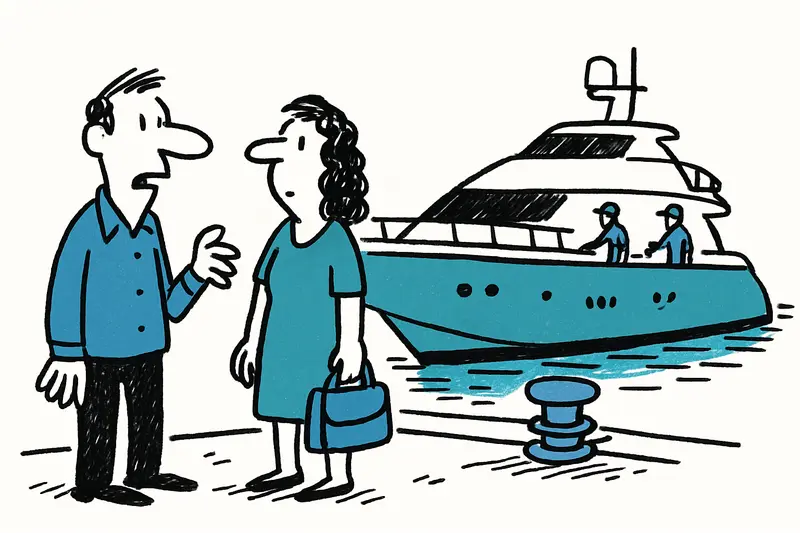
In the early morning, when the garbage trucks in Marina Botafoch still creak and the seagulls circle the scent of diesel, the 43-metre yacht Foners lies quietly at the quay (Former king's yacht between Ibiza and Mallorca: Luxury, history — and who actually pays?). Up close you can see the pristine bulkheads, the crew tidying the bunks, and tourists stopping to take photos with their phones. The guiding question remains: is it just a stylish outing for the well-off and seasonal residents, or does the availability of a once-royal yacht have broader consequences for port life, the environment and the image of the islands?
Practical information for those interested
Foners is currently offered by a Mallorcan charter company on behalf of the shipping company, as reported by Exyate real 'Foners' en el mercado de chárter: lujo, historia y preguntas abiertas. The base price is around €20,000 per day, with additional fees often added for berthing, fuel for longer trips and on-board catering. There is room for up to eight guests; on board: a jacuzzi, a home cinema in the salon and various water sports equipment. An experienced captain knows the currents around Formentera and the often treacherous swell conditions off the west beaches — a reassuring thought when you jump overboard.
Why this is more than celebrity gossip
That a vessel once associated with a king can now be booked at prices comparable to a luxury villa is not just a celebrity gag. It raises concrete questions: who really benefits from these charter revenues — local port operators, the shipping company, brokers in Mallorca or only the international owners? How do such yachts change the appearance of ports when every free quay is partly reserved for high-priced berths? And last but not least: what ecological costs arise from operating large luxury yachts in sensitive coastal areas?
Aspects that have so far been neglected
First: port logistics. Places like Palma or Ibiza are overcrowded in the summer months — additional luxury berths put pressure on infrastructure, waste disposal and towing services, as noted by Puertos del Estado on port management and fees. Second: environmental impact. A 43-metre yacht consumes considerable amounts of fuel on longer trips; the CO₂ footprint per passenger is significantly higher than that of a normal ferry crossing, a concern discussed by the European Environment Agency on shipping emissions. Third: social perception. For many locals, €20,000 per day is a symbol of a polarization that is reflected in rising prices for public services and urban space.
Concrete approaches that should be discussed
Instead of only talking about bans, practical steps can be proposed: fair berthing fees that also reflect ecological costs; time limits for luxury berths in inner-city ports during the high season; stricter requirements for sewage and waste management on board; and more transparent taxation of charter income in favor of local port and coastal protection projects. Such measures could help make the operation of expensive yachts more socially and ecologically compatible without banning the charter market entirely.
For charter clients: a few practical tips
Anyone considering going on board should book early, plan the total costs including port fees and fuel, and be aware that such vessels attract attention — photographers, passersby and neighbours with views towards Dalt Vila are part of the experience. Tip: short trips close to the coast reduce consumption and allow more time for swimming and snorkeling, without immediately stressing the nature around Cabrera, where visitors can consult the Cabrera National Park official page.
In the evening, when the sun over Ibiza slowly turns golden and a glass of sparkling wine clinks on the deck, the romantic side of such outings remains: the salty air, the sound of small waves, the soft hum of the engine. But the fact that a piece of royal history is now for sale should not be seen only aesthetically. It is an occasion to reflect on distribution, marine protection and the future of our ports — between photo motifs and the harbour promenade.
Frequently asked questions
How much does it cost to charter the former royal yacht Foners in Mallorca?
How many guests can stay on board Foners?
What amenities does the Foners yacht have?
Is Foners suitable for a day trip around Mallorca?
Where is Foners currently available for charter in Mallorca?
Why does a luxury yacht like Foners matter for Mallorca ports?
Does chartering Foners have environmental implications in Mallorca?
What should I know before booking a luxury yacht charter in Mallorca?
Similar News

After the Fatal Rally Crash: A Reality Check for Mallorca
The death of L’Osteria co-founder Klaus Rader at the Rally 550 Challenge raises questions about safety on Mallorca's cou...
Who really protects Mallorca's coasts? A reality check after the viral beach video
A viral online video compared developed coasts in Turkey with Mallorca's beaches and praised the island. A good moment t...

Arenal: How Two Strangers Stole Jewelry from a 91‑Year‑Old — and What We Should Learn
In El Arenal two young women managed to gain the trust of a 91‑year‑old and steal jewelry from her apartment. A family f...

Cool Night, Mild Days: Autumn Shows on Mallorca – Good for Land and People
The Tramuntana brought the coldest night in months: around 8 °C, 11–12 °C in the lowlands. Daytime temperatures rise aga...

Llucmajor bets on a new waste contract – is it enough to end the waste crisis?
The municipality of Llucmajor has signed a €36.6 million contract with Urbaser for eight years. After summers of overflo...
More to explore
Discover more interesting content

Can Cap de Bou

Townhouse Lleo 72
