
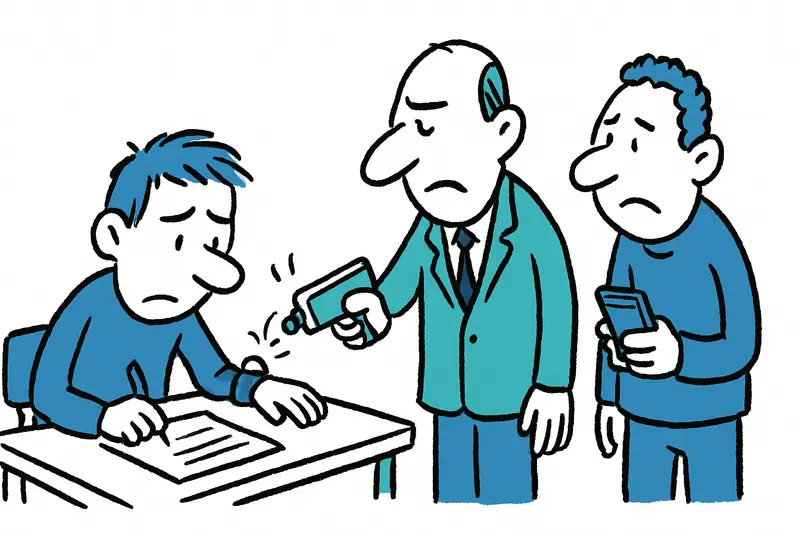
Exam detectors against AI cheating: a reality check for the selectividad in the Balearic Islands
Exam detectors against AI cheating: a reality check for the selectividad in the Balearic Islands
At the university entrance exams in the Balearic Islands, radio‑frequency detectors are to reveal phone and smartwatch use. A reality check: can device scanners prevent AI‑assisted cheating, and what is missing from the debate?
Exam detectors against AI cheating: a reality check for the selectividad in the Balearic Islands
Key question: Can radio‑frequency detectors in the selectividad really prevent candidates from using AI assistance, or do they merely shift the problems?
From early June, examination centers in the Balearic Islands will use detectors designed to locate unauthorized electronic devices such as mobile phones and smartwatches. Authorities want to prevent candidates from using artificial intelligence to cheat. Those caught risk zero points or even exclusion from the examination round — harsh sanctions that underline how seriously the situation is being taken.
The announcement seems decisive at first glance. On the Plaça Major in Palma, where one usually hears tourists chatting and market vendors calling out, teachers gather in small groups to discuss how they will handle intensified controls. Parents sit at café tables on Carrer de Sant Miquel and nervously debate exam stress. This proximity of everyday life and exam anxiety makes clear: it is not just about technology, but about young people experiencing life‑changing decisions on a single day.
Critical analysis: radio‑frequency detectors pick up signals and active devices, but they are no panacea against AI‑assisted cheating. Many models only indicate the presence of a transmitter; they do not reveal whether a device is switched off, in airplane mode or hidden in an inconspicuous case. And they do not detect passive aids such as small printed notes or carried memory devices with LED indicators. Those making trade‑offs could turn to creative workarounds.
There is also a legal and data‑protection grey area, as noted in Balearic Islands turn to cyber protection — is it enough to really secure the administration? Controls that detect electronic signals work with radio‑frequency measurements and potentially with localization technology. Schools and exam centers must clarify what data are collected, how long they are stored and who has access. Transparency requirements toward candidates are legally significant, especially when sanctions are as severe as failing the exam or being excluded.
What is missing from the public debate: there is little discussion of proportionality and prevention instead of mere deterrence. Many conversations revolve around "catching" and punishing, less around learning culture, exam formats and equal opportunities. Rarely discussed is how exam tasks themselves must be designed if digital aids are ubiquitous: more open problem solving, oral exam components or practice‑based tasks could make the system more resilient.
Another blind spot is the training of invigilators. A detector is only as good as the people who operate it. In Mallorca one knows the calm voice of invigilators in some exam rooms — with tightened technology there is a need for training, clear protocols and procedures for borderline cases, for example when a signal has a technical explanation or a device was brought in by mistake.
Concrete solutions: first, communicate clear rules in advance. Exam authorities should inform in writing and early on which technology will be used, what rights candidates have and what sanctions apply. Second, define technical standards: detectors must be calibrated, tested models selected and error rates disclosed. Third, transparent data‑protection protocols: which measurements are logged, for how long and where are the data stored? Fourth, consider alternative exam formats that minimize the benefit of external aids without diluting learning objectives.
Further options: random checks of bags and jackets before entering the room, collecting phones in neutral deposit boxes, mandatory removal and physical storage of smartwatches during exams. Technical detection would then play a complementary, not primary, role. It would also be sensible to run pilots on Mallorca — allow small exam centers to trial the measures to gather experience before rolling out the technology broadly, and learn from debates about public monitoring such as Hidden speed cameras in the Balearic Islands: safety or trap?.
A slice of everyday life: at an exam center near the Parc de la Mar, you see exam‑ready young people tossing last notes into a bin on their way in. Parents take a deep breath, and an elderly woman hands a young candidate a bottle of water. Scenes like these make it clear: exam time is a human moment, not a technical checkpoint. Measures must protect that moment, not only monitor it.
Risks remain: false alarms could damage careers, create uncertainty and weaken trust in academic procedures. A purely technical strategy also shifts the problem into digital sidelines — to test recordings in chats, to pre‑arranged support systems, to commercial offers that in turn circumvent security measures, a strain reminiscent of administrative backlogs seen elsewhere such as Exam backlog in the Balearic Islands: 7,000 driving students waiting — why are examiners missing?.
Conclusion: detectors are a visible signal against AI misuse — useful as part of a comprehensive approach, risky as the sole measure. Those who want to make exams safer in the Balearic Islands need more than scanners: transparent rules, guarantees on data protection, trained invigilators and exam formats that target genuine competence. Only then will the selectividad be not only technically clean but also fair.
Brief outlook: if exam authorities now carefully document how detectors work and how often they produce false positives, the Balearic Islands could become a model — but only if the balance between control and trust is right. Without that balance, there is a risk of turning exams into a rigid security exercise that forgets the people behind the scenes.
Frequently asked questions
What is the weather usually like in Mallorca in autumn?
Can you still swim in the sea in Mallorca in autumn?
What should I pack for Mallorca in autumn?
Is autumn a good time to visit Mallorca?
Is Sóller good for a day trip in Mallorca?
What is Port de Sóller like for visitors?
Why do people visit the Serra de Tramuntana in Mallorca?
What kind of trip is Palma de Mallorca best for?
Similar News
German tourist dies in Sa Calobra – a reality check for emergencies on Mallorca's beaches
A 40-year-old tourist died at the Torrent de Pareis. The emergency call, a doctor who happened to be present, a defibril...
Deadly Tractor Accident in Bunyola: What Needs to Be Done Now
In a work accident on an estate near Bunyola, a roughly 40-year-old man lost his life. His wife and a small child were o...
Head-first dive into the shallow part of Cala Fonoll: An accident and the unresolved question of responsibility
A young tourist dove into Cala Fonoll and was seriously injured. Key question: Why are clear warning signs missing at da...
Mistaken identity with fatal consequences: Brutal assault in S'Aranjassa — what's missing in the follow-up?
At S'Aranjassa a visitor to a finca was tied up, beaten and thrown out of a van. Three men have been arrested, including...
High heel slips, car accelerates: accident on Camí de Son Hugo
A woman lost a high-heeled shoe on the forecourt of the sports facility at Camí de Son Hugo. The car accelerated, mounte...
More to explore
Discover more interesting content

Can Cap de Bou

Townhouse Lleo 72
