
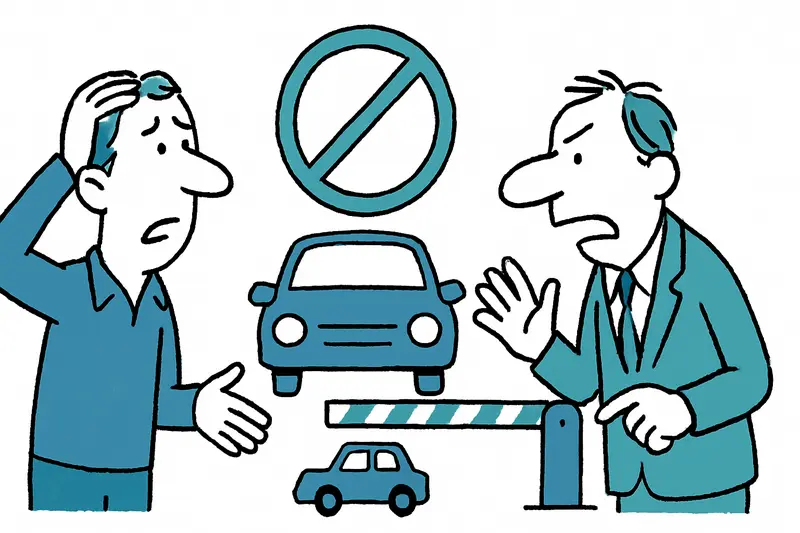
Fast-Track Car Limit: Can Mallorca Really Cope with Fewer Vehicles?
Fast-Track Car Limit: Can Mallorca Really Cope with Fewer Vehicles?
The Balearic Parliament plans an expedited law to cap the number of vehicles: limits for non-local cars, restrictions for rental fleets and a levy for vehicles not registered in the Balearics. A reality check on what's missing and how the island could be practically relieved.
Fast-Track Car Limit: Can Mallorca Really Cope with Fewer Vehicles?
The Balearic Parliament intends to consider a law to limit the number of vehicles in Mallorca under an expedited procedure. Plans include Rental Car Cap: Between Traffic Calming and Holiday Stress – What Mallorca Must Consider Now, restrictions for rental car fleets, and a fee for vehicles with foreign registration. According to reports, the governing parties have reached an agreement; the conservative PP cites February next year as a possible deadline.
Key question
Is a quick legislative package enough to sustainably reduce traffic jams, air pollution and parking chaos on the island — or does politics risk hasty measures without practical implementation on the ground?
Critical analysis
The idea of limiting the number of vehicles strikes a chord. On the Vía de Cintura in the morning and on the Paseo Marítimo in the evening one can see the metal flood with one's own eyes: rental cars with French, German or British plates line up with locals, delivery vans park in the second row, and narrow town passages become congested. But the small measures now being suggested — caps, fleet rules, levies — only work if administration and enforcement grow accordingly. A law on paper remains ineffective if municipalities lack the resources to carry out controls or if registration loopholes remain.
What's missing in the public debate
Two aspects are underemphasized: administrative capacity and social acceptability. So far the debate focuses on technical measures, less on levers such as digital vehicle databases, neighborhood-based parking concepts, or how commuters and businesses are affected. The practice of short-term registration tricks — for example vehicles with temporary documents — is also rarely addressed. And: who pays the fee if a tourist stays only a few days on the island? Such details ultimately determine acceptance and enforceability.
Everyday scene from Mallorca
A Tuesday noon in Santanyí: market women clear olive crates, a delivery van stops in the middle of the narrow carrer, tourists look for a parking space, an older Mallorcan hoots in annoyance. No one blocks intentionally; the system produces the chaos. These small, daily frictions are the benchmark for any new law — this is where you notice whether it works or only creates bureaucracy.
Concrete solutions
A few proposals that are practical and adapted to the island: First: graduated pricing instead of flat fees — short-stay visitor cars should be treated differently than long-term vehicles or commercial fleets. Second: link digital controls — a central register for rental cars, connected with checkpoints at ports and airports, reduces evasion. Third: municipal parking zones with clear priorities for delivery traffic, residents and public transport hubs. Fourth: support programs for businesses so that delivery fleets can be switched to lower-emission vehicles. And fifth: a phased pilot in several municipalities (e.g. Palma, Alcúdia, Calvià) before rolling out the measure island-wide — this allows side effects to be measured and adjustments to be made. (See Too Many Old Cars in Mallorca: Why the Problem Runs Deeper Than the Exhaust.)
Funding and enforcement
A fee for vehicles not registered in the Balearics can generate revenue, but it must be earmarked: for traffic control, expansion of public transport and parking infrastructure. Without clear earmarking the measure easily becomes fiscal adjustment without traffic effect. Accompanying monitoring — measurable indicators such as traffic flow, air quality and parking utilization — is necessary so that parliament evaluates not only numbers but effects, as examined in Mallorca at the Limit: Will This Weekend Break the Visitor Maximum?.
Punchy conclusion
The expedited law is an important signal: politics wants to act. What will be decisive, however, is whether the signal becomes sober practical tools. Limits alone are not enough; they need clear rules, enforcement and financing mechanisms, and tests at municipal level. Otherwise the plan ends up between well-intentioned aims and bureaucratic paper — while the honking queue on the Vía de Cintura keeps growing.
Frequently asked questions
Why is Mallorca considering limits on the number of cars?
Will fewer cars really reduce traffic in Mallorca?
What parts of Mallorca are most affected by traffic and parking problems?
Would Mallorca charge foreign-registered cars to drive on the island?
How could Mallorca control rental cars more effectively?
What practical changes could help Mallorca besides car limits?
Why is Palma mentioned in Mallorca’s car limit plans?
How can Mallorca make sure a car limit law actually works?
Similar News
Body in the Basin of Port Adriano: Who Protects People During Crossings?
In the morning, just before noon: employees of a luxury marina discovered a floating body in the basin of Port Adriano. ...

Raised from the Sand: A Late Antique Merchant Ship Tells of the Sea off Can Pastilla
A 1,700-year-old Roman merchant ship was raised off Can Pastilla. Finds such as sail fragments and amphorae provide rare...

After the Storm: Why Many Fish Died at Riuet de s'Illot — and What's Still Missing
After the severe storm, numerous dead fish were found in the Riuet de s'Illot wetland. Who is affected, why it may have ...
Fire in Can Picafort: Family Rescued at the Last Minute – a Safety Check for the Promenade
A fire in a sports shop on the Can Picafort seafront forced the evacuation of a mother with four children. How safe are ...

Nine-year-old rescued after cliff fall at Cala Murada — How safe are Mallorca's coastal paths?
A boy fell roughly five meters down the rocks near Cala Murada. The dusk rescue was elaborate; a helper also had to be r...
More to explore
Discover more interesting content

Boat Tour with BBQ along Es Trenc Beach

Private transfer from Mallorca Airport (PMI) to Pollensa
