
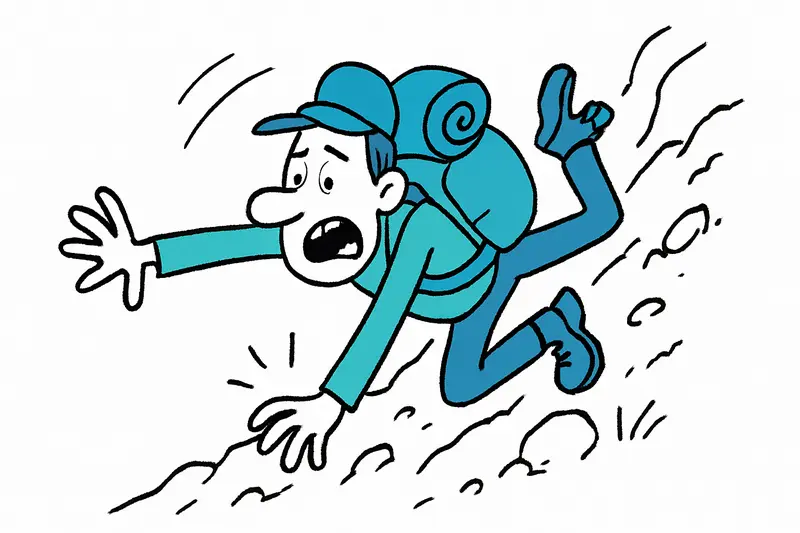
Fatal Fall on Massanella: What a Mountain Hike in Mallorca Demands
A 20-year-old has died after falling on Massanella. The circumstances of the accident remain unclear. The case turns attention to preparation, knowing your limits and the risks of challenging mountain hikes in Mallorca.
A fall, and many unanswered questions
At midday on Saturday, a 20-year-old hiker died in an accident on Puig de Massanella. He was walking with a 40-year-old companion when, according to current information, he fell around 70 metres. Why it happened is unknown. The Guardia Civil is investigating the circumstances of the accident; firefighters and a helicopter were involved in the recovery. At present, it would not be responsible to say more—and that limit matters, especially when someone has died.
Speculating about a misstep, inadequate equipment or a poor choice of route does not make the case any clearer while the circumstances remain unknown. The presence of a companion, too, tells us nothing in itself about what happened on the mountain. This fall is a tragedy, not a reason to assign blame from afar.
How safe is “a hike”?
For anyone heading into Mallorca’s mountains, the key question is not simply: Can I reach the summit? It is: Is the whole hike right for my abilities—including the return journey, the weather and the daylight left? At around 1,365 metres, Massanella is the island’s second-highest mountain and is considered its highest freely accessible summit. Its rocky, steep slopes are no casual stroll, even when the island below seems to promise beaches and an easy day outdoors.
Looking only at the elevation gain can be misleading. On rocky terrain, a short stretch can demand far more concentration than a long walk on a broad path. Navigation, sure-footedness and the ability to turn back in time are just as much a part of the hike as fitness. A summit is not an appointment you have to keep at any cost.
In November, the difference between the city and the mountains can be especially striking. An afternoon in Palma may feel mild; higher up, wind, clouds and fading light can change the conditions. This is not a claim about the weather on the day of the accident—there is no confirmed information about that here. It is a reminder that the weather app at the starting point does not always tell the whole story of the route.
What is often missing from the public conversation
After an accident, attention quickly turns to the dramatic figure: 70 metres. Less attention is given to the practical questions that could actually help other hikers: What route had been planned? What were visibility and ground conditions like? Where exactly did the fall happen? Were there signs of a difficult section? These are questions for the investigation, not invitations to speculate. Only confirmed information could provide a sound basis for learning from the incident.
The recovery operation in difficult-to-access terrain also deserves a sober look. Help on a mountain does not necessarily reach the scene immediately. Narrow paths, rock and a lack of vehicle access make operations complicated; a helicopter cannot simply resolve every situation. Anyone setting out should therefore consider not only how the hike begins, but also how they could share their location in an emergency.
Before setting out: small decisions that matter
Good preparation may not sound exciting, but it helps. Check the route and return journey in advance, look up current conditions at the relevant elevation and allow a realistic time buffer. Do not wait until the summit to decide whether there will be enough daylight for the descent. In a group, the pace should be set by the slowest member—not by the fastest person’s ambition.
Sturdy shoes with grippy soles, enough water, an extra warm layer and a charged phone belong in your backpack. An offline map is useful if reception drops out. It is equally important to tell someone which route you plan to take and when you expect to return. In the event of an injury or immediate danger, call Spain’s emergency number, 112. If you feel unsure on a section, do not stay on an exposed stretch out of pride; turn back if it is safe to do so.
It sounds like a familiar checklist. Yet the contrast is easy to recognise in everyday life on the island: at midday in Palma, cups clink on a café terrace, while up in the Tramuntana a narrow path may suddenly demand your full attention. The shift from café pace to mountain terrain can happen quickly; conditions do not always change quite so agreeably.
The mountain will remain—the caution must come with you
The young hiker’s death does not prove that Massanella should generally be avoided. But it is a reminder that popular destinations are not automatically easy ones. The investigation must establish exactly what happened on Saturday. Until then, the most sensible response is neither sensationalism nor a blanket ban, but respect for the terrain, an honest assessment of your abilities and the willingness to abandon a hike. In Mallorca, the summit can wait. A safe return cannot.
Frequently asked questions
How difficult is the hike to Puig de Massanella in Mallorca?
What should I pack for a mountain hike in Mallorca?
What is the weather like for hiking in Mallorca in November?
How should I plan a safe mountain hike in Mallorca?
What should I do if I get into trouble on a Mallorca hike?
What is known about the fatal fall on Puig de Massanella?
Is Puig de Massanella the highest mountain in Mallorca?
How can I tell when to turn back on a Mallorca mountain hike?
Similar News
Rafa Nadal Joins Real Madrid's Board
Mallorcan Rafael Nadal will join Real Madrid's board. Club members approved his appointment by a large majority.
Fake Driving Licence in Palma: The Case Raises a Bigger Road Safety Question
A 42-year-old German man is suspected of presenting a fake driving licence in Palma. The case has not yet been decided i...
Mallorca in November: When the Island Slows Down Again
In November, Mallorca shows a different side: fewer beach crowds, more room for walks, markets and excursions. If you vi...
Mallorca and Adults-Only Hotels: What New Plans Would Really Change
More hotels exclusively for adults may seem to target a clear audience. But for Mallorca, the label matters less than wh...
Ryanair Pause on December 25: What Mallorca Travelers Can Really Take Away from It
A Europe-wide Ryanair operating pause has been announced for Christmas Day. For Mallorca travelers, the key is understan...
More to explore
Discover more interesting content

Can Cap de Bou

Townhouse Lleo 72
