
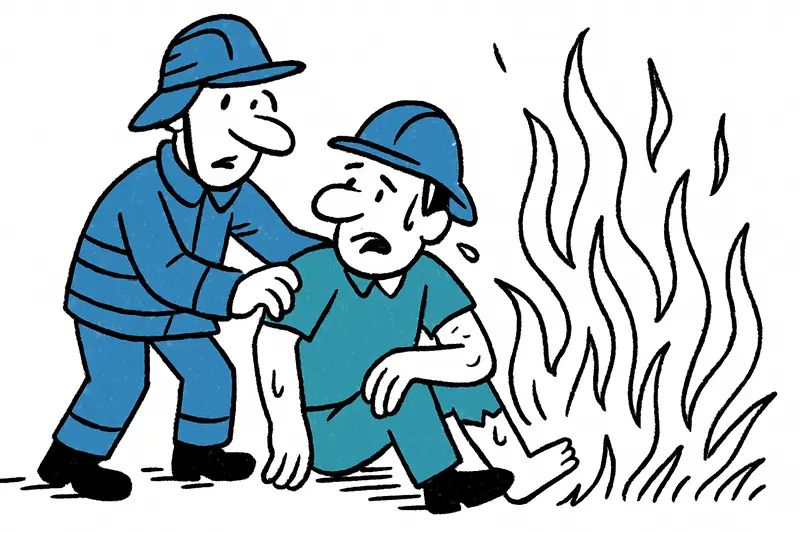
Fire next to the sports field in Inca: A firefighter injured — what now?
During a grassfire next to the Constància sports field in Inca a firefighter was injured. Why do such operations happen right now and what needs to change?
Fire next to the sports field in Inca: An operation that leaves questions unanswered
Yesterday at around 13:30 a usually quiet midday in Inca turned into hectic alertness: smoke rose above the green area next to the Constància sports field, passers-by coughed, dogs pulled on their leashes, and within minutes sirens and the whir of a firefighting helicopter could be heard. Roughly one hectare of dry grass and brush burned, the smoke plume drifted over Calle Conquistador — an image that has worried many of us during these dry weeks.
The key question: Why now and here?
The immediate cause is still unclear. Police and firefighters are investigating, examining technical failure as well as human error; more on the incident appears in Heavy Deployment in Inca: Firefighter Injured — and the Big Questions That Follow. But the central question remains: Why do fire outbreaks in and on the edges of places like Inca become so dangerous during hot, dry periods? Beyond the cause of today’s fire we must think further: Are paths and green spaces sufficiently maintained? Are prevention measures and public education adequate? And how good is the equipment of the emergency services?
What happened on site — and how the firefighter is doing
The incident report sounds familiar (see Field fire in Inca: An injured firefighter and the question of better protection): several fire engines, breathing apparatus crews, foam and water, and a helicopter making repeated water drops. Unfortunately the operation did not end without consequences: a firefighter suffered burns to an arm and a leg and was taken to the Hospital Comarcal d'Inca after first aid. Doctors classified the injuries as serious but not life-threatening. Colleagues reported, their voices still rough from the smoke: "You only notice afterwards how hot it really was," said a firefighter who still had her gloves hanging on the vehicle.
Aspects that are often overlooked
Public reports quickly focus on the where and who, but often remain vague on the deeper questions. Three points deserve more attention: First: staffing and equipment levels. Many fire brigades operate under heavy strain; extra shifts, long operations and worn equipment increase the risk of mistakes and injuries. Second: urban planning and maintenance of peripheral green areas. Neglected verges and hedges are eager fuel sources — why isn't there more systematic mowing and clearing, especially near sports facilities and residential areas? Third: the population's sense of responsibility. A discarded cigarette butt, grill remains in plastic containers or a small campfire can become catastrophic in dry conditions.
Concrete measures that could help now
It is not enough to admire the burned area after extinguishing it. Pragmatism is needed: targeted prevention work in schools and clubs, increased checks in particularly vulnerable zones like the area around the Constància sports field, and clearly marked ban zones for open flames. Technically sensible measures would also include additional water access points outside the town center and regular maintenance of personal protective equipment. Early warning systems — for example cameras at strategic points or drone patrols during critical periods — could also help detect fires at an earlier stage.
Avoid speculation, assign responsibility
Of course one must not judge hastily. Investigations are ongoing. Yet responsibility is also a municipal task: adjust mowing schedules, check the firefighting water supply, and inform residents better. If barbecue areas are approved, then with firm rules and suitable disposal options for embers. A touch of irony is allowed: the "small barbecue in the park" is not necessarily the best idea on dry days — many know that, and still most incidents happen through carelessness.
What the city is doing now — and what citizens can do
The city has scheduled additional shifts for fire control, the fire service has increased patrols and asks: if you see smoke call 112 immediately, do not try to extinguish the fire yourself, and keep your distance. For the coming days: no open fires, dispose of ash and grill remnants properly, do not leave combustible waste in green areas. And if you see a suspicious spark — report it. Sometimes a minute decides on a hundred meters of burned area.
A personal perspective
The day after the fire a brown scar lies at the edge of the sports field. Children who usually kick the ball on the lawn pause briefly, older people wipe their noses from the smoke. The sound of helicopters has faded, but the rumble of the memory remains: how quickly an afternoon can change. We wish the injured firefighter a speedy and full recovery. And we would be wise to treat this incident as a wake-up call — for authorities and neighbors alike.
Those who live in Inca know: summer brings light, warmth and unfortunately also dangers. A little caution, an eye on nature and respect for emergency personnel can make a big difference.
Frequently asked questions
Why do fires in Mallorca become more dangerous during dry, hot weather?
What should I do if I see smoke or a fire in Mallorca?
When is it safest to do outdoor grilling or use open flames in Mallorca?
What should I pack for Mallorca in fire-prone summer weather?
Is it safe to walk near dry grass areas in Mallorca during summer?
What happened near the Constància sports field in Inca?
How is the firefighter injured in the Inca fire doing?
What can Mallorca residents do to help prevent fires near green areas?
Similar News
First Day, First Consequences: What Palma's Rent Freeze Really Means
A new decree stops a planned eviction in Palma — but what really changes for tenants and landlords? A reality check with...
When Housing Becomes a Matter of Survival: Mallorca Between Rental Frenzy and Everyday Life
The case of 87-year-old Maricarmen showed that on Mallorca many people's lives are poised between affordable and uninhab...
Autumn in Mallorca: When Melancholy Gets a Window
Why autumn quietly tightens here — and how to make use of the mood: walks, culture, candles and the light from Palma to ...
Near-miss on Lanzarote: Landing Ryanair Jet and Iberia Takeoff — what really went wrong
On Lanzarote there was a dangerous incident: A Ryanair flight (FR5910) from Dublin landed on runway 03 while an Iberia E...
Eurowings introduces new Premium Business seats on Mallorca routes
From December 1, selected Eurowings flights to Palma and other destinations will feature eight particularly generous sea...
More to explore
Discover more interesting content

Can Cap de Bou

Townhouse Lleo 72
