
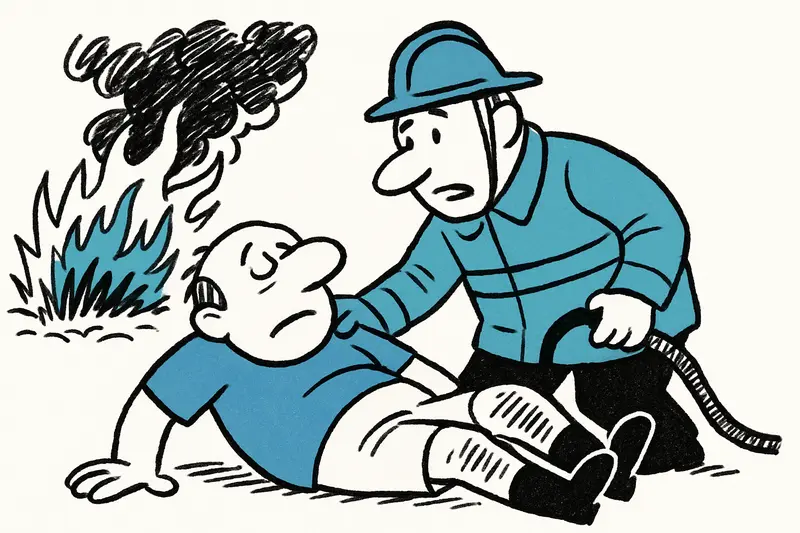
Field fire in Inca: An injured firefighter and the question of better protection
A fast-moving field fire at Club Constància brought helicopters, firefighting planes and casualties. One firefighter was severely injured. Why does the risk repeat at field edges — and what needs to change?
A hot midday, a loud helicopter: the fire at Inca's field edge
It was around 12:30 pm, the sun hung high over Inca, dust like a gray blanket over the fields. Next to the Club Constància football pitch, flames suddenly shot into the dried scrub at the edge of a field — right at an intersection where buses, delivery vans and commuters head daily toward the station. Sirens wailed, a helicopter released water with a dull thud, and two firefighting planes traced bright paths across the blue sky. What began as a brief alarm quickly developed into an operation that shook the whole community awake, as reported in Fuego junto al campo deportivo en Inca: un bombero herido — ¿qué pasa ahora?.
A comrade severely injured — and the question of his safety
During the extinguishing work a firefighter suffered second and third degree burns to his arms and legs. Colleagues treated him on site, the SAMU 061 emergency service took over first aid; he was not immediately taken to hospital but remained in secured care. Four others complained of mild smoke inhalation and were treated as outpatients. A neighbor who watched the scene from his bakery window summed it up simply: 'The smoke was suddenly everywhere. You could literally hear the burning.' Further local details were published in Bombero gravemente herido: incendio en Inca durante intervención en campo.
Why does this happen so often at field edges?
The immediate suspicion falls on discarded cigarettes or sparks from farm machinery — classic ignition sources in a dry season. But the real guiding question is: have we as a municipality and island taken sufficient precautions so that such operations do not end in injuries? The problem is multifaceted: dried vegetation, narrow access for fire engines, sometimes lacking water points and the proximity of residential and commercial areas to former agricultural land.
Aspects that are often overlooked
While helicopters and firefighting planes are spectacular, structural weaknesses remain invisible. Three points deserve more attention: First, the training and protective equipment of responders — are protective gloves, fireproof overalls and cooling stations sufficiently available and quickly accessible? Second, the accessibility of fire sites: narrow field tracks and parked vehicles delay the advance of pumps. Third, prevention across the area: are grass verges along access roads freshly mowed, are there sufficient firebreaks and clear warning signs?
Concrete proposals instead of general concern
The current situation offers opportunities for tangible improvements. Short-term sensible measures would be:
- More water extraction points and mobile tanks at fire hotspots. - Mandatory checks for agricultural machines for spark suppression during the summer months. - Additional cooling and support areas for responders during major incidents. - Increased controls and fines for careless disposal of cigarettes at critical points.
In the medium term it is worth expanding firebreaks, reliable mowing plans along access routes and a joint prevention programme by municipalities, farmers and tourism operators, in line with European Commission wildfire prevention guidance. Last but not least, the psychological aftercare of responders should be given greater consideration: a severely injured colleague leaves more than physical scars.
What the municipality now announces — and what practice must deliver
The municipal administration has already announced enhanced prevention measures: intensified cutting of grass verges, warning signs and targeted controls in particularly dry periods. That sounds sensible, but whether it is enough will be decided in implementation: will personnel be provided for controls? Is there a budget for additional water points? And will landowners be informed and involved in time? Local coverage provides more context in Bombero gravemente herido durante trabajos de extinción cerca de Inca.
The afternoon in Inca ended without large-scale evacuations, but with an injured firefighter, several briefly treated people and a burned hectare of land that now loudly calls for rain. The operation shows once again: fire knows no pretty landscapes — but it does reveal clear weaknesses in our preparedness.
An outlook with hope — if we act
If the measures now announced are not only announced but implemented consistently, an alarming incident can become a turning point. Better infrastructure, clear rules for summer operations on and next to fields, plus increased public awareness — those are the ingredients so that the sound of fire engines becomes an emergency call less often.
And for the injured comrade: may his rehabilitation be swift and complete. The island owes him not only wishes for recovery but also actions that make future operations safer.
Frequently asked questions
Why do field-edge fires happen so often in Mallorca during dry weather?
How dangerous are field fires for firefighters in Mallorca?
What should people do if they see a field fire in Mallorca?
When is the risk of grass and scrub fires highest in Mallorca?
What should I wear or carry for outdoor walks in Mallorca during fire season?
Why is Inca especially vulnerable to field fires?
Are there plans to improve fire prevention around Inca, Mallorca?
What makes access to field fires in Mallorca so difficult for emergency crews?
Similar News
Masked Images, Real Panic: When Social Media Aesthetics Alarm Neighbors
Five German content creators filmed on a recently vacated detention site using deceptively realistic props. The result: ...
Why the Striped Breams in Cala Pí Should Be a Wake-up Call
Once again bathers in Cala Pí were surrounded while swimming by small, nippy fish — some wounds bled. Time for clear rul...

Daily from New York: How Palma's Air Traffic Is Growing — and What Must Change
United will increase the Newark–Palma service to daily flights in 2027 (Boeing, 231 seats). Strong tourist numbers clash...

When Love Ends in Shards: Destruction in Son Vida and the Questions That Remain
In Son Vida a relationship dispute escalated: a woman destroyed furniture in a luxury villa, later pressed a panic butto...
Who Bears the Burden? Mallorca Between Tenant Protection and Landlord Fears
Madrid's new housing decrees strengthen tenant rights — but on Mallorca concern is growing: will the law drive small lan...
More to explore
Discover more interesting content

Can Cap de Bou

Townhouse Lleo 72
