
Who Pays the Bill? Why Mallorca's Gas Station Strike Is More Than a Wage Dispute
Who Pays the Bill? Why Mallorca's Gas Station Strike Is More Than a Wage Dispute
UGT and CCOO have announced strikes for late April/early May. On Mallorca the wage debacle hits low‑paid workers — and the island's economy in a sensitive week.
Key question: Who pays the bill when work at the pumps comes to a halt?
A strike in the traffic flow — and what is far too rarely discussed on Mallorca
A four‑hour stoppage is planned for April 30; if the blockade continues, a 24‑hour strike is scheduled for May 3. UGT and CCOO speak of around 55,000 people affected in Spain, more than 800 of them in the Balearic Islands. The demand: noticeably higher wages — away from the roughly €1,350 average toward a target of about €1,650. At stake is not only a wage issue but also the island's accessibility during a traffic‑heavy holiday week.
That is the framework. The analysis must go deeper: national collective bargaining and local everyday realities collide here. In April Mallorca is no longer a perennial provincial market: rents rise, seasonal workers arrive, and demand for mobility increases. A salary that barely registers on the mainland often isn't enough here to pay for a small flat or to maintain a car — both prerequisites to get to the pump in the first place.
On the streets of Palma, along the Passeig Marítim and Avinguda Jaume III, the picture is familiar: delivery vans in the morning, taxis behind them, commuters with coffee cups at the stops. When petrol station staff are absent for hours in protest, it's not only fuel that moves more slowly — the corner shops, buses, tradespeople and care services feel the impact quickly, as in Alarm on the Coast: Why the Lifeguard Strike in Mallorca Is More Than a Labor Dispute.
The unions name causes that are visible even at the kiosk next to the station: rising bundles of tasks (shop, car wash, digital payments), intensified price pressure and a shift toward self‑service that changes jobs without changing responsibility. Employers point to the sector's profit margins, investments in technology and competitive conditions. Both sides are engaged in national negotiations that so far have stalled, as reported in Bus strike in Mallorca: Why talks keep failing — and what might come next — locally, the problems are growing sharper as a result.
Three things are missing from the public debate: first, the distinction between large oil companies, franchise operators and independent station owners. They do not all have the same bargaining power. Second, the role of precarious contracts: part‑time work, short seasonal contracts and night work change the calculations for employees. Third, the consumer perspective on the ground: who ultimately bears higher wages — the tourist, the commuter or the municipality? Echoes of these broader concerns have surfaced in warnings about public‑service stoppages, for example Strike Warning in the Public Service: Could the Balearic September Come to a Standstill?.
Without these perspectives, misguided solutions are likely. If the discussion focuses only on percentage points in the collective agreement, structural questions remain open: how to prevent staff turnover in remote towns? How to reconcile fair pay with the need for modernised payment systems? Who takes responsibility for training in tills, shop management and security tasks?
Small, pragmatic steps would be more effective now than posturing. Suggestions that make sense for Mallorca:
- Immediate mediation with a neutral body that takes into account the Balearic Islands' regional particularities.
- A time‑limited compensatory payment for island employees until wage points are made binding; this could open negotiable paths for employers and municipalities.
- Transparency obligations for chain operators: disclosure of how fuel prices are composed so wage increases are not automatically passed on to customers.
- Investments in shift planning and training, supported by an industry fund; this would reduce turnover, make jobs more attractive and stabilise service quality.
This is not a patent remedy — but working paths that can defuse the tariff dispute without blocking the island in a week when many people are on the move. Time is short. The strike dates fall in a travel period when traffic jams and full ferries already strain nerves and plans, and air travel disruptions such as Ryanair Strike in Mallorca: Who Pays the Price — and What Travelers Should Do Now add to uncertainty.
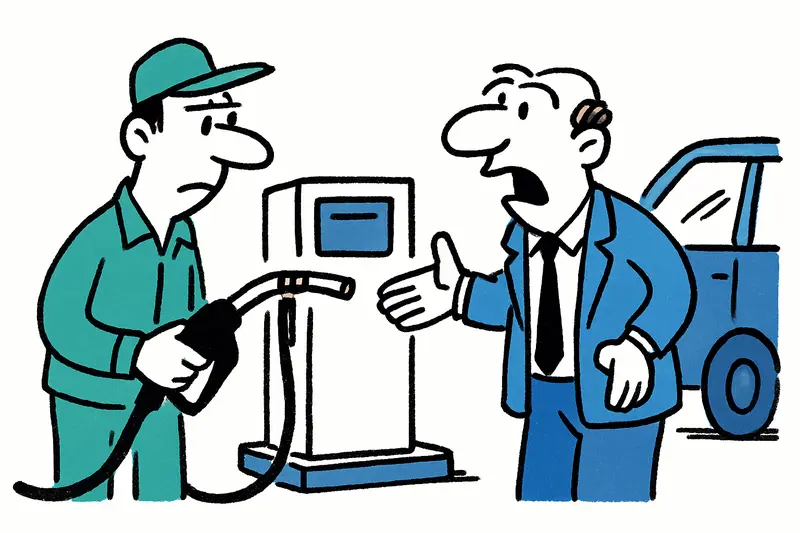
A everyday scene to finish: It's six in the morning at a petrol station near the market in Santa Catalina. The attendant is still wiping the nozzle, two delivery vans pull in, an older woman fills her car with diesel for a trip to the mountains. She hears there will be strikes, shrugs and says: "I don't have much, but if they do the job, I'm grateful." Voices like hers often get lost in tariff tables.
Conclusion: Those who now look only at short‑term costs overlook the long‑term risks to supply security and the attractiveness of the work. The solution lies in a combination of willingness to negotiate, regional transitional arrangements and more transparency in the sector. Otherwise, in the end the employees will pay — or the islanders, if pumps, supply chains and local transport grind to a halt.
The lingering question remains: can unions and employers resume negotiations before the protest turns into concrete shortages? Mallorca's everyday life can scarcely afford failures. The answer will decide who ultimately pays the bill.
Frequently asked questions
Will the gas station strike in Mallorca affect travel and daily life?
Why are gas station workers in Spain and Mallorca going on strike?
How many people could be affected by the gas station strike in Mallorca?
What should drivers in Mallorca do if petrol stations close for hours?
Why is a gas station strike in Mallorca more serious during holiday weeks?
Is Palma likely to feel the gas station strike first?
Could a fuel strike in Mallorca affect taxis, buses, and delivery services?
What would a fair solution to the Mallorca gas station dispute look like?
Similar News

Fewer Airlines, Fewer Destinations: What Palma's Winter Flight Schedule Means for Mallorca
Analysis shows: Winter at Son Sant Joan Airport will be quieter, with significantly fewer airlines and destinations. Who...
German tourist dies in Sa Calobra – a reality check for emergencies on Mallorca's beaches
A 40-year-old tourist died at the Torrent de Pareis. The emergency call, a doctor who happened to be present, a defibril...
Deadly Tractor Accident in Bunyola: What Needs to Be Done Now
In a work accident on an estate near Bunyola, a roughly 40-year-old man lost his life. His wife and a small child were o...
Head-first dive into the shallow part of Cala Fonoll: An accident and the unresolved question of responsibility
A young tourist dove into Cala Fonoll and was seriously injured. Key question: Why are clear warning signs missing at da...

Mistaken identity with fatal consequences: Brutal assault in S'Aranjassa — what's missing in the follow-up?
At S'Aranjassa a visitor to a finca was tied up, beaten and thrown out of a van. Three men have been arrested, including...
More to explore
Discover more interesting content

Can Cap de Bou

Townhouse Lleo 72
