
Fuel vapors on a finca: a deadly spark near Pollenca
Fuel vapors on a finca: a deadly spark near Pollenca
At Torre de Ariant in the Serra de Tramuntana, a 58-year-old man died after sparks from an angle grinder apparently ignited remnants of petrol vapors in a steel drum. A look at causes, gaps in everyday safety and concrete measures for finca owners and tradespeople.
Fuel vapors on a finca: a deadly spark near Pollenca
Why a single moment is enough — and what must change to prevent this from happening again?
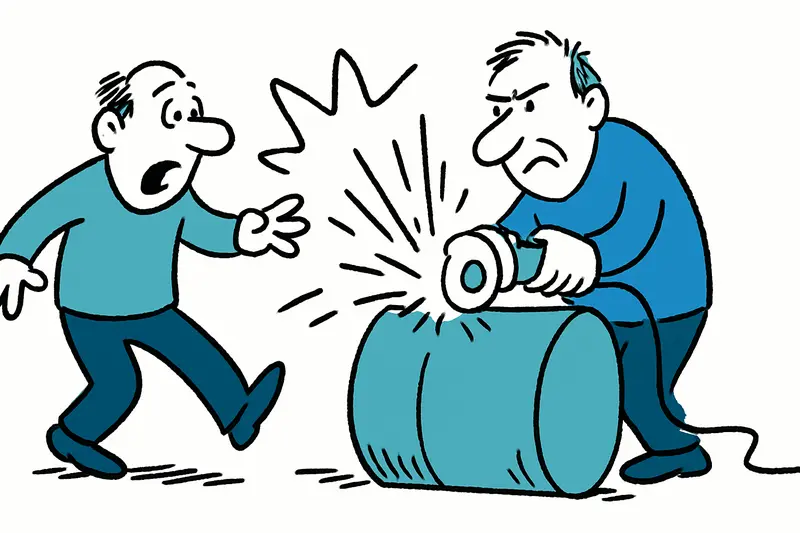
Early one afternoon in May in the Serra de Tramuntana, near Torre de Ariant: a 58-year-old man was carrying out maintenance and garden work on a remote finca near Pollenca. According to the facts known so far, he apparently tried to open the lid of a steel container with an angle grinder, believing it to be empty. Sparks were produced, remaining fuel vapors ignited, the drum deformed and a violent flash fire occurred — the man succumbed to his severe injuries on site.
The sequence of events is painfully clear: first aid by the local police, alerting the emergency services, arrival of the Guardia Civil and ambulance service 061, and the request for an air rescue helicopter due to the remote location. Medical rescue measures were initiated but later stopped when the victim’s death was confirmed. The Guardia Civil has opened an investigation into the exact cause of the accident; recent reporting on island fires such as Spain is Burning: Fire Traces as Far as Mallorca underlines pressures on emergency services.
Key question: Why do private properties and fincas remain places where basic safety rules are so easily overlooked — and what responsibility do owners, workers and authorities bear?
Critical analysis: power tools such as angle grinders are now standard equipment on many properties. They are practical and efficient — but they produce sparks. When old pressure vessels, jerrycans or drums are stored on a property, even a small residue of petrol or diesel plus evaporated gases is enough to trigger a tragedy. In rural areas, family members, seasonal workers or neighbours without special training often do the work. Clear labelling, safe storage areas and simple pre-checks before starting spark-producing work are often missing.
What is missing from the public discussion: the debate too often stays at headline level. Detailed guidance for finca owners is rarely addressed: Where can I have old tanks disposed of properly? How do I recognise residual vapors? What simple pre-checks can a layperson perform? Authorities do publish hazardous-substance regulations, but these rarely reach people who do private work in rural areas or carry out small repairs themselves; local incidents such as a hotel fire in Cala San Vicente show how safety messages can fail to reach everyone.
A scene from everyday life: on the way out of Pollenca you smell freshly cut grass, olive trees cast shade over stone walls, an old farm trailer stands by the path. Men on fincas tinker with engines, pump petrol into cans and store used drums in a remote corner. No one posts a big sign: "Danger — do not open with spark-producing tools." And it is exactly this mix of familiarity and ignorance that is dangerous.
Concrete solutions that could help immediately:
1) Simple rules and checklists: For any work on containers, first perform a visual check, open lids only with good ventilation, and keep spark sources away. A handy checklist, distributed through municipal offices, hardware and garden stores and petrol stations, would prevent many accidents.
2) Safe disposal and collection points: Municipalities should offer regular collection drives for old jerrycans and drums. Those on fincas without disposal options should be able to hand in these old containers free of charge.
3) Awareness for owners and workers: Short, practical information sheets in several languages and brief workshops for seasonal workers — for example organised by the municipality or agricultural associations — would be useful. Incidents such as a fire in Can Morro near Porto Pi highlight the same need for basic precautions and outreach.
4) On-site safety rules: Containment areas, clearly marked storage zones, no storage near repair sites and the use of non-sparking tools when contents are uncertain.
5) Emergency and rescue preparation: On remote fincas, telephone numbers, directions and information on the nearest access routes should be clearly displayed. For rescue services, time is often decisive; structured preparation by residents can save lives.
These measures do not require a large budget but rather organisation and attention. Owners must take responsibility; municipalities can achieve a lot through easily accessible services and information. And craftsmen, gardeners or family members should never assume a container is "just empty" — a single breath of vapors or a spark is enough.
Concise conclusion: An explosion like the one at Torre de Ariant is not a one-off fate but the result of many small, avoidable oversights. A spark is produced quickly; the difference between routine and catastrophe often lies in a few minutes of preparation. Clearly labelled storage, collection points for old containers, simple checklists and local awareness campaigns could prevent neighbours and family members from having to go through such an experience. This is not a high demand — just the duty of common sense on an island built on proximity, community and small fincas.
Frequently asked questions
Why can fuel vapors in a metal drum be dangerous on a Mallorca finca?
Can you use an angle grinder near old fuel containers on a finca?
What should I do with old jerrycans and drums on my Mallorca property?
What basic safety checks should I do before working on a container at a finca?
How can Mallorca finca owners reduce the risk of a fuel fire?
Who should be careful with fuel containers on Mallorca rural properties?
What emergency information should be available on a remote finca in Mallorca?
How are accidents with fuel vapors investigated in Mallorca?
Similar News
When the Wallet Becomes a Danger: Attack in Peguera and Lessons for Mallorca
In Peguera, two women are said to have stolen the wallet from a 75-year-old German couple. When the victim intervened, t...
Plata stays Plata: Young people take over, Llonguets remain
A small bar on Carrer de l'Argenteria will continue: Tolo Serra hands the place over to young Mallorcans at the end of t...
Unnoticed in the Luggage Compartment: How a Boy Traveled More Than 100 Kilometers in a Team Bus
A minor traveled in the undercarriage of a team bus for more than 100 kilometers until his cries for help were heard. A ...

Cap Vermell Grand: Second Michelin Key – a Gift for the East
The Cap Vermell Grand in Capdepera has been awarded its second Michelin key. For the region this elevates the luxury off...
Eurowings lets four aircraft carry names – a friendly idea that also reaches Mallorca
Eurowings is launching a campaign: four Airbus A320s are to carry the first names of people who help others in everyday ...
More to explore
Discover more interesting content

Can Cap de Bou

Townhouse Lleo 72
