
Mysterious Shark Discoveries at Calanova: A Wake-up Call for How We Treat the Sea
Mysterious Shark Discoveries at Calanova: A Wake-up Call for How We Treat the Sea
Two large sharks were found dead off Calanova. Who is liable, what causes are possible — and why do we talk so little about systematic risks to the seas off Mallorca?
Mysterious Shark Discoveries at Calanova: A Wake-up Call for How We Treat the Sea
What does the find mean for the coast, fishermen and conservation?
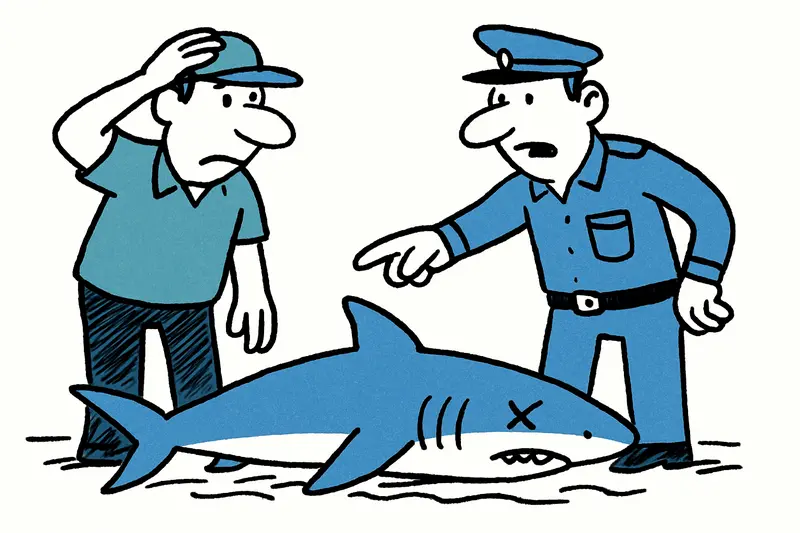
On Tuesday, emergency crews recovered two dead sharks from the water near Calanova. The Guardia Civil secured the site, and biologists from Palma Aquarium examined the carcasses on site before the animals were taken away for further investigation. The species has not yet been confirmed; observers on site reported large specimens. Why this happened remains unclear.
Key question: Is this an isolated accident — or is the finding a symptom of a larger problem in our coastal waters?
At first glance, several explanations are conceivable: entanglement in fishing nets, illegal disposal of dead animals, disease, poisoning or consequences of changing marine conditions. Fishing nets are not uncommon off Mallorca, and bycatch is a known danger for larger marine animals. At the same time, an infection-driven mass mortality can strike suddenly if parasites or toxins spread.
The authorities have reacted, but the response alone is not enough. What matters is which information is now made public: which investigations are being carried out, how quickly results will be available, and who evaluates them? Without transparent findings there is room for speculation and false narratives — this harms both conservation efforts and the credibility of oversight institutions. Local coverage has previously documented comparable cases such as Dead Shark at the Paseo: A Wake-up Call for Better Coastal Protection in Palma, Dead Shark on the City Beach: What the Large Wound Reveals About Mallorca and Dead Shark at Playa Can Pere Antoni: Bite Marks Raise Questions.
What has so far been missing from the public discourse: reliable figures on bycatch in the region, clear rules and controls for handling caught or dead large fish, and openly accessible documentation of necropsy (animal autopsy) results. Also rarely discussed are the incentives in the fishing sector: who looks the other way when nets are too fine-meshed or catch quotas create pressure? And what role do seasonal tourist movements or changed sea currents play in such discoveries?
An everyday scene I often observe: in the afternoon people sit on the Calanova promenade, hear the squawking of the seagulls, and watch the small fishing boats chug back into the harbor. Suddenly the mood quiets; people take out their phones, record videos, whisper. No one likes to see death in the sea, but everyone wants to see what is happening. This mixture of curiosity, concern and helplessness shapes the local response.
Concrete solutions that make sense now:
1) Investigate quickly and transparently: Complete necropsies by independent marine biologists, followed by publication of the results in an accessible form.
2) Make bycatch reporting mandatory: Electronic reporting systems for fishing operations and regular inspections by inspectors on land and at sea.
3) Protect sensitive areas: Temporary exclusion zones or gear restrictions (e.g., different nets, time windows) in areas with a high presence of large marine animals.
4) Strengthen research: Fund local projects that investigate diseases, toxins and the effects of water temperatures on large fish.
5) Use citizen participation: A reporting platform for beach and boat observations, combined with training for first responders and volunteers to properly secure samples.
Another measure: cooperation between state agencies, coastal guards, research institutions and fishing associations must become more binding. Too often these groups work in silos — that delays responses in a crisis.
Finally, a clear word: dead sharks are not just sensational material; they are indicators. They tell of interventions in the ecological balance, of gaps in monitoring and control, and of an approach to the sea that is often reactive rather than forward-looking. When the findings of the investigations are clear, the response must not remain merely an administrative procedure. Measures are needed to prevent such discoveries from becoming everyday normality.
Those who live on Mallorca’s shores or vacation there should be able to learn more than a police report. Clear information, timely research results and concrete changes in fishing practices would be a start. And the next time the seagulls circle over Calanova, we should not just watch — we should know what happened and what we can learn from it.
Frequently asked questions
Why do dead sharks sometimes wash up near Mallorca?
What should happen when a dead shark is found on the coast of Mallorca?
Can fishing nets in Mallorca harm sharks and other large marine animals?
Is it safe to swim in the sea near Calanova after shark discoveries?
Why is transparency important after shark deaths in Mallorca?
What does a dead shark in Calanova tell us about Mallorca’s sea?
What can be done to prevent dead sharks from becoming a regular sight in Mallorca?
Can visitors in Mallorca report unusual marine finds on the beach or from a boat?
Similar News
German tourist dies in Sa Calobra – a reality check for emergencies on Mallorca's beaches
A 40-year-old tourist died at the Torrent de Pareis. The emergency call, a doctor who happened to be present, a defibril...

Deadly Tractor Accident in Bunyola: What Needs to Be Done Now
In a work accident on an estate near Bunyola, a roughly 40-year-old man lost his life. His wife and a small child were o...
Head-first dive into the shallow part of Cala Fonoll: An accident and the unresolved question of responsibility
A young tourist dove into Cala Fonoll and was seriously injured. Key question: Why are clear warning signs missing at da...

Mistaken identity with fatal consequences: Brutal assault in S'Aranjassa — what's missing in the follow-up?
At S'Aranjassa a visitor to a finca was tied up, beaten and thrown out of a van. Three men have been arrested, including...

High heel slips, car accelerates: accident on Camí de Son Hugo
A woman lost a high-heeled shoe on the forecourt of the sports facility at Camí de Son Hugo. The car accelerated, mounte...
More to explore
Discover more interesting content

Can Cap de Bou

Townhouse Lleo 72
