
Dead Shark at the Paseo: A Wake-up Call for Better Coastal Protection in Palma
An injured shark drifted in the evening off the Paseo in Palma — dramatic images, failed recovery attempts and the question whether our coastal management is prepared. Time for clear reporting channels, rapid response capacities and scientific verification.
Dead Shark at the Paseo: Evening Mood, Phone Cameras and Many Unanswered Questions
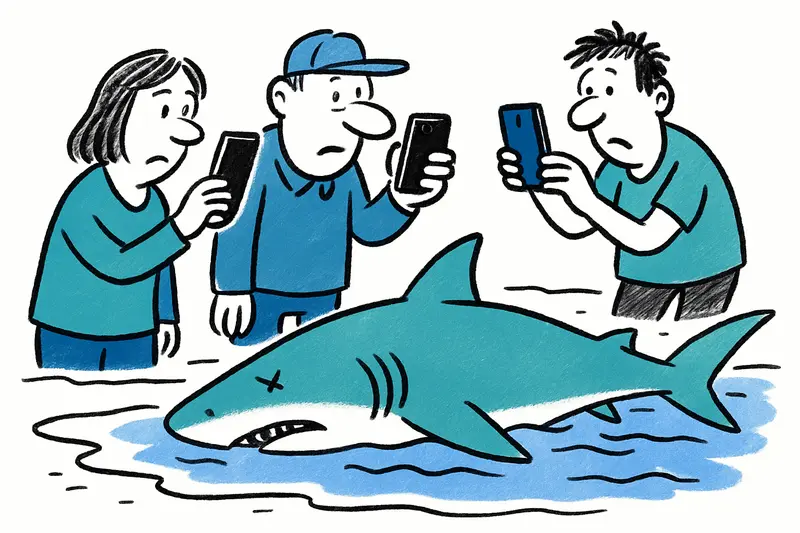
It was one of those quiet evenings on the Paseo in Palma: the sound of the waves, the clatter of ropes in the harbor, seagulls calling over Portixol. Then an unusual sight stopped many local walkers — a large shark, motionless in shallow water, visibly injured. Phone cameras flashed, people moved closer, some laughed nervously. "People film it as if it were a movie," said an older man who often walks here. The scene felt like a bad plot. Except it was reality.
The Key Question: An Isolated Incident or a Symptom of a Bigger Problem?
Speculation sprang up quickly: propeller strike, nets, disease, an attack. The fact is: the animal was injured and recovery attempts failed due to increasing waves. Port and coastal authorities as well as the Guardia Civil were on site and warned people to keep their distance. But the episode Dead shark on Palma's city beach: a sign of a bigger problem? Do we have the organizational and scientific structures in Palma and Mallorca to make sensible use of such finds — or will it end up as just a viral video?
The Facts — Briefly
On site: Rescue personnel urged caution. The animal could not be secured and was washed back out to sea.
What is often missing: A rapid, professional examination (necropsy), clean documentation of Dead Shark on the City Beach: What the Large Wound Reveals About Mallorca and a clear chain of reporting to the responsible authorities.
Practical hurdles: Wind, waves, tidal windows, lack of specialized equipment and not always available boats hamper quick operations — especially where tourism, leisure and commercial shipping overlap.
What Often Falls Short: The Organizational and Scientific Response
The public focus usually stays on the images at the waterline. Yet the follow-up work decides what can be learned: Who examines the wounds? Dead Shark at Playa Can Pere Antoni: Bite Marks Raise Questions Are there systematic records? Without these steps, causes remain speculation. And this is not merely academic: only with valid data can recurring threats to marine animals be identified and countermeasures planned.
Concrete Proposals — What Should Happen Now
1. Standardized reporting channels: A clear protocol for reporting beach finds that connects citizens, ports, the coastal authority and research. A simple app or a hotline with required information (location, time, photos, GPS) would save a lot of time.
2. Rapid response resources: Standby boats and teams with lifting and securing equipment that can operate in moderate seas. Short response times are crucial when carcasses serve as evidence.
3. Scientific cooperation: Agreed partnerships with universities and marine research institutes for rapid necropsies and lab tests. Only then can injury patterns, parasites or pathogens be clearly identified.
4. Public awareness: Information boards at city beaches, guidance on how to behave when finding animals (keep distance, Spain's 112 emergency service) and awareness campaigns explaining why crowds at the shore can hinder rescue and research work.
5. Shipping prevention measures: Review of navigation routes, temporary protection zones and speed limits in sensitive coastal areas — especially where shallow shorelines and port traffic meet.
Why This Matters for Palma and Mallorca — A Realistic Look Ahead
A dead shark in the bay is more than a macabre photo for a phone. It is an indicator: conflicts over use of the coast must be addressed in a multidisciplinary way. Rescuers, authorities, researchers and the public belong together. The sounds at the harbor — engines at sunset, captains' whistles, the clink of chains — are a reminder: leisure, commercial traffic and nature converge in a small space.
If the authorities now draw conclusions, record data systematically and implement the proposed measures, the find at the Paseo could become a turning point. More knowledge about our seas, better emergency plans and fewer wild speculations at the waterline would be a real gain for Mallorca. Until then: keep your distance, Spain's 112 emergency service and remember that our curiosity can delay rescue actions — with real consequences for animals and responders.
The neighborhood around Portixol will not forget that evening soon. Nor will the seagulls.
Frequently asked questions
What should I do if I find a dead or injured shark on a beach in Mallorca?
Why do marine animals sometimes wash up on Palma beaches?
Can you swim near a dead shark or other stranded animal in Mallorca?
When is shark activity more noticeable around Mallorca?
What happens after a dead shark is found in Palma?
Is the Paseo in Palma a place where wildlife and port traffic can clash?
How should people behave when they see a stranded animal in Portixol or Palma?
What can Mallorca do better after a dead shark is found on the coast?
Similar News

Cafetería San Siro: A Meeting Place on Schinken Street Since 1966
In the middle of Schinken Street, Cafetería San Siro has been offering Mallorcan hospitality for more than six decades —...

From Ballermann to Prison: What the Verdict Against the Femina Operator Means for Palma
The Munich Regional Court convicted a German operator for subsidy fraud. What does the verdict mean for the Femina Club,...
Underpass Verge de Lluc: 19-year-old fights her way out of flooded car – a warning sign for Palma
A 19-year-old recently escaped swimming from her car after the Verge de Lluc underpass held up to one and a half meters ...

When the Floodgates Open Again: Why Palma's Floods Aren't a Coincidence
A sudden heavy downpour around 5 p.m. brought Palma to a standstill: flooded streets, full basements, panicked commuters...
Playa de Palma: Life-saving at Balneario 11 – Lifeguards Act Quickly
A German holidaymaker suffered cardiac arrest at Playa de Palma. Lifeguards resuscitated her on the beach; emergency ser...
More to explore
Discover more interesting content

Can Cap de Bou

Townhouse Lleo 72
