
Dead Shark at Playa Can Pere Antoni: Bite Marks Raise Questions
A dead shark with pronounced bite marks was found on Palma's city beach. Authorities secured the site and took samples — what causes are possible and what lessons should Mallorca learn?
Discovery at the city beach: A shark on the sand — and many open questions
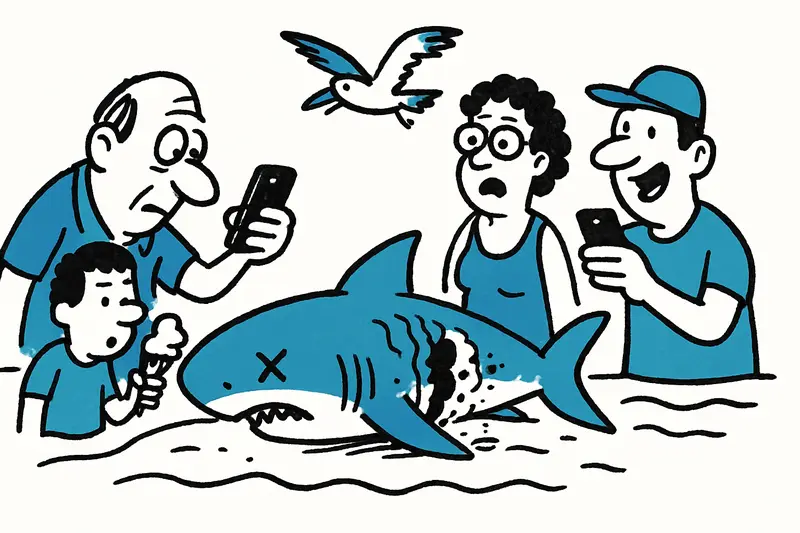
On early Friday evening, with the sun still warm on the promenade and the seagulls sending their shrill cries over the sea, walkers at Playa Can Pere Antoni near the conference centre discovered a dead shark (covered in Dead Shark on the City Beach: What the Large Wound Reveals About Mallorca). Within minutes a small crowd gathered: children with ice cream, a couple on a bench, mobile-phone cameras, a delivery rider pushing his scooter. The carcass lay clearly visible on the sand from the shore — for many a curious, for others an unsettling sight. That no one was injured reassured those present only slightly.
What stood out
The animal showed conspicuous bite marks, parts of the tail and fin area were missing, and open flesh wounds were visible. Lifeguards immediately cordoned off the area, cleared bathers and waited for municipal emergency crews. Later the carcass was removed by vehicle and samples were handed over to a laboratory. Photos and speculation quickly circulated on social networks, a pattern found in Dead shark on Palma's city beach: a sign of a bigger problem? — ranging from an encounter with a larger predator to damage caused by human equipment. Authorities warn to be cautious: photos alone are not sufficient to determine the cause of death unequivocally.
Analyses: What explanations are possible?
Marine biologists and city experts name several scenarios: an attack by a larger predatory fish or mammal, scavenger bite marks, an animal that had already died and was washed ashore by currents, or an accident involving human activity — for example propeller injuries, net or hook damage. Infections or environmental toxins can also impair swimming behaviour. Recent strong coastal currents could also have played a role and transported a carcass to this unusual location. In short: the visible bite marks are only one piece of the puzzle.
What is often missed in the public debate
The rapid collection of images on the beach and the usual social-media explanations tend to obscure three little-noticed questions: first, why there is hardly any comprehensive monitoring of larger predators in the Balearics; second, how clear the reporting and action protocols are for beach findings; third, what long-term role local fisheries and recreational boats play for marine fauna. Mallorca has many researchers and well-intentioned initiatives — yet a binding, publicly accessible process is lacking that would provide reliable data immediately when such animals are found.
There is also disposal to consider: a carcass on a city beach creates odour, health concerns and image problems for tourist destinations. How quickly and transparently action is taken often determines public sentiment. In Palma the response was swift this time, but not all find locations are so accessible, as reported in Dead Shark at the Paseo: A Wake-up Call for Better Coastal Protection in Palma.
Concrete opportunities and next steps
The incident also offers an opportunity: now that the issue is visible, authorities, research institutions and fishing associations could develop a clear plan. Marine experts specifically propose:
1. Standardised necropsies: Every report of a larger animal should be documented uniformly — photos, measurements, tissue samples. Results should be published promptly to reduce speculation.
2. Reporting app for beach finds: An easy-to-use app allowing citizens to report finds and receive brief guidance on keeping distance and safety would enable quick responses and deliver valuable data.
3. Public information: Clear notices on beaches about what to do (do not touch, respect cordoned-off areas), combined with short information leaflets about local species and currents.
4. Collaboration with fishers: A network that collects observations and provides robust data on fishing pressure, nets and accident frequency.
In the long term, more systematic research is needed into the distribution of larger fish species in Mallorcan coastal waters — also in the context of rising water temperatures and changing food availability.
What you should do now
Beach visitors should remain calm but act responsibly. Keep your distance, avoid close-up photos, and explain to children that wild animals must be respected. Authorities are working on answers; samples should show whether this was a natural incident or whether human influences played a role. Until then, caution is the best recipe — and more questions for decision-makers who live daily with sea and tourism here in Mallorca.
The dead shark at Playa Can Pere Antoni is more than a curious beach notice. It is a moment that should unsettle: it reminds us how little we know about the processes beneath the water surface and how urgent a joint monitoring and information system would be. The seagulls are still circling, the children keep eating their ice cream — and we should use the opportunity so that such finds bring not only headlines but clear answers in the future.
Frequently asked questions
What should I do if I find a dead shark on a Mallorca beach?
Can you swim at Playa Can Pere Antoni if a shark has been found there?
Why do dead sharks sometimes wash up on Mallorca beaches?
Are bite marks on a shark in Mallorca proof that another predator attacked it?
What happens when a dead shark is found on a city beach in Palma?
Is it safe to take photos of a dead shark on the beach in Mallorca?
Could currents bring a dead shark to Playa Can Pere Antoni in Mallorca?
Why do experts want better reporting for marine finds in Mallorca?
Similar News
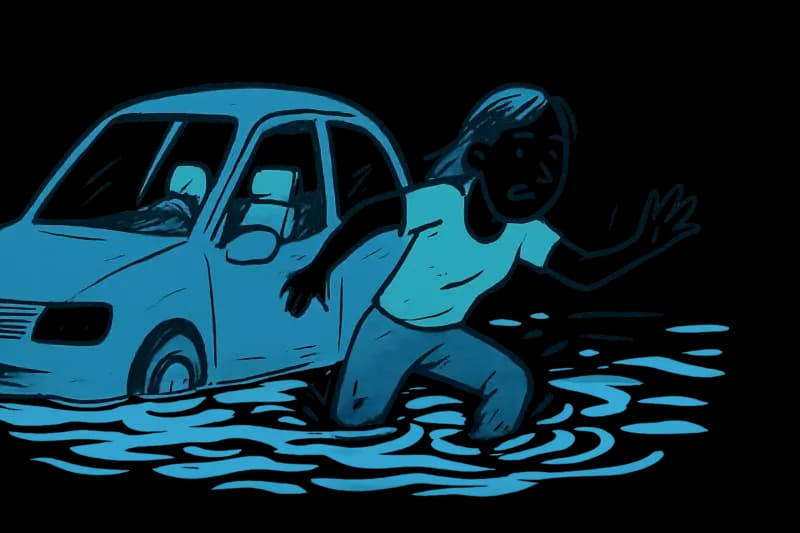
Seconds in the Water: 19-year-old Fights Her Way Out of Flooded Car in Palma
A 19-year-old managed to rescue herself from her half-submerged car after sliding under the Verge de Lluc underpass. Res...

Between Dream and Reality: Thorsten Legat and the Challenges of FC Germania Mallorca
The former Bundesliga pro has assembled a colorful squad in a short time. But how realistic is the grand plan for promot...

Arrest warrant at check-in: Why two travelers at Cologne/Bonn Airport suddenly had to pay
At Cologne/Bonn Airport, federal police in mid-September found two German passengers subject to enforcement measures. Bo...
Balearic Islands as a New Route: A Reality Check on Rising Boat Migration
For the first time the Balearic Islands are ahead of the Canary Islands in boat arrivals. What do the numbers really say...

Residents First at Palma's Stops? A Reality Check on Negueruela's Bus Idea
The proposal to prioritize residents with TIB or Tarjeta Única cards when boarding strikes a nerve. But what would a pri...
More to explore
Discover more interesting content

Can Cap de Bou

Townhouse Lleo 72
