
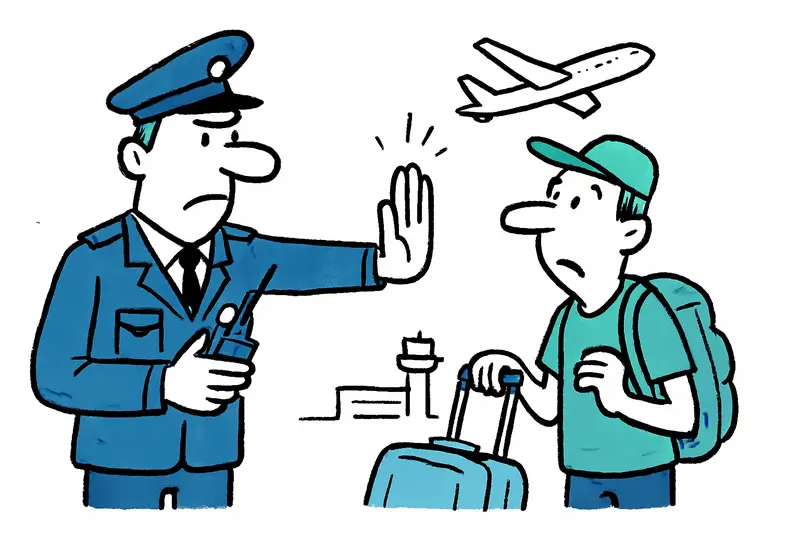
Alert at German airports – what Mallorca travelers should know now
The Federal Police are increasing their vigilance because of the Iran conflict. What does this mean in practice for flights to Mallorca, for travelers and for everyday life on the island?
Alert at German airports – what Mallorca travelers should know now
Key question: Does the Federal Police's heightened state of alert (see German Federal Police (Bundespolizei) website) mean that holidaymakers heading to Mallorca must expect noticeable checks or even dangers?
In recent days authorities in Germany have increased their presence at airports. The trigger is considered to be the escalating situation in the Middle East and concerns that so‑called sleeper networks could be activated. This assessment comes from security circles and was publicly named by the relevant police union. For people flying to Palma soon or returning to Germany, the immediate question is: What changes in everyday life at check‑in, gates and in the terminal?
Critical analysis: between caution and panic
From an operational planning perspective two things are relevant: first, airports are considered critical infrastructure and are therefore routinely monitored more closely. Second, most connections within the Schengen Area – including many flights between German cities and Mallorca – are subject to fewer passport checks than international non‑Schengen routes. That does not mean nothing can happen; authorities may still request identity documents or carry out targeted checks, for example in cases of suspicion or outstanding arrest warrants.
The situation becomes problematic when a mood of warning turns into diffuse fear. Airport controls that suddenly occur more frequently and visibly can unsettle travelers and create longer waiting times, as reported in Long security checks at Cologne–Bonn: What Mallorca travelers need to know. Such effects have consequences for connections, onward flights and the overall holiday experience – especially on an island that depends heavily on tourism.
What is missing in the public discourse so far
There is a lot of talk about increased vigilance, but hardly any concrete directives. The following questions often remain unanswered: Which concrete measures are planned at which airports? Who informs affected passengers in advance? How are rights and data protection ensured when people on Schengen routes are checked more frequently? And last but not least: How do Germany and Spain coordinate their security work so that travel flows and the economy do not suffer unnecessarily?
Transparent answers would help dampen rumors. Instead, much is conveyed through general warnings that leave room for speculation.
A scene from the square: Palma in the morning
At Passeig Mallorca the neighbor has breakfast with her dog, a city bus rumbles by, and scattered clouds drift across the sky – everyday life on the island goes on. Still, you hear conversations at Playa de Palma, in Santa Catalina and at Palma de Mallorca Airport information about “more checks in Germany.” Travelers push suitcases through the arrivals hall, children eat ice cream, and at the same time someone at the gate checks their phone nervously because the airline has sent messages about changed boarding plans. These small everyday scenes show: security policy has immediate effects, even if nothing has happened on the island itself.
Concrete solutions
- Better information policy: Airlines and airports should provide standardized notices for travelers — short, clear, multilingual — about what to expect in the event of intensified checks. That reduces uncertainty at the gate.
- Coordination between states: Germany and Spain must share their situational awareness faster. Consulates and tourist information offices on Mallorca should pass current notices to hotels and tour operators via secure channels.
- Visible but proportionate measures: A presence of uniformed police is reassuring, but must not lead to blanket escalations. Random spot checks, bomb‑sniffing dogs and increased video analysis are options that should be used precisely.
- Protection of travelers' rights: During checks data protection and legal guarantees must be respected. Travelers should know whom to contact to file a complaint if they feel they were treated unfairly.
- Emergency communication on the island: Palma should provide a clear hotline or information page for German tourists, accessible via consular advisories and local channels, so that rumors on the promenade or in bars do not gain the upper hand.
What this specifically means for Mallorca
Short term: possible delays at departures, isolated stricter checks in German terminals, more nervous passengers. Medium term: if the situation persists, bookings and travel routes could be adjusted – holidaymakers might choose direct flights instead of connections, and operators may review cancellation policies. For the island's economy this means: inform, coordinate, stay calm.
Conclusion: Vigilance is understandable; panic is not helpful. Travelers should check the latest notices from their airline and the airport before departure, have ID documents ready and allow a bit more time. On Mallorca that means: daily life continues, but a little more composure and better information would benefit the island. Authorities and the travel industry are called upon to maintain the balance between security and freedom to travel – so the suitcase can roll without unnecessary fears.
Frequently asked questions
Will flights from Germany to Mallorca face longer security checks now?
Should I arrive earlier at the airport when flying to Mallorca from Germany?
Do I need to carry my passport or ID for a Mallorca flight within Schengen?
Are flights to Palma de Mallorca Airport affected by the security alert in Germany?
What should I do if my Mallorca flight is delayed because of extra airport checks?
Is it still safe to travel to Mallorca right now?
What does the airport alert mean for family holidays to Mallorca?
How do airport checks in Germany affect Mallorca tourism?
Similar News
Magaluf: Watchtower Alarm – Lifeguards Pull Unconscious Beachgoer from the Water
After a drama in the late afternoon, two lifeguards at Magaluf beach rescued an unconscious 44-year-old man. He was stab...
Turquoise in the City: How dangerous is the color play of the Sa Riera?
The Sa Riera in Palma suddenly turned turquoise — a pretty motif, but behind the effect lies a discharge of saline waste...

Jeckliner at Sunnesching: Cologne spirit sets sail from Palma
In September 2027 the Mein Schiff 2 briefly becomes a floating carnival stage: four days with Cologne bands, comedy and ...
Finally Home: Mike and Leyla Heiter Buy Villa with Sea View in Mallorca
The reality TV couple Mike and Leyla Heiter have bought a house in Mallorca with a roof terrace and sea view. An Instagr...
Arrest after series in Palma: Who protects apartments from repeat offenders?
The National Police arrested a man in Palma who investigators say may have broken into several apartments. In one incide...
More to explore
Discover more interesting content

Can Cap de Bou

Townhouse Lleo 72
