
Penthouse fire on the Avenidas: A reality check for Palma's fire safety
Penthouse fire on the Avenidas: A reality check for Palma's fire safety
A fire in a seventh-floor apartment on the Avenidas affected several people last night and left many questions unanswered. What is missing in Palma's protection plans?
Penthouse fire on the Avenidas: A reality check for Palma's fire safety
Key question: Why does a room fire on the top floor immediately cause citywide anxiety — and what is missing to prevent such incidents from becoming so serious?
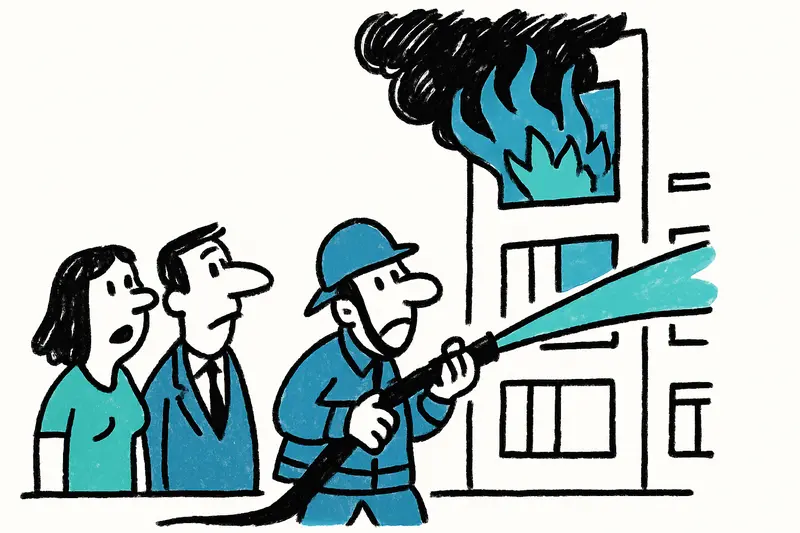
On Tuesday afternoon an apartment on the seventh floor of a multi-family building on the city belt of the Avenidas caught fire. Around 5 p.m., numerous fire department vehicles arrived, supported by units from the National Police and the local police as well as ambulances from the emergency medical service 061. People stood on the pavement, some still in their pajamas; sirens, flashing lights and the smell of burned materials hung over the street.
The residents of the affected apartment were apparently able to leave the building in time. A minor was carried out of the flat and treated on site. Some bystanders reported anxiety or light smoke inhalation; no serious injuries were reported initially. After the fire department extinguished the blaze, the street and pavement were reopened. The cause of the fire is the subject of ongoing investigations.
Sounds like a brief summary — and that is exactly where the critical analysis begins: a fire on the top floor brings particular risks. Escape routes are longer, flames and smoke are more difficult to combat from below, and evacuation depends heavily on intact stairwells and functioning alarm systems.
For days the Avenidas have been filled with pedestrians, café visitors and delivery vehicles; yesterday suddenly curiosity, uncertainty and the usual afternoon noises mixed in. People whispered in Catalan and Spanish, a nearby café folded its awning, a woman held her child more tightly — scenes familiar in Palma, but ones that would benefit from clearer procedures, visible signage and easily accessible hydrants, as discussions after Fire in Can Morro near Porto Pi: A Wake-Up Call for Mallorca's Fire Safety have shown.
What is missing in the public discourse when such events occur? First: transparency about building technology and the equipment of older residential buildings. Many central buildings are older and their documentation is incomplete. Second: reliable information for residents about emergency plans. Who lives in the building, who is responsible for shutting off the gas supply, who conducts evacuation drills? Third: a discussion about how quickly help must arrive on site — including whether hydrant locations and fire access routes meet modern requirements.
Concrete, practical and local solutions: mandatory installation of battery-powered smoke detectors in all apartments, with regular checks when tenants change; annual fire safety checks for buildings over five storeys organized by the municipality; simple, visible information folders in stairwells with escape routes in two languages; training for property managers and residential communities on shutting off electricity/gas and on evacuation; clearly marked, unobstructed hydrants and emergency access points along the Avenidas.
Technically feasible and not just a luxury are automatic extinguishing systems in particularly exposed apartments — think roof terraces and open-plan kitchens. Such solutions are costly, but a combination of mandatory basic measures and grant programs for owners would be a realistic approach. The municipality could also set up a fund to help owners from lower-income households install smoke detectors or carry out fire safety repairs, a concern raised in previous coverage such as Fire near Porto Pi: What the blaze reveals about safety in Palma.
Simply put: communities must practice. A five-minute evacuation drill per year costs nothing but creates routine. If neighbors know where key boxes are kept, who on the third floor has limited mobility and who holds the key to the external corridor in an emergency, many things run more smoothly.
Investigations into the cause of the fire will show how the spark spread. Until then, the city administration should ensure that the public learns more than just the time of the operation. A checklist for residents, clearly visible information boards on apartment buildings and a development overview map with safety-relevant points along the Avenidas would be small, immediately implementable steps, echoing concerns seen after incidents such as Fire on the Paseo Marítimo: A Blaze, Many Questions.
Conclusion: a fire like yesterday's is a wake-up call, not an act of nature. We can reduce the likelihood and the consequences — through better equipment, clear rules and neighborhoods that are prepared. Palma is a lively city with narrow streets and old buildings; that gives it charm, but it also demands greater attention to protecting the people who live here. In particular, following NFPA guidance on smoke alarms would strengthen the case for mandatory detectors and routine checks.
Frequently asked questions
Why can a fire in a top-floor apartment in Palma be more dangerous than a lower-floor fire?
What should residents in Mallorca do if a fire breaks out in their apartment building?
Are smoke detectors required in apartments in Mallorca?
What fire safety problems are common in older buildings in Palma?
Where in Palma did the recent fire on the Avenidas happen?
Were there injuries in the Palma Avenidas apartment fire?
What fire safety improvements are being discussed for Palma residential buildings?
Should Mallorca apartment communities practice fire evacuations?
Similar News
Magaluf: Watchtower Alarm – Lifeguards Pull Unconscious Beachgoer from the Water
After a drama in the late afternoon, two lifeguards at Magaluf beach rescued an unconscious 44-year-old man. He was stab...

Turquoise in the City: How dangerous is the color play of the Sa Riera?
The Sa Riera in Palma suddenly turned turquoise — a pretty motif, but behind the effect lies a discharge of saline waste...

Jeckliner at Sunnesching: Cologne spirit sets sail from Palma
In September 2027 the Mein Schiff 2 briefly becomes a floating carnival stage: four days with Cologne bands, comedy and ...
Finally Home: Mike and Leyla Heiter Buy Villa with Sea View in Mallorca
The reality TV couple Mike and Leyla Heiter have bought a house in Mallorca with a roof terrace and sea view. An Instagr...

Arrest after series in Palma: Who protects apartments from repeat offenders?
The National Police arrested a man in Palma who investigators say may have broken into several apartments. In one incide...
More to explore
Discover more interesting content

Can Cap de Bou

Townhouse Lleo 72
