
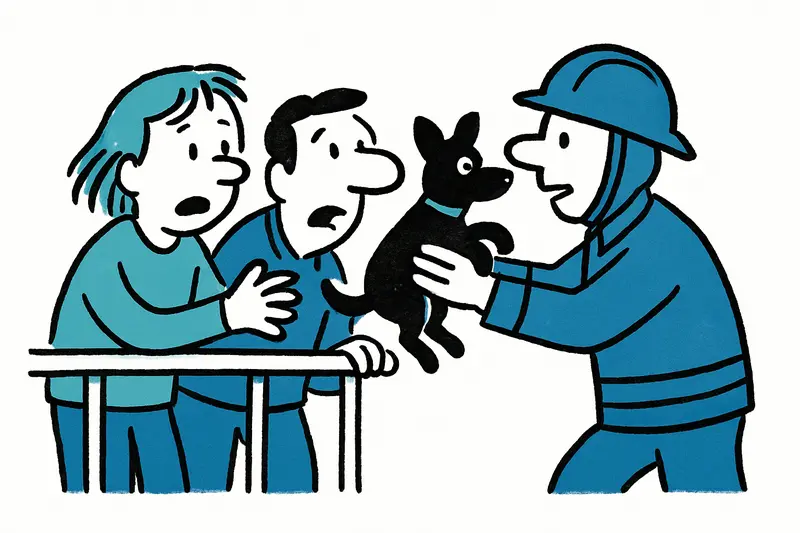
Small dog falls at the mirador: Coco safely recovered in the morning
Small dog falls at the mirador: Coco safely recovered in the morning
In strong winds a small dog apparently lost its footing at the Mirador Pedrafort and fell down the cliff. In the darkness it remained missing — until morning, when rescue drones and neighbors discovered the little canine.
Small dog falls at the mirador: Coco safely recovered in the morning
Restless night in Badia Gran – drone detection turns the tide
It was one of those moments you'd rather forget quickly: at a sea-facing viewpoint a small dog lost its footing during the night and disappeared over the cliff edge. The owners, a man and his daughter, stood stunned at the edge of the Mirador Pedrafort and alerted the Llucmajor municipal fire brigade.
The situation was complicated. Strong wind shook the railing, the streetlights in the Badia Gran settlement flickered in the distance, and the sea roared so loudly that any calling threatened to vanish into nothing. An emergency vehicle arrived quickly, but in the darkness and gusts the responders did not descend the slope—the risk was too great.
So the animal remained undiscovered during the night. The family endured a sleepless time, neighbors stopped by, and an older woman from the Main Street quietly offered support. Many in the settlement know these cliffs well: the slopes at Badia Gran, Puig de Ros and Sa Torre drop steeply and pose a risk for walkers and pets.
The next morning brought relief: from the haze of early day the owner heard whining and barking—soft but distinct. With drone support, emergency personnel and residents systematically searched the rock face. The cameras finally showed what everyone hoped for but had almost stopped believing: the small female dog “Coco” was sitting 15 meters below the mirador on a narrow rock ledge, exhausted but alive.
The drone sighting was the turning point. In daylight, with better visibility and under the watchful eyes of neighbors, rescuers were able to retrieve the animal and bring her to safety. Photos after the rescue show a trembling but recovering Coco—the fur still dusted with sea salt and grit, eyes tired but alert.
Such operations reveal a piece of Mallorca’s blend of risk and community: rugged nature meets residential areas, and in this overlap it quickly becomes clear how important mutual help is. The people of Badia Gran know the viewpoints, they watch the ferries in the morning light and hear the seagulls, and that closeness paid off in the end. Neighbors with flashlights, the quick response of the Llucmajor fire brigade and modern drone support together contributed to the happy outcome.
What remains as a lesson? Without a chastising tone: anyone who goes to the cliffs with dogs should keep the leash on, especially in the dark or in strong wind. Questions of responsibility are highlighted by cases like Who Is Responsible? Dog Injures Four-Year-Old on Playground in Son Armadans. Previous incidents have also raised wider safety debates, for example Playground attack in Palma: Who protects our children from unleashed dogs?.
And those who live near the coast know that visibility and timing often decide the outcome. It is quite possible this incident will encourage neighbors to better secure the area at night—whether with stronger lighting, warning signs or the exchange of phone numbers for quick help. Similar concerns have led to legal rulings, such as Palma must pay €106,700: Ruling after fall in unlit dog zone.
In the end it is a small but warm everyday scene: a dog that barks at night and returns in the morning; helping voices from the neighborhood; drones that are today not just a hobby but a rescue tool. For Mallorca it is a hopeful sign—the island remains a community that sticks together when the wind blows over the cliffs.
The dog family is now reunited. Coco has gotten over the shock, and soon the street below will smell of fresh coffee again as the settlement returns to its usual routine. If you like, take this as a small reminder: a few precautions can spare you great worry—and give the sea back a calmer horizon.
Frequently asked questions
Is it safe to take a dog to the cliffs in Mallorca at night?
What should you do if a pet falls near a cliff in Mallorca?
Why are drone rescues useful in Mallorca?
What makes the coastline around Badia Gran dangerous for walkers and pets?
What is the Mirador Pedrafort in Mallorca known for?
How important are neighbours during emergencies in Mallorca?
What should you pack for a coastal walk in Mallorca with a dog?
Can strong wind make Mallorca cliff paths more dangerous?
Similar News
Parking dispute in Els Hostalets: When a gap leads to violence
A parking dispute on Calle Aragón escalated into a mass brawl at night. Why do trivial conflicts here turn bloody so qui...
Bodycams in Palma: More clarity needed so surveillance doesn't become the norm
Palma's local police equip UII officers with Axon Body 4 cameras. Useful for evidence collection — but specific rules on...
When the Bread Door Closes: Why Maria de la Salut Lost Its Last Bakery
The only bakery in Maria de la Salut, a sales outlet of Forn de ca'n Joan Terès from Palma, has permanently closed. What...
Ancient Piece Brought to Light: Guardia Civil Recovers Roman Anchor Fragment off North Coast of Mallorca
Divers from the Guardia Civil recovered a massive iron piece from Roman times off Mallorca's north coast. The roughly 35...

Who Benefits from the Half‑Hourly Flight on the Edge? Aena, Investments and the Island's Interests
Almost one billion euros is flowing into Son Sant Joan. The figures show the scale of investment and expected beneficiar...
More to explore
Discover more interesting content

Can Cap de Bou

Townhouse Lleo 72
