
Palma must pay €106,700: Ruling after fall in unlit dog zone
Six years after the fall in the fenced dog zone of Son Dameto, the highest court of the Balearic Islands has ordered the city of Palma to pay €106,700. Reason: inadequate lighting and a breach of the duty to secure public safety. A ruling with signal significance for public parks.
Six years later: court orders Palma to pay
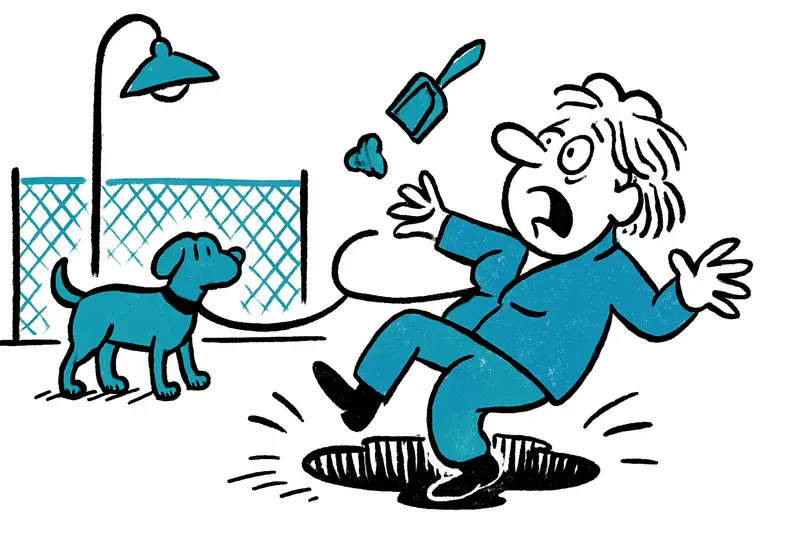
An evening in the park, the dog on a leash, a plastic bag in hand – that was all it took for a normal walk to turn into a years-long legal battle. The highest court of the Balearic Islands has now decided: Palma must pay a woman €106,700 in compensation for pain and suffering. The incident dates back to January 2019, in the fenced dog zone of Son Dameto. The woman stepped into a hardly visible hole and fell badly while trying to dispose of dog waste.
Why this ruling is more than just compensation
At first glance the case seems trivial. On closer inspection it is symptomatic: this was not about an open manhole or a cracked pavement, but about lighting, or rather: the lack of it. Residents had described the spot as dim. Witness statements and investigations showed that a single lamp dazzled more than it illuminated the ground. The court saw this as a violation of the duty to ensure public safety – that is, the municipality's obligation to maintain public spaces so that avoidable hazards are prevented.
The city had argued that anyone who goes into a secluded part of a park must be careful. In court this argument did not hold. Judges emphasized that an occasional user could not have known that a deep hole was hidden there. The duty to secure public spaces extends beyond well-meaning advice over coffee.
What neighbours have complained about for years
Anyone who goes to Son Dameto in the evening knows the muffled murmur of voices, the occasional barking, the rustle of pine needles. Paths are often dim. Residents have reported for years about flickering or missing lights, about lamps that dazzle more than they reveal. These reports were apparently documented. The court took this seriously – and found that repeated warnings put the city under an obligation to act.
The ruling is therefore more than recognition of an individual injury: it is a warning shot for city hall officials. Public spaces must be inspected carefully; repairs must not be postponed indefinitely. And: ignoring reports from the public increases the risk of liability claims.
What should happen now: concrete steps
The sum is high, and it has an effect. But prevention would be simpler than retroactive payments. Three practical steps Palma should now take:
1. Systematic inspections: A regular inspection schedule for parks and dog zones, including evenings. Not just a visual check in daylight.
2. Lighting technology instead of mere fixtures: Good lighting means illuminating, not dazzling. Modern LED solutions with correct orientation and sensors can make hazard areas visible without blinding neighbours.
3. Take citizen participation seriously: Make reporting channels visible, process reports more quickly and temporarily close or mark hazard areas until they are fixed.
Legal and financial consequences
Financially, the ruling hits the city treasury. Legally, however, it also establishes a precedent: municipalities must document and respond to warnings from the public. Otherwise, further cases may follow. For the affected person, a burdensome chapter ends: six years of doctor appointments, expert reports and court proceedings. Money cannot undo the injury, but the ruling confirms the city's responsibility.
A small, practical tip to finish
If you walk your dog in the evening: carry a flashlight, wear shoes with good grip and, if you know about problems, choose another corner of the park until defects are fixed. And if you see hazards: report them. Sometimes things really do change – sometimes only a court ruling makes sure the lamps stop remaining silent.
Frequently asked questions
Who has to pay after the fall in Palma’s Son Dameto dog zone?
What should you watch out for when walking your dog in Mallorca parks at night?
Can a Mallorca town be held responsible for accidents in public parks?
Why was the lighting in Son Dameto considered a safety problem?
What kinds of complaints do Mallorca residents make about park lighting?
What should I do if I spot a hazard in a Mallorca park or dog zone?
What does the Son Dameto ruling mean for other public spaces in Mallorca?
Is a hidden hole in a Mallorca park enough for a compensation claim?
Similar News

Maribel: Five Decades of Service – Housekeeper from Peguera Celebrated with a Special Honor
Over 50 years in the hotel business: María Isabel “Maribel” Molinos was honored in Palma at the Nit del Turisme by Unive...
Orange Alert over Parts of Mallorca: Are We Prepared?
Dark clouds and an announced wet spell have triggered an Orange alert in parts of Mallorca. A reality check: what's miss...

Sundair & Co.: Sale speculation and what it could mean for Mallorca
Rumors about a possible sale of the airlines Sundair and Fly Air 41, which belong to Schauinsland-Reisen — and whether b...
Anne Wünsche in Mallorca: A job offer with a catch — who fits the role of personal assistant?
Influencer Anne Wünsche has left Berlin and is urgently looking for a full-time personal assistant in Mallorca. Why the ...
Daily from New York: Palma Between Boom and Strain
United will increase the Newark–Palma route to daily flights in 2027 using Boeing aircraft (231 seats). What does the in...
More to explore
Discover more interesting content

Can Cap de Bou

Townhouse Lleo 72
