
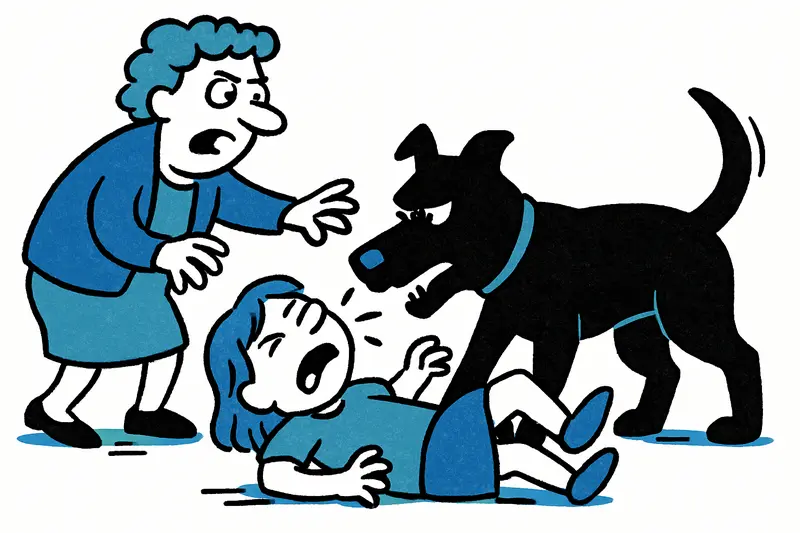
Playground attack in Palma: Who protects our children from unleashed dogs?
A four-year-old girl was injured on the playground next to the Escuela Sagrado Corazón by an unleashed dog. A look at causes, legal gaps and practical solutions for Palma.
An afternoon, one bite, many questions
A typical Friday afternoon on the street next to the Escuela Sagrado Corazón: children laughing, the crunch of sand under rubber boots, a pigeon fluttering onto a bench, and in the background the distant honking from the streets. Then, suddenly, those seconds that change everything. A larger animal jumps into the play area, a four-year-old girl falls, her face bloody — an incident later reported as Who Is Responsible? Dog Injures Four-Year-Old on Playground in Son Armadans. The grandmother, a nurse by profession, reacts immediately and prevents worse. But for the family the question remains: How safe are our playgrounds really?
Key question: How safe are our playgrounds?
At first glance this sounds trivial – signs, leash requirements, rules for so-called dangerous breeds. In practice, however, cases like this show that rules on paper are not enough. Are regulations being deliberately ignored? Does the municipality lack staff to sanction leash violations? Or does some dog owners' assessment of risk create a false sense of security? The answer is probably a mix of all of the above.
What often goes unsaid
Sitting in the Mallorcan sun watching the playground, you see many everyday scenes: retirees with newspapers, young people with bicycles, parents with coffee cups. But some aspects remain underexposed in the public debate. First: enforcement costs time and personnel. The Local Police prioritize deployments – accident scenes, tourist inquiries, nighttime disturbances – and cannot constantly patrol playgrounds. Second: the list of "dangerous breeds" is legally vulnerable; many biting animals do not fall into those categories. And third: social pressure in the neighborhood. "He just wanted to play" is often offered as an excuse – a sentence that erases the victim's perspective and downplays responsibility.
Eyewitnesses: Panic in seconds
Those on site describe a short, intense panic. Parents pulled children away, others pulled out their phones, some shouted for help. The dog's owner is said to have intervened only when the animal would not let go; requests for vaccination or health certificates were refused. Such snapshots show: in reality seconds count, and decisions like "call" or "grab" are driven by fear and reflex. The faint chirring of the cicadas over the park fell silent for a moment – normality was interrupted.
Legal and practical consequences
The municipality has legal tools: fines, temporary bans on holding animals, orders for leash and muzzle requirements or, in severe cases, confiscation. But how often are such measures actually enforced? Residents demand more visible controls and faster responses. The affected family is still waiting for clarity on whether a complaint has been filed; such uncertainty increases the feeling of vulnerability. Past cases have even led to municipal rulings, as in Palma must pay €106,700: Ruling after fall in unlit dog zone.
Concrete solutions — realistic and feasible
Outrage alone is not enough. Practical suggestions come from the neighborhood that could be implemented relatively easily:
- More visible patrols: Scheduled patrols by the Local Police at peak times at playgrounds. Presence acts as a deterrent – even a uniformed glance from a park bench can change behavior.
- Clear sanctions and documentation: Faster enforcement and digital recording of violations (location, time, photos). A citizen reporting tool could prevent cases from disappearing into a file.
- Prevention and education: Information campaigns for dog owners in multiple languages, workshops in schools and daycare centers on how to behave in an emergency and first aid for bite injuries.
- Rethink infrastructure: Fenced, clearly visible play areas next to separate dog zones — and improvements to playground surfaces and safety, as in New Grip for Palma's Playgrounds: Safer Play in Camp Redó & Co.. A secure toddler playground with clear markings would give many parents peace of mind.
- Practical proof requirements: After an attack, owners should be required to present vaccination and health certificates; repeated violations could lead to registration with tighter controls.
What parents and residents can do now
In daily life: keep your eyes open, agree on fixed play times and places, keep your mobile phone ready. Witnesses should immediately take photos, note personal details and consider filing a complaint. Medically: have the vaccination status checked immediately – bite injuries to the face are particularly delicate. And emotionally: talk with the children so that going to the playground does not become a zone of fear.
No one wants to demonize dog ownership. Most animals are well socialized and many owners are responsible. But an evening on the park bench with worried parents and a child with a bandage shows: rules must be lived and enforced. Otherwise the crunch of the sand will in future be associated with an unpleasant aftertaste as children grow up while the island continues to breathe – between the scent of pines, the rustle of the Tramuntana and the occasional bark of a dog, which this time had consequences.
Frequently asked questions
How safe are playgrounds in Mallorca for small children?
What should parents do if a dog enters a playground in Mallorca?
Are dog leash rules enforced in Palma and other parts of Mallorca?
What can the police or town hall do after a dog attack in Mallorca?
Is Son Armadans in Palma safe for families with young children?
What evidence should you collect after a dog bite in Mallorca?
Why are playgrounds next to dog areas a concern in Mallorca?
When should a dog bite in Mallorca be checked by a doctor?
Similar News
Rental Car Theft in El Arenal: What This Incident Reveals About Our Gaps
A teenager steals a running rental car in El Arenal, flees on foot, climbs over walls and is caught by the Guardia Civil...
Red Rope in Palma's Library: What Helps Against Selfie Tourism — and What's Missing
Palma's city library cordoned off an area with a red rope to keep selfie tourism away from reading and working activitie...
Fort San Carlos: Museum, Harbor Dispute — and a Conflict That Demands Answers
The military museum at Fort San Carlos sits right on Palma's harbor, with unexpectedly quiet rooms filled with cannons a...
Old Town Under Pressure: When a Doorway Becomes a Sleeping and Shower Place
For months a woman has been living with a parasol, a clothes rack and personal belongings next to the social welfare off...
When Shopping Weighs Heavier: Mallorca Demands a Tax Pause on Food and Fuel
Rising prices are putting pressure on households and agriculture. The Balearic Islands are calling for temporary tax rel...
More to explore
Discover more interesting content

Can Cap de Bou

Townhouse Lleo 72
