
When the city sleeps, the nerves don't rest: Palma and the noise dispute in Santa Catalina and Es Jonquet
When the city sleeps, the nerves don't rest: Palma and the noise dispute in Santa Catalina and Es Jonquet
Residents in Santa Catalina and Es Jonquet have had enough: with posters reading 'Noise is torture' they demand an end to new concessions and a review of existing licences. A reality check on what's missing and how Palma can balance nightlife and residential quality.
When the city sleeps, the nerves don't rest: Palma and the noise dispute in Santa Catalina and Es Jonquet
On Monday residents walked through parts of Santa Catalina and Es Jonquet and attached posters reading 'Noise is torture' to lamp posts and doorways. The scene: rainbow lights at the street cafés, the clatter of glasses on the plaza, the smell of fried fish on a warm May night. For many who live here, this is not a picture of holiday idyll but constant stress.
Key question
Can Palma maintain the balance between a lively nightlife and the protection of the people who live here, as disputes over other noise sources demonstrate 'Our bedroom sounds like a workshop' – Palma residents demand night flight ban?
Critical analysis
The protests are based on three clear demands: stop new permits in noise-affected zones, review existing licences and carry out inspections of outdoor terraces and public events with music. The problem is not new, but the level of escalation is: weekend nights are becoming sleepless periods for many residents. What is missing is less moralising and more willingness to implement measures in the administration. There is a lack of capacity for precise measurements, of fast sanctions and of a transparent plan for how permits are spatially regulated.
What is missing from the public debate
First: the question of priorities in urban planning. Nightlife must not be allowed to spill arbitrarily into residential neighbourhoods. Second: costs and incentives for noise protection measures. Many venues neither have the funds nor the pressure to invest in soundproofing. Third: shifts in traffic and entertainment. Restrictions in one neighbourhood can exacerbate problems on adjacent streets if alternatives are not created at the same time, as when Palma bans concerts in Es Coliseu – a noise dispute with consequences.
An everyday scene
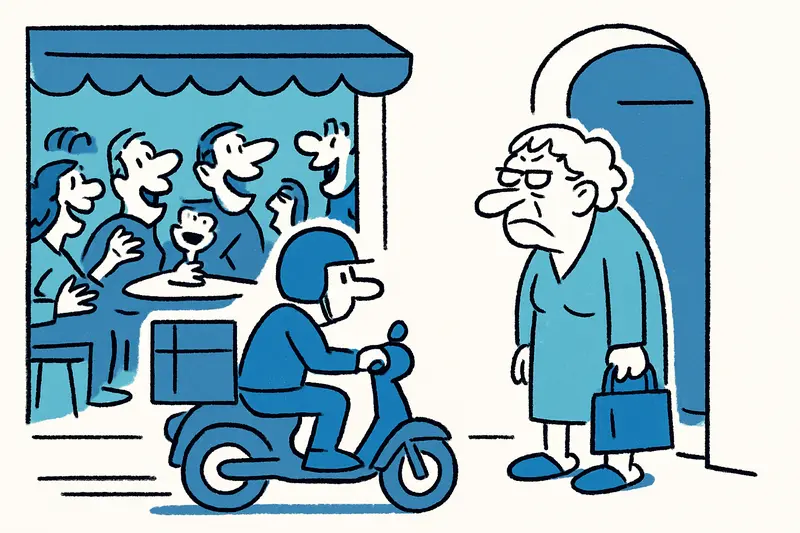
At two in the morning on Carrer de Sant Magí, an old woman stands with a shopping bag in front of her house, a delivery scooter buzzes past, behind her laughter and loud music from a bar with its sound windows open. She already has earplugs in the drawer, but they only last one night. Many neighbours see scenes like this: not spectacular, but wearing.
Concrete solution approaches
1) Immediate measures: a moratorium on new terrace and event permits in identified problem zones until a noise mapping is available. 2) Transparent inventory review: a public list of licences, terms of use and complaints so residents know which permits apply. 3) Measurement systems: installation of fixed and mobile sound meters at key points, linked to a clear enforcement logic (warning level, fine, licence revocation). 4) Support programmes: grants or tax relief for acoustic upgrades (double doors, insulation, technical ventilation) so that renovations become economically feasible. 5) Spatial planning: designation of nightlife zones with clear opening hours and better public transport connections so activity is spread out. 6) Sanctions and swift implementation: shorter deadlines for administrative decisions, higher fines for repeated offences and a practical local mediation office. 7) Communication: a local noise portal with measurement data, complaint forms and clear responsibilities to create transparency.
Why this should not be directed against the venues
Many hospitality businesses rely on income in the summer months and create jobs, and measures such as Less Christmas Noise in Sa Feixina – Success for Residents, but How Lasting? show the tension. A solution must take both sides seriously: residents need quiet at night, businesses need planning security. Otherwise only frustration will arise on both sides.
Pithy conclusion
The neighbours' posters are a cry for help, not a culture war. Palma stands at a real crossroads: either the city creates rules that secure residential quality while channeling nightlife, or friction will grow. Short-term bans without perspective will only shift the problem. Those who want lasting quiet must work hard: measure, plan, support, punish and green. That is uncomfortable – but loud protest alone does not replace a plan.
Frequently asked questions
What is the weather usually like in Mallorca in January?
Can you swim in Mallorca in winter?
What should I pack for a trip to Mallorca in the off-season?
Is January a good time to visit Mallorca?
What is Palma like in winter?
Is Sóller worth visiting in the cooler months?
Are Mallorca beaches empty in winter?
What activities can you do in Mallorca when it is cooler?
Similar News

When the Wallet Becomes a Danger: Attack in Peguera and Lessons for Mallorca
In Peguera, two women are said to have stolen the wallet from a 75-year-old German couple. When the victim intervened, t...
Plata stays Plata: Young people take over, Llonguets remain
A small bar on Carrer de l'Argenteria will continue: Tolo Serra hands the place over to young Mallorcans at the end of t...

Unnoticed in the Luggage Compartment: How a Boy Traveled More Than 100 Kilometers in a Team Bus
A minor traveled in the undercarriage of a team bus for more than 100 kilometers until his cries for help were heard. A ...

Cap Vermell Grand: Second Michelin Key – a Gift for the East
The Cap Vermell Grand in Capdepera has been awarded its second Michelin key. For the region this elevates the luxury off...

Eurowings lets four aircraft carry names – a friendly idea that also reaches Mallorca
Eurowings is launching a campaign: four Airbus A320s are to carry the first names of people who help others in everyday ...
More to explore
Discover more interesting content

Can Cap de Bou

Townhouse Lleo 72
