
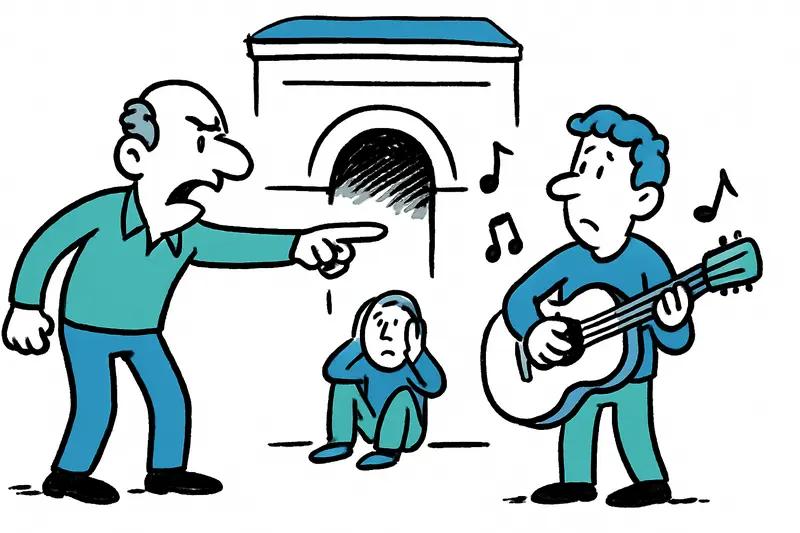
Palma bans concerts in Es Coliseu – a noise dispute with consequences
The town hall has temporarily prohibited all music and leisure events in the old bullring Es Coliseu. Why the ban should not only calm residents but also shake up the local cultural scene.
Palma bans concerts in Es Coliseu – a noise dispute with consequences
Key question: Is the ban a necessary step to protect residents or the wrong signal for Palma's concert culture?
Early evening in Palma: a cool November sun, the honking of buses on the Avingudes and voices from the old town drifting along the café terraces. In this everyday scene the town hall has now drawn a clear line: until further notice, no concerts or leisure events are permitted at Es Coliseu. According to municipal records, the reason is repeated violations of noise protection regulations found during inspections.
The facts are concise and stark: residents repeatedly complained about disturbing noise, the city checked and concluded that the measured levels did not comply with the applicable limits. The consequence is a complete halt to events until the operators submit an acoustic report approved by the city; City hall has provisionally banned all music and leisure events in the Es Coliseu bullring, so planned shows – including a concert by the band Xanguito next month – are in jeopardy.
Critical analysis: the ban is legally tangible and socially charged. On one hand it's about quiet, nighttime rest and the burden on people living near the arena. On the other hand it affects a piece of the cultural and music scene, promoters, technicians and artists who rely on such venues. The city's decision reads like a clear signal: there are consequences when noise limits are not respected. At the same time there is an impression that procedures, measurement methodology and deadlines were not communicated transparently.
What is missing in the public debate so far are concrete figures and timelines. How high were the measured levels in relation to WHO environmental noise guidelines, at what times of day did the exceedances occur, and which mitigation steps are considered sufficient? It has also not been made clear which technical requirements an expert report must meet and how long the review will take. That creates uncertainty – for residents as well as for promoters.
A Mallorca everyday scene: neighbors meet at Plaça d’Espanya and discuss the ban during a walk with dogs. The bakery around the corner shakes its head: “Concerts bring life, but people also need quiet.” In Santa Catalina a waitress talks about how daytime and Sunday live performances could enliven the neighborhood without disturbing nighttime rest. Such voices show it is not only black or white.
Concrete solutions that should urgently be put on the table in Palma's administrative debate: first, short-term, transparent measurement protocols and a fixed timetable for the review of the acoustic report; second, technical minimum standards for events in historic arenas – for example prescribed volume limits, directional speakers, soundproof curtains and certified sound barriers; third, adjustments in event management, such as later admissions in favor of earlier breaks and binding end times; fourth, municipal grant programs to financially support owners or operators in retrofitting sound protection so that investments become possible; fifth, a local round table with resident representatives, promoters, acoustic experts and cultural industry stakeholders to negotiate practical compromises.
Another practical tool could be the introduction of a resident dialogue in which planned events are communicated early – with clear contacts and a hotline for immediate complaints. Technically sensible would also be mandatory live monitoring of decibel levels, documented in real time and published after an event. This would make inspections more comprehensible and, above all, fairer.
For the cultural scene the ban means economic and organizational uncertainty. Small bands, local technicians and caterers who depend on such gigs feel it immediately. At the same time the ban should be understood as a wake-up call: those who want to work with the city in the long term must invest now in sound protection and transparent processes. City administration and operators are obliged to create practical rules that protect both the right to nighttime rest and cultural life.
Pointed conclusion: the ban at Es Coliseu is legally justified, but not an endpoint. It is a call to the administration and the scene to formulate clear rules and finance technical solutions. If Palma manages to make the criteria transparent and enable quick, practicable measures, the noise dispute can become an opportunity – for better harmonies between city life and nightlife.
Frequently asked questions
Why has Palma banned concerts at Es Coliseu?
Can concerts still take place in Es Coliseu in Palma right now?
What happens to planned events in Es Coliseu, Palma?
What should a concert venue in Mallorca do to meet noise rules?
How serious are noise complaints for residents near venues in Palma?
Will Palma's Es Coliseu ban affect local musicians and event workers?
How can Palma balance nightlife with residents' right to sleep?
What does the Es Coliseu decision mean for concerts in historic venues in Mallorca?
Similar News
The End of the Cheap Ride? Why Mallorca Is Hit Harder by the Fuel-Price Shock
Gasoline and diesel average close to two euros per liter. What this means for commuters, supply chains and renters in Ma...
Relaxed liquid rules in Munich: What Mallorca travelers will notice
At Munich Airport the 100-milliliter rule will be lifted at all checkpoint lanes — thanks to new CT scanners passengers ...
For 45 Years on Mallorca — and Then This: How a Market Visit in Santa Ponsa Became a Lesson
A woman who has lived on the island for decades lost money and important documents at the Mercat Setmanal in Santa Ponsa...
10 percent surcharge on the beach: How legal and transparent is the extra charge at Playa de Muro?
A German part-time resident noticed days after a restaurant visit in Playa de Muro that the bill included a flat ten per...

Body near the Llevant Market: What this death says about our city
A man was found dead on Sunday afternoon near the Llevant Market. Police say the death appears natural. The scene raises...
More to explore
Discover more interesting content

Can Cap de Bou

Townhouse Lleo 72
