
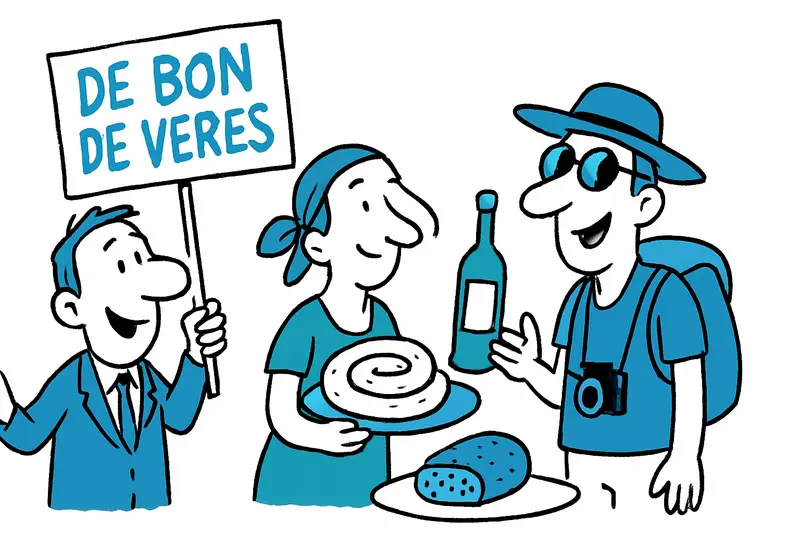
New tourism campaign 'De bon de veres' focuses on island products and the off-season
New tourism campaign 'De bon de veres' focuses on island products and the off-season
The Island Council launches 'De bon de veres': more guests in the off-season and a clear focus on Mallorcan products such as wine, sobrasada and ensaimada.
New tourism campaign 'De bon de veres' focuses on island products and the off-season
Regional specialties at the center – gentle tourism for better year-round quality
On Monday a campaign was presented at the La Misericòrdia cultural center in Palma that starts soberly and will hopefully be received warmly. On the way there one could see bakers with freshly baked ensaimadas on Passeig del Born, market women from Mercat de l'Olivar shaking almonds in baskets, and the soft clatter of the tram tracks – the island is breathing slowly but surely.
'De bon de veres' is the new slogan of the Island Council. Behind the name there is no spectacular fireworks display but the idea of showing Mallorca up close: local craftsmanship, wines, sobrasada, ensaimada and almonds – products with a protected origin that have their history here. The presentation was given by Island Council President Llorenç Galmés. New to the team is Tourism Director Tomeu Ferragut, who has supported the direction and is aiming for more guests outside the hot high season.
Why is this important? The answer lies in simple everyday scenes. In August the streets overflow, in November the same cafés are almost empty. Fewer seasonal swings mean more stable jobs for cooks, chambermaids, market traders and winemakers. And they give locals back space in their city – not a foreign, anonymous summer backdrop, but places with authenticity.
The campaign wants to make that authenticity visible. At the center are producers and small businesses: visits to wineries in Binissalem, sobrasada workshops in the villages, workshops on traditional baked goods. This is not a directive but an offer: those who come in November should not find only a closed restaurant, but a cup of coffee in a bakery with warm dough and a conversation with the baker.
On the street you can already hear first reactions. A vendor at the weekly market in Sineu said customers are already asking for 'local experiences'. A taxi driver in Palma laughed and said he is looking forward to guests who walk quietly through the streets on Sundays instead of making noise at pool bars in the middle of the night. Small voices, but they show what the campaign aims for: a better distribution over the year and more respectful encounters.
The Island Council's program plans to use several levers: cooperation with markets and restaurants, seasonal packages together with hotels and tour operators, such as Short break, big impact: Island Council launches three-day tours for over-60s, and visibility for products with protected origin. Concrete actions like tastings, production tours or 'small producers' days' should help strengthen the connection between visitors and producers.
For producers this means more than advertising. It is an opportunity to generate higher value locally: visitors who buy directly from the producer or participate in a tasting spend more money locally than an all-inclusive tourist who only uses the hotel. That strengthens local businesses and creates incentives to preserve traditional production methods.
Of course a campaign like this needs patience. The island cannot become quieter, fairer or more 'authentic' overnight. But small signals – a sign at a winery, a weekly market with extended opening hours, a hotel promotion in November – can change a lot together. The challenge is to make these signals visible and recognizable.
For visitors it means: eyes open. Try sobrasada directly from the producer, ask about the vintage of the wine, take part in an ensaimada baking class. For locals: support the offers, recommend your favorite businesses, talk to guests. Together this makes 'De bon de veres' come alive – not as a slogan, but as a real everyday experience.
The campaign is a step toward an island that lives less from peak numbers and more from year-round quality. Whether it brings a big turnaround will not be decided in one day; see Mallorca's Quiet Season: Why Around 20 Percent of Hotels Stay Open Through Winter — and What It Means.
Those who want information will find guidance on site in the future: at the weekly markets, in tourist information offices and at participating hotels. The idea is simple: offer Mallorca for self-discovery. And that is a prospect many here welcome.
Frequently asked questions
What is the weather usually like in Mallorca in early spring?
Can you swim in Mallorca in spring?
What should I pack for Mallorca in March or April?
Is Mallorca a good destination for hiking in spring?
What is Palma de Mallorca like in spring?
Are Mallorca beaches busy in early spring?
Is spring a good time to visit Mallorca with children?
What kind of activities are best in Mallorca when the weather is mild?
Similar News

When the Wallet Becomes a Danger: Attack in Peguera and Lessons for Mallorca
In Peguera, two women are said to have stolen the wallet from a 75-year-old German couple. When the victim intervened, t...
Plata stays Plata: Young people take over, Llonguets remain
A small bar on Carrer de l'Argenteria will continue: Tolo Serra hands the place over to young Mallorcans at the end of t...

Unnoticed in the Luggage Compartment: How a Boy Traveled More Than 100 Kilometers in a Team Bus
A minor traveled in the undercarriage of a team bus for more than 100 kilometers until his cries for help were heard. A ...

Cap Vermell Grand: Second Michelin Key – a Gift for the East
The Cap Vermell Grand in Capdepera has been awarded its second Michelin key. For the region this elevates the luxury off...
Eurowings lets four aircraft carry names – a friendly idea that also reaches Mallorca
Eurowings is launching a campaign: four Airbus A320s are to carry the first names of people who help others in everyday ...
More to explore
Discover more interesting content

Can Cap de Bou

Townhouse Lleo 72
