
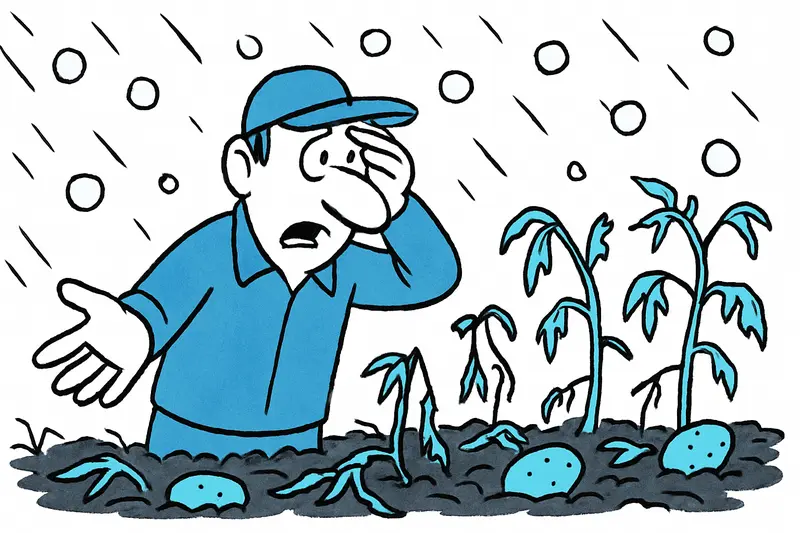
Hail catastrophe in Sa Pobla: potato harvest on the brink
A sudden hailstorm has devastated large parts of the potato fields near Sa Pobla. Many family-run farms fear for their survival — and face gaps in insurance coverage.
Hail in Sa Pobla: potato crops heavily hit — what to do now
Late Tuesday afternoon, as the wind pushed the last summer clouds off the Plaça, a hailstorm struck the fields around Sa Pobla, as reported in Granizo golpea Sa Pobla: cultivos de patata gravemente dañados. Within minutes, hailstones turned lush green rows into a white-gray mess. There were crashes and clatters — tractor panels, plastic tarps, leaves falling to the ground like paper. On the farm tracks the air smelled of wet earth and diesel; somewhere a dog howled in the village as if trying to drive the storm away.
The immediate situation: crop losses and existential worries
Anyone stopping at the field entrances today sees broken stalks, perforated foliage, and exposed, damaged potato tubers in the mud. Several farms report losses that could locally exceed 60%. An older farmer I met between Inca and Sa Pobla says, "I've been growing potatoes for forty years — I've never experienced anything like this." His voice trembles not only with anger but with fear: a failed summer can wipe out an entire year's earnings.
Why the force of the damage is surprising — and what is often overlooked
Hail is not a new phenomenon, but the intensity and frequency of such storms have increased. Notably, many farms were already struggling before the storm, as documented in Cuando las hileras quedan vacías: La crisis de la patata en Sa Pobla: pest infestations, falling market prices, and rising operating costs. These cumulative pressures turn a single extreme event into an existential crisis.
Also little noticed is how vulnerable the supply chain is: small farms without storage or processing capacities cannot turn damaged produce into shelf-stable products. This not only means lost yield but also lost income that could secure the coming months.
Insurance gaps and the call for disaster designation
A major problem is the lack of insurance coverage. Many policies exclude weather damage or reimburse only a fraction of the costs. This fuels calls to officially recognize the affected areas as disaster zones so that emergency aid can be released. But the procedure is lengthy: assessments, cost estimates, ministries — and in the meantime families are left without income.
What is already helping locally — and what urgently needs to happen
At Sa Pobla's weekly market today not only tomatoes and eggs were the talk of the town: customers offered help, neighbors organized shifts to sort damaged tubers, a young farmer called for volunteers. This solidarity eases immediate pressure — but it does not replace structural support.
Concrete steps that could help now:
1. Quick recognition as a disaster area — so that emergency aid and interest-free loans become available quickly.
2. Mobile collection and processing centers — so damaged produce can be turned into longer-lasting products (flakes, chips, canned goods).
3. Support programs for short-term protective measures — for example subsidies for protective nets, tarps or rollable covers that may not stop every hail front but can reduce damage.
4. Transitional financing for family farms — microloans and tax deferrals to cushion liquidity shortfalls.
5. Long-term prevention — investments in early warning systems, regional cooperatives for risk sharing and adapted planting plans with diversified crops.
Less bureaucracy, more practical action
The island government and the municipality can reduce bureaucratic hurdles: simplified damage reports, mobile advisory teams in the fields, accelerated payouts of smaller aid amounts. This would not be grand political theater but pragmatic help with immediate effect. And it would give people the assurance that they are not being left alone.
A hailstorm has destroyed crops — but above all it has hit livelihoods. In Sa Pobla today you don't hear loud complaints on the paths, but quiet, determined work. If help arrives quickly and in a targeted way, not only fields but also homes and prospects can be preserved.
Frequently asked questions
How bad was the hail damage to potato fields in Sa Pobla?
What should farmers in Mallorca do after a hailstorm damages crops?
Why are Mallorca’s potato farms especially vulnerable to hail damage?
Can hail-damaged potatoes in Sa Pobla still be used or sold?
Is hail becoming more common in Mallorca?
What kind of help are farmers in Sa Pobla asking for after the hailstorm?
Should Mallorca be declared a disaster zone after the Sa Pobla hailstorm?
What can Mallorca do to reduce future hail damage to crops?
Similar News

When a Taxi Fare Dispute Turns Violent: What the Magaluf Case Reveals About Safety and Prevention
In Magaluf a 2023 dispute over a taxi fare escalated: an 18‑year‑old British man is accused of seriously injuring a taxi...
Bloody clash in Canòdrom Park: What is missing in addressing violence on Mallorca's streets?
At midday on October 23, an 18-year-old man was critically injured in Canòdrom Park in Palma. The attack raises question...

Palma raises bus fares: Who pays the bill for public transport?
Single tickets rise from €2 to €3, airport trips have a reference price of €4.50. It remains unclear whether residents w...

Palma's New Indoor Pool: Sea View, Sunbeds and Space for Everyone
At Aigua Dolça, near the Paseo Marítimo, Palma has a new municipal indoor pool. For a small fee people can now train, re...

How Four Burglars Emptied Ten Houses with a Simple Trick — and What It Means for Mallorca
Four men used the impressioning technique, posed as delivery workers and accepted two years in prison. A reality check f...
More to explore
Discover more interesting content

Can Cap de Bou

Townhouse Lleo 72
