
Half the fleet booked: How Mallorca should rein in the boating euphoria for the solar eclipse
Half the fleet booked: How Mallorca should rein in the boating euphoria for the solar eclipse
Around seven months before the total solar eclipse on August 12, charter boats in Mallorca are in high demand. Between business opportunity and safety risk stand port operators, authorities and recreational skippers. A critical appraisal with concrete proposals.
Half the fleet booked: How Mallorca should rein in the boating euphoria for the solar eclipse
Key question: How can the island organize the surge of recreational boats on the evening of the total solar eclipse on August 12 in a safe, fair and disruption-free way?
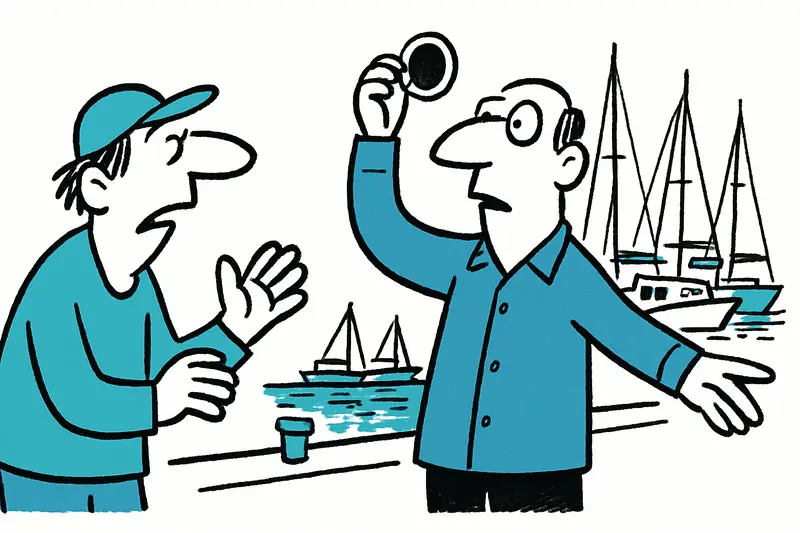
I was standing recently one early morning on the Passeig Marítim, the smell of diesel from the harbor basins still hanging in the air, and heard the harbor radio operators at Palma's Club Náutico announce that another charter company had just confirmed reservations. The picture is typical: anticipation at the charterers, uneasy neighbors on the breakwater, and a few workers on the quay fixing a charter yacht so it can leave "on time."
Fact: The Association of Charter Boat Companies (AECIB) reports that about half its fleet is booked for the night of the eclipse, as discussed in Total Solar Eclipse 2026: Opportunities, Risks and How Mallorca Should Prepare. The west and southwest coasts of Mallorca are expected to offer the best views. The time window is tight: the partial phase begins around 19:38, the total phase occurs at about 20:31 and lasts roughly 90 seconds; the event concludes around 20:49. For official timings and the path of totality see Solar eclipse on August 12, 2026 — timings and path.
Short-term boom — but what risks lurk?
From an economic perspective, this is good news for boat rental companies, crews and harbor service providers. But there are also clear dangers: many boats could head simultaneously to the same viewing spots. Bottlenecks can occur not only at sea but also on land — berths, steps, parking spaces and already strained harbors.
Worrying is the mix of experienced skippers and leisure skippers who rarely sail on such nights. Not everyone can navigate safely as dusk sets in; there are also legal restrictions: smaller sailboats or rowboats without motors are not allowed to go out after sunset. Without proper propulsion or experience this can quickly lead to hazardous situations.
What's missing in the public debate
The discussion so far has focused mainly on booking numbers and logistics for the rental companies. Less heard are questions like: How will harbor capacities be allocated? Who will monitor distances between boats during the eclipse? How will anchoring bans, emergency corridors and communication channels be regulated? And: what role do nature conservation and noise play for coastal towns that expect a quiet evening?
Concrete proposals — so the night doesn't turn into chaos
A few measures would be short-term and practicable:
- Central coordination by the port authority. Staggered departure permits and designated observation zones would prevent traffic chaos. The authority could coordinate procedures via local VHF channels and online portals.
- Temporary exclusion zones and anchoring bans. Clear charts and radio notices reduce dangerous concentrations. Rescue and operational corridors should always be kept clear.
- Mandatory registration for charter boats. A simple registration form with crew size, return time and safety equipment would ease controls.
- Information campaign for renters. Boat rental companies should offer mandatory safety briefings: navigation at dusk, behavior when approaching other vessels, use of AIS and positioning services.
- Increased presence of the coast guard and rescue teams. For rapid assistance and clear enforcement of navigation bans.
- Consideration for local residents. Harbors and municipalities should limit noise times and plan berth rotations so the few harbor spaces do not become a burden for neighbors.
Everyday scene as a reminder
In the early evening in the fishing harbor of Port d'Andratx you can see how the same harbors that are sleepy in winter pulse on such evenings: tourists with binoculars, vendors selling extra drinks, and locals wondering whether they will lose their peace. This mix of celebratory mood and logistical strain can be expected — and if it is not managed, the mood can quickly turn sour.
Conclusion
The booking wave is an opportunity — for the economy, for small services along the coast; local accommodation pressure has already been reported in Sóller fills up: Hotels almost fully booked for the 2026 solar eclipse. It is also a wake-up call: without clear rules and coordination, dangers at sea and strains on land loom. A cooperative approach by the port authority, rescue services, charter associations and municipalities can make the observation night an experience — for guests and residents alike.
If you are planning a tour on August 12: get informed early, insist on experienced skippers and avoid the tightest booking windows. For decision-makers this means: act now, and the spectacular sky over Mallorca will work out.
Frequently asked questions
Will boating in Mallorca during the solar eclipse be crowded?
What time is the solar eclipse in Mallorca?
Is it safe to go boating in Mallorca at dusk for the eclipse?
What should I pack for a solar eclipse boat trip in Mallorca?
How should Mallorca manage boat traffic during the solar eclipse?
Why is Port d’Andratx mentioned as a possible eclipse viewing spot in Mallorca?
How can Mallorca protect residents from eclipse-night noise and disruption?
When should I book a boat in Mallorca for the solar eclipse?
Similar News

More water than last year: Mallorca's reservoirs breathe easier
September rain refilled the Tramuntana's reserves: overall fill around 35 percent, Cúber at 40.42 percent, Gorg Blau at ...

Three Luxury Hotels in Banyalbufar: Lots of Money, Many Questions
A Danish investor plans three exclusive accommodations in Banyalbufar — including the historic Son Valentí. The announce...
2.1 tonnes of cocaine on sailing yacht off Spain's coast – a reality check for the coastguard
A 14-metre yacht was seized with 2.1 tonnes of cocaine. Who monitors the ports, how does the international hunt succeed ...

Heat Bonus in Mallorca: 100 Euros Extra for Outdoor Staff at MarSenses
MarSenses pays employees who worked outdoors in August an extra €100 as recognition. Lighter uniforms, reduced hours for...
Renovating in Mallorca: What You Really Can Do Without Neighbour Consent
Many think they can do whatever they want in their apartment. That's partly true — but only as long as structural elemen...
More to explore
Discover more interesting content

Can Cap de Bou

Townhouse Lleo 72
