
Hantavirus on board the "MV Hondius": What we know — and what Mallorca must ask now
Hantavirus on board the "MV Hondius": What we know — and what Mallorca must ask now
Three dead, one laboratory-confirmed case and several suspected cases on a luxury liner in the Atlantic. The WHO has been involved. A fact-finding report — with concrete questions for ports and shipping companies.
Hantavirus on board the "MV Hondius": What we know — and what Mallorca must ask now
Key question: Is there a real danger to the Balearic Islands, and how should authorities and travelers respond?
The facts are simple and alarming: On the cruise ship "MV Hondius", which sailed from Ushuaia (Argentina) and is on its way to the Canary Islands, the World Health Organization reports several people falling ill. According to current information there was one laboratory-confirmed hantavirus case, five further suspected cases, three deaths and one patient in intensive care in South Africa. The WHO is supporting the responsible authorities and coordinating medical measures and risk assessment.
In short: the problem is real for those affected on board. Whether the situation also represents a larger regional risk cannot be judged without further information. And that is exactly the problem: important details are missing.
Critical analysis — what remains unclear
First: Which hantavirus variant is involved? Hantaviruses are a group of pathogens, according to CDC hantavirus information; some cause severe pulmonary disease in South America, others cause different clinical pictures elsewhere. Knowing the strain is central to assessing transmission risk and necessary protective measures. Second: Where and how did the exposure occur? Hantaviruses are usually inhaled with dust contaminated by rodent droppings or urine. On a modern cruise ship a rodent infestation is unusual but not impossible — for example via supplies in a port or in storage areas. Third: How transparent are the shipping company, the flag state and the port authorities? Travelers and receiving countries need clear information on passenger lists, evacuation plans and testing strategies. Fourth: What screening and safeguards apply at calling ports, including those in the Balearics?
Another point: human-to-human transmission of hantaviruses is very rare and so far has only been documented for certain South American strains. That does not change the need for health systems and airports to be well prepared — from laboratory sequencing to clear transport rules for suspected cases.
What is missing in the public discourse
In the media much revolves around the headline "three dead." The debate often overlooks two things: the responsibility of the cruise operator, the technical controls on board, and the role of ports in receiving potentially infected people, as illustrated by Horror at Palma Port: 27 Dogs Dead After Ferry Crossing — What Went Wrong?. We also hear little about the affected passengers: which nationalities are involved, who is organizing repatriations, as highlighted by Emergency on Board the Aidamar: Why a Helicopter Medical Evacuation Raises Questions, and how are relatives being informed? And not least, there is no clear estimate of how long after exposure passengers may still develop symptoms — which is relevant for travelers returning to Europe.
Everyday scene from Mallorca
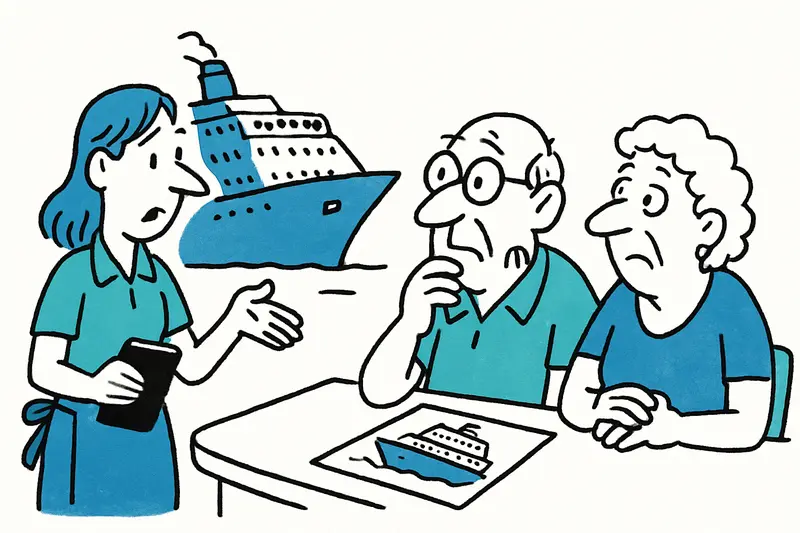
On the Passeig Mallorca in Palma an older couple sits with travel brochures on the table, the sun low in the sky. The waitress behind the counter glances at her smartphone, reads the report about the ship and shrugs: "That's far away, but it makes us uneasy." The pharmacy two streets away is already receiving precautionary inquiries about fever and breathing difficulties. These small gestures show: news of the ship reaches people in Palma who in the coming weeks may wonder whether they could be affected.
Concrete solutions — what should be done now
1) Full transparency: The shipping company and the responsible health authorities must make public which tests exist, which sequencing data are available and who on board is affected. 2) Port inspections: Before berthing at the first European port, inspectors should check the ship for signs of rodent infestation (storage, supply chains, waste areas), as incidents such as Palma: 27 hunting dogs dead in cargo hold — why inspections are failing demonstrate. 3) Passenger tracing: All passengers and crew must be contacted with contact lists and clear instructions; returnees to Mallorca must know whom to call. 4) Clinical preparedness: Hospitals and emergency departments in potential ports of call should receive information on symptoms, isolation measures and reporting channels. 5) Laboratory coordination: Rapid sequencing and international release of the data will clarify transmissibility and the origin of the pathogen. 6) Clear communication: Authorities should avoid fueling speculation but provide timely practical guidance (e.g., seek medical help immediately if symptoms begin).
Concise conclusion
The situation on board the "MV Hondius" is tragic for those affected and justifies concern. For Mallorca and the rest of the Balearics the advice is: remain calm, but do not act inactionably. Authorities and ship operators must show transparency, ports must not allow blind berthing, and travelers need clear, practical guidance. Only in this way can a distant incident be prevented from becoming a local, groundless source of uncertainty.
Frequently asked questions
What is the weather like in Mallorca in spring?
Can you swim in Mallorca in May or early summer?
What should I pack for a spring trip to Mallorca?
Is spring a good time to visit Mallorca?
What can you do in Mallorca in spring?
What is Palma like in spring?
Is Sóller nice to visit in spring?
Are there fewer crowds in Mallorca in spring?
Similar News
Ancient Piece Brought to Light: Guardia Civil Recovers Roman Anchor Fragment off North Coast of Mallorca
Divers from the Guardia Civil recovered a massive iron piece from Roman times off Mallorca's north coast. The roughly 35...

Who Benefits from the Half‑Hourly Flight on the Edge? Aena, Investments and the Island's Interests
Almost one billion euros is flowing into Son Sant Joan. The figures show the scale of investment and expected beneficiar...
Are the Balearic Islands the Southern Border of Europe? A Reality Check on Immigration
The Balearic Islands are again calling for EU aid after a sharp rise in arrivals by sea. Conflicting priorities between ...

"Expensive chaos" and many open questions: What clients can do when a lawyer suddenly stops responding
Several clients complain that a well-known German lawyer in Mallorca has been unreachable for months. Key question: What...

TV tip: 'The Last Problem' — Mallorca as the setting of a classic crime
A classic whodunit on Mallorca: A new miniseries set in spring 1959 brings storm, an isolated hotel and a dense web of s...
More to explore
Discover more interesting content

Can Cap de Bou

Townhouse Lleo 72
