
Home, Language, Football: An 18-year-old from Fornalutx Becomes a Regular Starter at CF Sóller
Home, Language, Football: An 18-year-old from Fornalutx Becomes a Regular Starter at CF Sóller
Maximilian Redden, 18, from the mountain village of Fornalutx has worked his way into CF Sóller's starting lineup. Between Mallorcan lanes, German spoken at home and work as a painter, a down-to-earth talent is growing up.
Home, Language, Football: An 18-year-old from Fornalutx Becomes a Regular Starter at CF Sóller
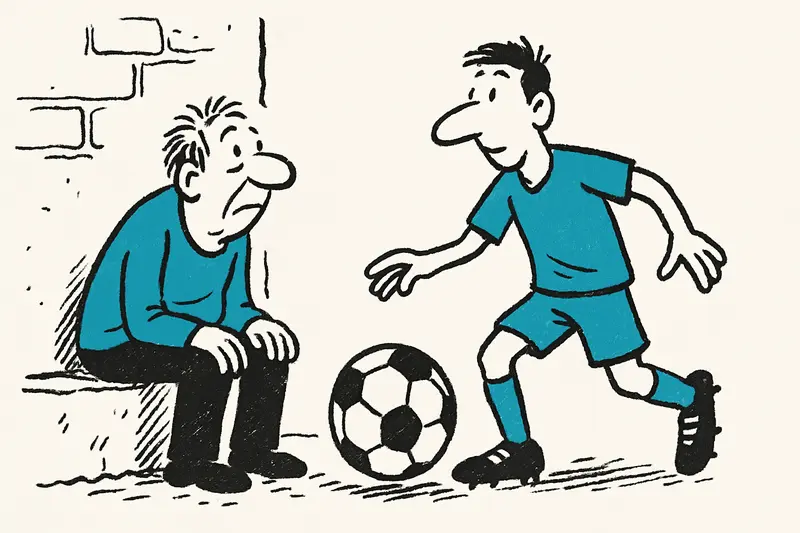
When the late afternoon sun lights up the limestone houses of Fornalutx and the cicadas provide a familiar background hum, you can still see groups of youngsters pressing a ball against the house wall. One of them has made it all the way into CF Sóller's first team: Maximilian Redden, 18, now regularly sits in the village club's defence.
Fornalutx feels like a place where time runs slower: narrow lanes, steep steps, the smell of freshly baked bread in the morning. It was here that Redden learned to play football with the other boys, barefoot or in worn trainers, on spaces that were more like driveways than training grounds. That natural upbringing, he says, did more for him than any tactics lesson: a sense of space, ball control and an instinctive eye for his teammate.
At home he is multilingual. He speaks German with his father and grandmother, his mother teaches German and English, and conversations with the extended family in the village take place in Catalan. This mix has shaped the young defender: linguistically and personally. He calls the island and his Mallorcan roots "a part of me I wouldn't want to be without" — a sentence that in the cosy silence of Fornalutx sounds more like a promise than a platitude.
Sportingly, things happened surprisingly quickly: at the start of the season Maximilian was still with the under-19s; in October the then-coach called him up to the senior squad. He doesn't forget his first game for the first team: an odd mix of nerves and pride, in the end a defeat, but a real milestone for him personally. He has since earned his place under the current coach and now plays as a centre-back, even though he was originally trained as a full-back.
CF Sóller plays in the División de Honor Mallorca and currently sits in the upper third of the table, and the island's clubs also make headlines in national competitions; for example, five Mallorcan clubs entered the Copa del Rey, which has sparked local excitement.
For a young player from a village of hardly 700 inhabitants, simply being in the starting eleven is already an achievement — yet the desire to help the team progress remains. Maximilian speaks openly about wanting to develop further, get more playing time and contribute to the club's play-off ambitions.
What stands out: despite the sporting responsibility, his everyday life remains very down-to-earth. He works as a painter and knows the early working hours when the lanes are still empty and the sun warms the cobblestones. This coexistence of craftsmanship and football is part of life here; it ensures the dream of professional football stays grounded.
For Mallorca it is a small but beautiful piece of news: a boy from the Tramuntana mountains who knows village idyll and speaks the language of his neighbourhood is actively contributing to local club life. Stories like this, and even unusual youth signings such as Real Mallorca signing an E‑youth talent named Donald Trump, keep local identity alive and show young people that talent can grow far from big cities. When training in Sóller finishes one evening and the players head home toward the mountains, the clatter of football boots mixes with the sound of the Tramuntana winds — an image that lingers long after.
Outlook? For Maximilian it means: keep going, learn, collect games. For the club it means: integrate young talents, nurture the bond with the community and combine sporting goals with local pride. And for the neighbourhood kids in Fornalutx the most important message remains: a ball, a stretch of road and perseverance are often enough to play at the top.
Why this is good for Mallorca: Young talents like Redden strengthen the club structure, keep the villages alive and serve as role models for the next generation. It's not a big headline, but it's precisely these stories that carry the island's identity.
Frequently asked questions
Why is Fornalutx such a good place for young footballers in Mallorca?
How do players from small Mallorca villages reach teams like CF Sóller?
What language do people speak in Fornalutx and the Sóller area?
Can you play competitive football in Mallorca while working a normal job?
Is CF Sóller a good club for young players in Mallorca?
What position does Maximilian Redden play for CF Sóller?
What is the División de Honor Mallorca in local football?
Why do Mallorca villages like Fornalutx matter for local football culture?
Similar News
German tourist dies in Sa Calobra – a reality check for emergencies on Mallorca's beaches
A 40-year-old tourist died at the Torrent de Pareis. The emergency call, a doctor who happened to be present, a defibril...

Deadly Tractor Accident in Bunyola: What Needs to Be Done Now
In a work accident on an estate near Bunyola, a roughly 40-year-old man lost his life. His wife and a small child were o...
Head-first dive into the shallow part of Cala Fonoll: An accident and the unresolved question of responsibility
A young tourist dove into Cala Fonoll and was seriously injured. Key question: Why are clear warning signs missing at da...

Mistaken identity with fatal consequences: Brutal assault in S'Aranjassa — what's missing in the follow-up?
At S'Aranjassa a visitor to a finca was tied up, beaten and thrown out of a van. Three men have been arrested, including...

High heel slips, car accelerates: accident on Camí de Son Hugo
A woman lost a high-heeled shoe on the forecourt of the sports facility at Camí de Son Hugo. The car accelerated, mounte...
More to explore
Discover more interesting content

Can Cap de Bou

Townhouse Lleo 72
