
Playa de Palma at night: attempted robbery ends with lacerations – the questions that remain
Playa de Palma at night: attempted robbery ends with lacerations – the questions that remain
In the early hours, National Police officers at Playa de Palma apparently prevented a robbery. A young tourist was injured in the hand by a broken glass bottle. Why do such assaults still happen, and what is missing in prevention?
Playa de Palma at night: attempted robbery ends with lacerations – the questions that remain
National Police intervene, woman treated, suspect arrested
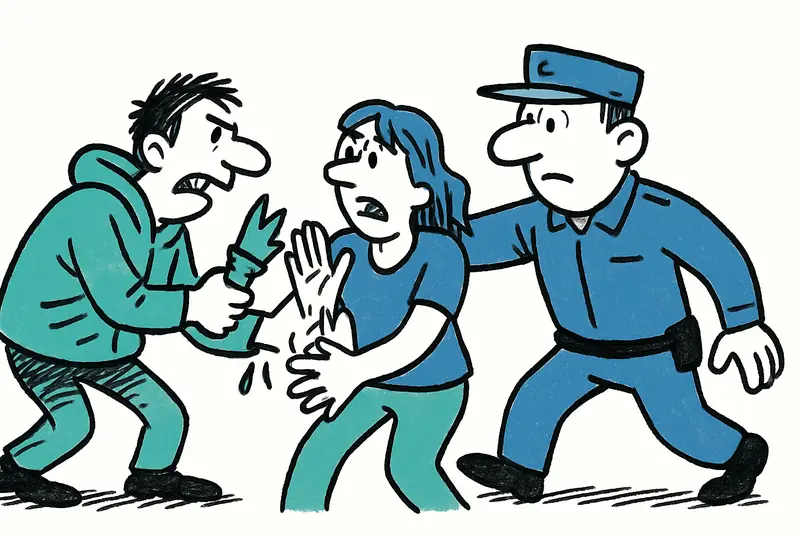
In the early morning hours of a Saturday at around 3 a.m., officers of the National Police at Playa de Palma observed a man moving among groups of tourists. As the officers followed him, they saw the man try to put his hand into a young woman's trouser pocket. When the woman reacted and pushed the man away, the perpetrator smashed a glass bottle and injured her hand. The officers intervened immediately, arrested the suspect and treated the bleeding woman, as reported in Playa de Palma at Night: Phone Tracking Catches Suspect — But What Does It Say About Our Safety?.
Key question: Why does the presence of patrols on site apparently not suffice to sustainably prevent such attacks?
Critical analysis: The incident shows two sides: on the one hand, what is expected of police worked — observation, intervention, arrest. On the other hand, the pattern is familiar: late hour, busy seaside promenade, intoxicated groups and perpetrators moving among people. Similar episodes where verbal exchanges escalated are detailed in Brawl at Playa de Palma: Why a verbal exchange could have ended fatally. The officers' presence prevented worse, yet the act still occurred within visible proximity of a police patrol. This raises questions about prevention. Are patrols too infrequent at the same times, is foot patrol too thin, or are structural factors like lighting, spatial design and glass bottles in public spaces the real problem?
What is missing in public discourse: discussions often remain stuck on headlines — "more police" or "harsher penalties." More important would be an honest debate about the night-time economy, public alcohol consumption, urban design weaknesses and the role of business owners. Rarely discussed are simple measures such as improved lighting, bins that discourage glass, or coordinated night shifts by municipal services that could make attacks harder. Also underexposed is aftercare for victims: rapid medical aid, filing of reports, psychosocial support — all of which contribute to the feeling of safety on the island, as covered in Night raid at Playa de Palma: assessment, questions and what's missing.
An everyday scene from Palma: shortly after three, the air is still cool, music plays in the bars along the promenade, taxi lights reflect on wet cobblestones and a group of young people laugh while trash bins clatter. Such images belong to nightlife, they keep the city alive — and at the same time they create niches where perpetrators act. On that Saturday morning it was police officers, not passersby or bar staff, who ended the situation.
Concrete solutions: 1) Increase foot patrols at night at known hotspots; not just more vehicles, but visible presence on the promenade. 2) Temporarily ban glass bottles in the core area of the promenade or provide secure collection points to reduce cutting hazards. 3) Improve lighting in dark sections and implement structural measures that reduce hiding places. 4) Training for hotel and bar staff to recognize suspicious behavior earlier and report it in a coordinated way. 5) Fast support paths for the injured: first-aid stations, clear reporting channels to the police and escorted routes to hospital. 6) Public information campaigns that inform visitors how to protect themselves in groups without causing panic.
In the short term, increased presence and pragmatic rules against glass in busy areas help. In the medium term, coordination between police, municipalities, businesses and tourism operators is needed to make night openings safer. And in the long term we need a thoughtful approach to how a holiday region like Mallorca can offer both joie de vivre and safety — without killing the character of its neighborhoods.
Concise conclusion: The National Police's intervention prevented worse. But the incident is not an isolated snapshot; it is part of a series of near-miss moments. More presence alone is not enough; smart local measures and a serious debate about night-time coexistence at Playa de Palma are required so that tourists and residents can sleep more peacefully again.
Frequently asked questions
Is Playa de Palma safe at night for tourists?
What should I do if I am approached by a pickpocket in Mallorca at night?
Why are there still robberies in Playa de Palma even when police are present?
What is the best time to walk along Playa de Palma at night?
Are glass bottles a problem on Mallorca nightlife streets?
What should I pack for a night out in Playa de Palma?
What kind of safety measures could help in Playa de Palma at night?
What should victims of an assault in Mallorca do first?
Similar News
German tourist dies in Sa Calobra – a reality check for emergencies on Mallorca's beaches
A 40-year-old tourist died at the Torrent de Pareis. The emergency call, a doctor who happened to be present, a defibril...
Deadly Tractor Accident in Bunyola: What Needs to Be Done Now
In a work accident on an estate near Bunyola, a roughly 40-year-old man lost his life. His wife and a small child were o...
Head-first dive into the shallow part of Cala Fonoll: An accident and the unresolved question of responsibility
A young tourist dove into Cala Fonoll and was seriously injured. Key question: Why are clear warning signs missing at da...
Mistaken identity with fatal consequences: Brutal assault in S'Aranjassa — what's missing in the follow-up?
At S'Aranjassa a visitor to a finca was tied up, beaten and thrown out of a van. Three men have been arrested, including...
High heel slips, car accelerates: accident on Camí de Son Hugo
A woman lost a high-heeled shoe on the forecourt of the sports facility at Camí de Son Hugo. The car accelerated, mounte...
More to explore
Discover more interesting content

Can Cap de Bou

Townhouse Lleo 72
