
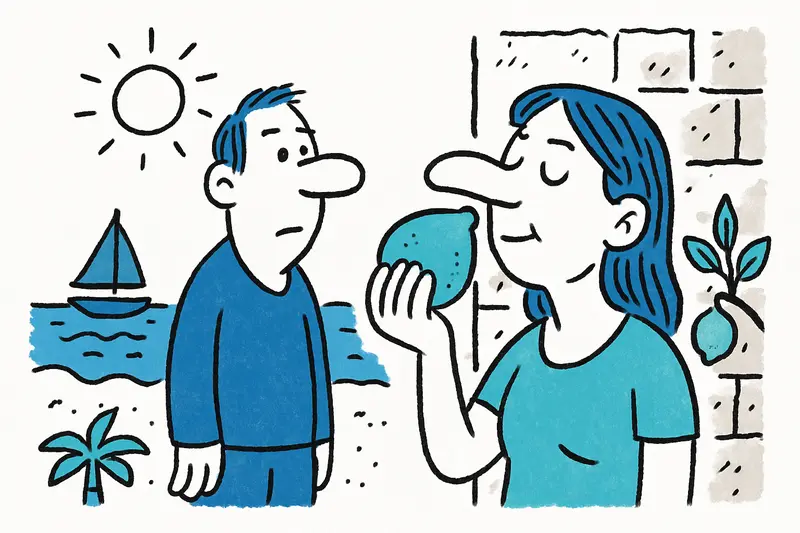
Sea, Citrus, Warm Walls: How Mallorca Works on the Nose
Sea, Citrus, Warm Walls: How Mallorca Works on the Nose
A scent trainer from Germany classifies the island into six olfactory landscapes — from the salty coastal breeze to the evening chord of stone, wine and jasmine. A walking tip included: how to sharpen your nose.
Sea, Citrus, Warm Walls: How Mallorca Works on the Nose
A scent trainer arranges the island into six smellscapes — and shows how to really listen.
Sometimes one step out of a shady alley onto the plaza is enough to notice: Mallorca doesn’t just shimmer in the light, it breathes. Tina Tzschoppe, originally from Celle and living here for almost eight years, guides people to consciously discover the richness of these smells. As a scent coach she works in Germany, Italy and Spain and has given the island a kind of olfactory map — free of clichés, full of everyday scenes.
Anyone moving about with open senses quickly recognizes that the island has several faces. (see Mountains or Sea? Two Art Nights, Two Moods — Esporles vs. Ses Salines)
Anyone moving about with open senses quickly recognizes that the island has several faces. Tzschoppe distinguishes six scent families, each with its own terrain and mood. And yes: you can test them practically — with a morning walk by the sea, a midday hike through the garriga or an evening on a tucked-away old town terrace.
1) Coast and Atlantic wind
By the sea salt mixes with a mineral note: damp rocks, ropes at the boat docks, sun-warmed wooden planks. Added are iodine notes and the faint trace of sunscreen on tanned skin. This composition feels tidy, wide — many experience it as liberating. Early in the morning, when the wind comes from the water, this scent family is strongest.
2) Steppe, herbs and heat
Along the trails into the island’s interior grow rosemary bushes, cushions of thyme and wild fennel. In the heat they give off a dry, almost medicinal aspect, together with dusty earth. On narrow paths of the Serra de Tramuntana World Heritage Site this mixture feels powerful and archaic — it awakens, sharpens the senses and reminds you how resilient the plants are here.
3) Citrus groves
In the valleys around Sóller and in some private gardens it smells of bitter orange and lemon, complemented by freshly green leaves and the moist earth in the shade of old trees. After a rain shower the freshness becomes even clearer. These notes make squares feel lighter and friendlier; in the morning or late afternoon they unfold a peculiar elegance (read more in Late Summer in Mallorca: More Beach Days, Mild Nights and Relaxed Villages).
4) Pines, needles and afternoon sun
Near the coast and in extensive pine forests resins rise, mixed with warm needles and fine dust. Often a faint smoke note sneaks in, as if someone had lit a wood fire higher up. This scent creates a feeling of being cared for and relaxed — strongest in the afternoon when the sun warms the needles.
5) Stone, patina and time
Houses of limestone, narrow village squares, courtyards with old wooden doors: warmth from stone and dust, a hint of patina and old furniture. This composition conveys slowness and permanence. In the midday sun, when the alleys are quiet, the scent feels sunk, almost like a conversation with the history of the places.
6) Evening chord: people, smoke, jasmine
When the lights come on, the aromas change. Terraces, bars and narrow lanes release a warm, human mix: skin, tobacco, occasional wood smoke, accompanied by wine and night-blooming flowers. The result is intimate and relaxed — a scent that evokes closeness and sometimes a light melancholy.
A small tip from Tzschoppe for the curious: don’t rush. Five minutes in one place is enough to fill in details. Close your eyes, breathe deeply and consider which memory the scent evokes in you. A walk along the Passeig Marítim with the surf rising (see Summer Magic in Alcúdia: A Day That Smells of the Sea), a hiking pause at Coll dels Reis with rosemary in the air or an evening in the Lonja — such short rituals sharpen the nose.
Why is it good for Mallorca to emphasize this side of the island? Because conscious perception increases appreciation for landscape and everyday life. Someone who knows the scent of the pines may look more closely at reforestation; someone who loves the smell of old farmyards will have a different feeling for monument protection. It is a gentle way to deepen the relationship between people and nature.
In the end the insight remains: Mallorca is not a single scent but a mosaic. And: practice makes the smeller. With small, everyday exercises you can gather more of the island’s character — a gain for residents and visitors who learn to travel not only with their eyes but with their whole nose.
Frequently asked questions
What does Mallorca smell like in different parts of the island?
When is the best time to notice the smells of Mallorca?
Can you really smell the sea in Mallorca?
What does the Serra de Tramuntana smell like?
What do the citrus groves in Sóller smell like?
What does Palma’s old town smell like in the evening?
How can I experience Mallorca through smell while walking?
Why is it useful to pay attention to the smells of Mallorca?
Similar News

Are the Balearic Islands the Southern Border of Europe? A Reality Check on Immigration
The Balearic Islands are again calling for EU aid after a sharp rise in arrivals by sea. Conflicting priorities between ...

"Expensive chaos" and many open questions: What clients can do when a lawyer suddenly stops responding
Several clients complain that a well-known German lawyer in Mallorca has been unreachable for months. Key question: What...

TV tip: 'The Last Problem' — Mallorca as the setting of a classic crime
A classic whodunit on Mallorca: A new miniseries set in spring 1959 brings storm, an isolated hotel and a dense web of s...
Nipping Sea Creatures: Why Bathers in Cala Major and Elsewhere Should Be Cautious
In Cala Major, bathers have reported being nipped by small fish. What is behind it, how can problems be avoided — and wh...

Forced eviction in Santa Catalina: When a 65-year-old slept in her car and showered on the beach — a question of responsibility
The story of Pilar López from Santa Catalina represents a problem affecting many Mallorcans: How can an island with a bo...
More to explore
Discover more interesting content

Can Cap de Bou

Townhouse Lleo 72
