
Son Reus: Massive Dump on Finca Puts the Island's Responsibility to the Test
On a finca in Son Reus, police and environmental officers discovered more than 1,000 cubic meters of illegal construction waste. The key question is: Who bears responsibility — the owner, the transporters, or the system?
Strong smell of diesel, dead birds and mountains of construction debris: a Son Reus nobody wants
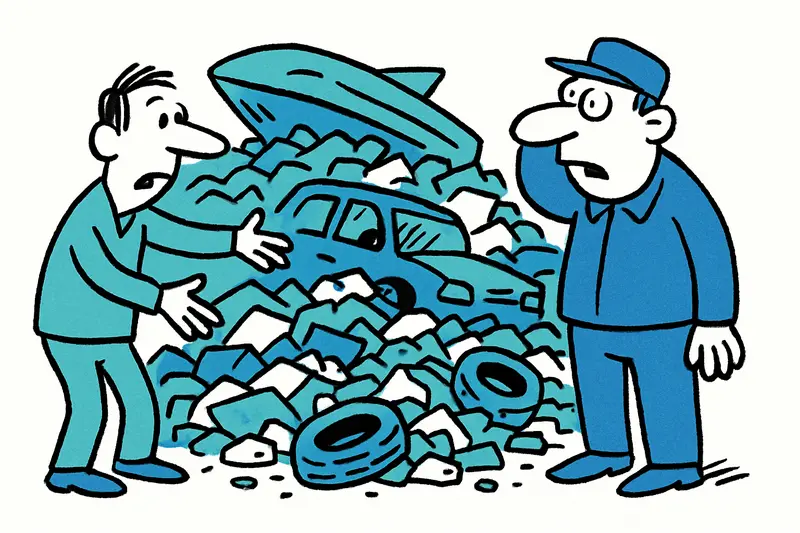
In the early morning, when the almond blossoms still drip and the country lanes smell of earth, the discovery in Son Reus struck the otherwise quiet landscape like a foreign body: On a finca, the Policia Local and Guardia Civil found an illegal deposit across roughly 800 square meters. More than 1,000 cubic meters of material were scattered — bricks, concrete, old upholstery, tires, burned-out vehicles and even overturned boats with dark oil stains. A neighbor put it bluntly: "You could smell it from the road — diesel, rot. The birds avoid the spot." Palma Takes Ibiza's Waste: Pragmatism or a Problem for the Island?
The central question: How could this grow unnoticed?
Such a volume does not appear overnight. The question now occupying authorities, neighbors and landowners is simple and harsh at the same time: Who transported it, who delivered it and why did this go seemingly unnoticed for months? On Mallorca's rural roads the trade in construction waste is often murmured about — but rarely does one see the end of the chain. Is every bill and every truck documenting disposal correctly? Or did much of it pass through opaque intermediaries who disposed of material more cheaply than official sites? Recent regional debates add context, for example Provisional Halt to Waste Transfers: Who Pays the Price Between the Islands?.
What the investigations show so far — and what is still missing
The Policia Local and the environmental authority have secured the site, filed reports and taken samples. Those are necessary immediate measures, but they treat the symptoms rather than the causes. Crucial will be whether investigators can trace delivery routes, whether delivery notes exist, and whether property ownership or possible tolerance by the landowner is apparent. In many cases such finds reveal gaps in the traceability of waste: Who controls temporary storage sites, who audits the accounts of small disposal companies, and where are the sanctions when operators illegally pass material on? The broader controversy around inter-island waste movements is reflected in coverage such as Project on Ice: Waste transports from Ibiza and Formentera to Palma temporarily halted.
What is often overlooked: economic incentives and supply chains
What rarely becomes clear in public debate is that illegal deposits are seldom just the work of "bad neighbors." They are often the end point of an economic logic. When legal landfills charge fees and haulers operate under price pressure, incentives arise to take detours. Especially in rural areas, where controls are less frequent and buyers for rubble are sought, vacant fincas or remote pits become the solution. What is needed, therefore, is not only on-site inspections but a close look at the entire chain — from the construction crew to the intermediary.
The direct and indirect costs are high
Beyond the visible damage to landscape and wildlife, the municipality incurs costs that often exceed the original disposal prices: specialist firms must sort the debris, contaminated material must be removed separately, oil and pollutants disposed of properly and polluted soil possibly replaced. Cleaning and remediation work, installation of monitoring wells and long-term controls can quickly run into tens of thousands. Fines alone usually do not cover these expenses — in the end the public pays.
Concrete steps: What must happen now
The discovery in Son Reus must not stop at reports and press releases. What is needed now is a mix of preventive and repressive measures that address both the root causes and the symptoms:
Transparency and digital traceability: Mandatory electronic documentation of construction waste transports (GPS tracking, digital delivery notes) — this allows routes and recipients to be reconstructed. See guidance from the EU on waste management for relevant standards: European Commission page on waste management.
Stricter inspections at transfer points: Regular checks and random inspections of landfills and recycling centers; sanctions for operators who tolerate illegal onward disposal.
Mobile collection services: Mobile bulky waste and hazardous waste collections for rural areas — if legal disposal is easily accessible and affordable, illegal dumping loses its appeal. The challenges and options for rural collection are also discussed by the European Environment Agency: EEA page on waste management.
Financial incentives: Temporary subsidies or reduced fees for small quantities of construction and bulky waste so that private owners do not seek expensive alternatives.
Resident involvement and transparent communication: Low-threshold reporting channels (anonymous hotlines, apps), rewards for tips combined with rapid responses by municipal teams and clear information sheets for neighborhoods.
Restoration: What needs to be done during remediation
Remediation is extensive: separate the debris, dispose of contaminated materials separately, take soil samples and possibly replace the earth. Technical measures such as containment trenches, removal of used oil and repair of any toxic hotspots belong to the work. Long-term monitoring is important: monitoring wells to check groundwater quality and an open timeline for the neighborhood so that rumors and fears give way to facts.
An appeal to responsibility and measured action
The finca in Son Reus is currently both a warning and a task: for authorities, municipalities and everyone who builds or renovates on Mallorca. Illegal deposits link environmental pollution with economic incentives and neighborhood conflicts. Threatening fines alone is not enough. We need better controls, practical and affordable disposal options and neighbors who watch and take reports seriously. Only then can we prevent our almond fields from smelling of diesel again and the birds from staying away.
Frequently asked questions
What should I do if I notice an illegal dump on rural land in Mallorca?
Why do illegal waste dumps happen on Mallorca fincas?
Can illegal waste dumping in Mallorca harm the environment?
How is an illegal dump on a Mallorca finca cleaned up?
What happens if an illegal waste dump is found near Son Reus in Mallorca?
Is Son Reus in Mallorca an area where waste issues have been discussed before?
What can Mallorca residents do to help prevent illegal dumping?
What kind of waste is often found in illegal dumps on Mallorca?
Similar News

Release after bloody attack in Palma: Why the court's decision raises questions
An 18-year-old who allegedly inflicted a serious neck injury on a man at Plaza Gomila using a wristwatch wrapped around ...
Kidnappings in Inca: Three young men forced into car trunks and abused in the forest – a reality check
In Inca, three 18-year-old men were forced into car trunks by masked assailants at the Plaça des Bestiar, taken to a for...
Spreading Massification: The Brake That Still Has Much Work to Do
Marga Prohens announces limits on volume tourism. The measures sound harsh — but are they enough to save everyday life, ...

Through the Keyhole onto the Party Yacht: How Daniela Katzenberger Is Planning Her 40th on Mallorca
Daniela Katzenberger turns 40 and wants to celebrate it on the island — likely with a boat, cake and her mother. A relax...
By Boat Instead of the Road: Palma's Water Bus — a Reality Check
The 'Bus Nàutic' launches in two stages — but questions remain over interim operations, fares and environmental requirem...
More to explore
Discover more interesting content

Can Cap de Bou

Townhouse Lleo 72
